
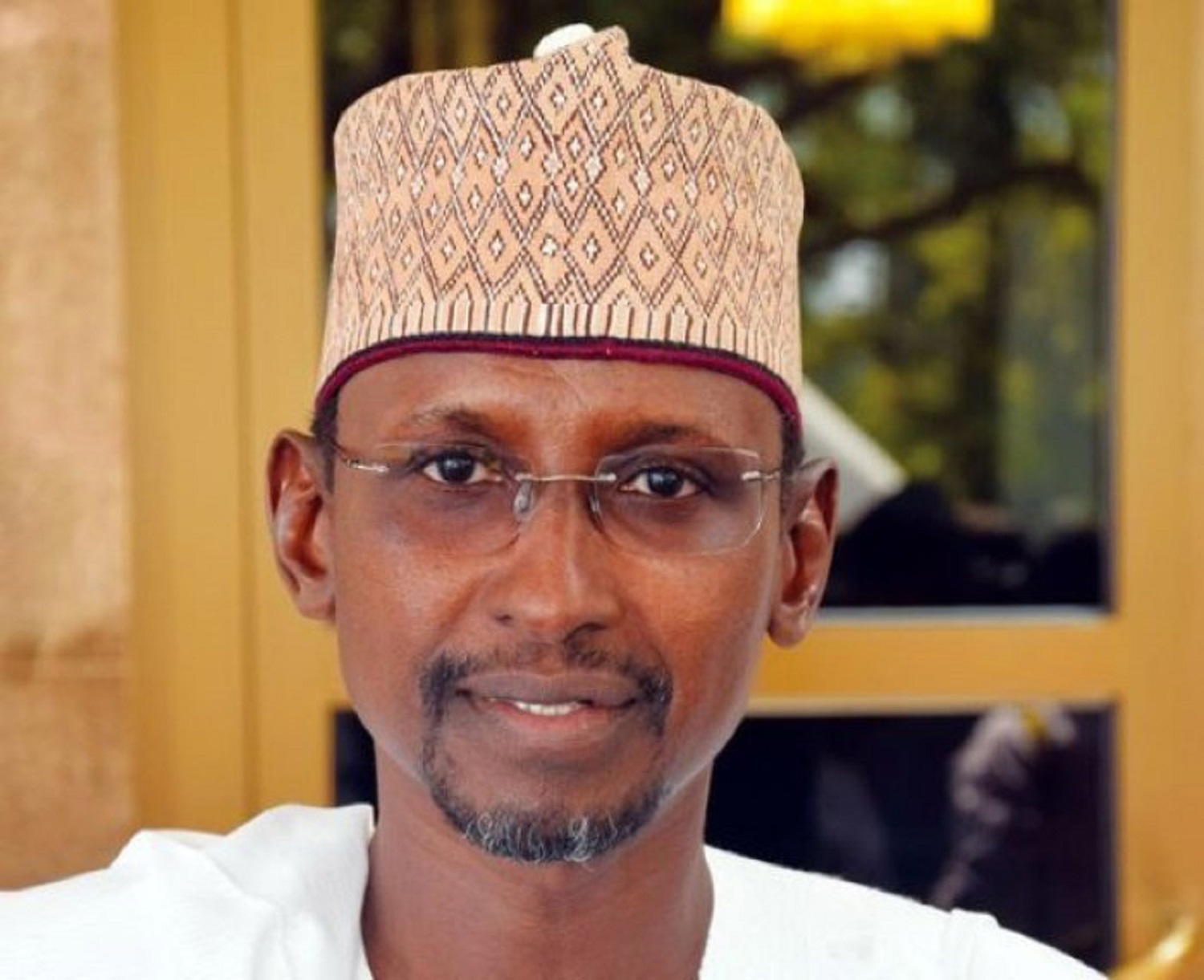
Muhammad Musa Bello
Omeiza Ajayi, Abuja
When on May 29, 2015 he assumed the reins of governance, many Nigerians, especially his supporters were optimistic that the President Muhammadu Buhari administration was indeed serious with his “Change” mantra which promised to reset the country and thrust it on the path of greatness.
Few months later, such hopes soon faded, giving way to cynicism as the new administration was so slow that it became apparent that it would not be able to meet the yearnings of Nigerians.
However, when on Wednesday, 30th September 2015, the then president forwarded his ministerial list to the Bukola Saraki -led Senate, there was a little ray of hope that perhaps the administration was finally on the verge of self redemption.
But that was not the case, especially for the Federal Capital Territory FCT. From that day till 29th May, 2023, it was simply an agonizing eight years of lawlessness, bigotry and general decadence.
Hopes that the FCT would soon become a model city were dashed when the duo of the Minister, Malam Muhammad Musa Bello and the Minister of State, Ramatu Tijjani Aliyu spent years trying to understand how to govern a modern day capital city.
While Bello generally oversaw the entire FCT, Aliyu on her part was to oversee a section of the FCT notably, Agricultural and Rural Development Secretariat, Social Development Secretariat, Area Council Secretariat, the FCT Rural Water Supply and Sanitation Agency RUWASSA, Satellite Towns Development Department, FCT Universal Basic Education Commission and the Social Investment Programme. The Area Councils and traditional council were also under her purview.
It is instructive to note that under the Bello/Aliyu administration, Abuja became an eyesore. For instance, from Area 1 to Utako and even some parts of Wuse 2, it was the same story of refuse dumps, clogged drainages, uncovered manholes, bad streets and traffic lights as well as foul atmosphere. In fact, the stench of urine around the Area 1 shopping complex, the Utako Market and other areas could trigger a pregnant woman into labour even before her Expected Date of Delivery EDD.
The level of infrastructural decadence witnessed under the eight-year administration of Bello was so unprecedented that a former FCT minister like Bala Mohammed, now a state governor, suddenly became a positive reference point, notwithstanding that he also performed abysmally.
Apart from trying to complete works on some roads within the city centre, other areas were simply abandoned.
Moral Police
While the territory deteriorated in geometric proportion, Bello would rather engage in moral policing of Abuja, destroying bars, hotels, night clubs and using the Abuja Environmental Protection Board AEPB to harass women in the guise of fighting prostitution.
Indeed, young ladies became endangered species under Bello’s “theocratic” administration even as cows became first-class citizens, roaming the streets of the nation’s capital, competing with motorists and causing accidents.
Failed security initiative
Under Bello, the G-7 security initiative which brought together the minister and governors of states contiguous to the FCT became history. Bello simply killed the G-7, a development which saw kidnappers from neighbouring states making intrusions into the territory and running back to their hideouts in the states. Thus, Kubwa, Bwari, Gwagwalada, Kuje and Abaji became operating theatres for bandits who carried out their operations with clinical precision.
Today, people are kidnapped almost on a daily basis in the territory, while armed robbery, carjacking and the so-called “one chance” are the order of the day.
What fueled the wave of insecurity in the territory was Bello’s refusal to implement the law banning the operations of commercial motorcycle riders popularly known as Okada in many parts of the city. For instance, there was a complete ban on the operations of Okada riders in Kubwa, Abuja’s largest suburban town.
While there was substantial compliance with the ban, the minister however turned a blind eye to their operations soon after the 2020 #EndSARS protest. While there were efforts to get him to act, there were speculations that Bello saw the riders as his kith and kin, hence his laid-back attitude towards ridding the city of the menace. Today, knife attacks are rampant in many parts of the territory, especially in Kubwa, Nyanya, Bwari, Kuje and Gwagwalada.
No Transportation Policy
Bello’s eight-year administration, it must be emphasized, had no transportation blueprint. The only transportation policy it had was to set humongous targets for the Directorate of Road Traffic Services DRTS otherwise known as Vehicle Inspection Officers VIOs. In a bid to meet such targets, the VIOs often deployed degrading and inhuman tactics, causing traffic gridlocks during peak periods, jumping in the middle of the roads, chasing drivers dangerously and often going physical with motorists.
While for nearly eight years the minister was confused on how to handle the transportation crisis in the city which saw more people buying cars, even if rickety, and clogging the roads, it was not until the twilight of his administration, precisely on 14th November 2022 that he directed the Abuja Investments Company Limited AICL to resurrect the dead Abuja Urban Mass Transport Company AUMTCO. Since that time till now, it would appear that the directive has been obeyed more in the breach.
Light Rail
Then, there is the Abuja light rail project which in Bello’s words, was more than half completed in 2015.
“When we came in 2015, about 52 per cent of the project was done and we pushed it to 100 per cent”, he had said at a media town hall in January this year.
At the event organized by the Federal Ministry of Information, Bello said despite being 100 percent completed, the light rail could not work because of COVID-19. He assured that it would commence operations before May 29, 2023, the terminal date of the Buhari Administration.
“Many of you will want to wonder why the Abuja Light Rail is not working. It is not working now because of the outbreak of the COVID-19 pandemic.
“We had to stop the operations because as you know, the light rail system basically is a mass movement, so if you don’t have much sitting capacity, many people will stand up and when you stand up, you face each other.
“So, it was obviously very difficult to maintain social distancing but we are done with all that; the carriages are here and by the grace of God before May 29, we will resume”, he had stated.
However, like many of his promises, including the pledge to complete the Karshi-Apo road, this one too fell through.
On February 17, 2021, Bello had declared that the 13 kilometre Karshi-Apo road which was awarded in 2011 would be completed before the start of that year’s raining season.
However, a month later, on March 31, the minister backtracked, saying there was a design error on the road and that the completion deadline was no longer feasible. The road, important as it is, was never completed till Bello left office.
Destitute, Beggars overrun FCT
Destitute and beggars also took over several parts of the city unlike before when it was difficult to sight them in areas like Maitama, Asokoro, Guzape and Wuse 2.
The excuse given by the minister was that each time they were repatriated to their various states, they often found ways to sneak back into the FCT.
This was why on September 14, 2016 when he visited the FCT Vocational and Rehabilitation Centre in Kuchiko, Bwari Area Council, where all arrested beggars were often taken to, he had declared that the Administration would establish a database for destitute and beggars.
According to Bello, the database would provide the FCTA with adequate information on those arrested and serve as a guidance for the government to make adequate preparation for their repatriation. Unfortunately, this was never done!
Horrific Evictions
What many Abuja residents would not be in a hurry to forget was the wave of demolitions under the Bello/Aliyu administration. While some past administrations reduced their penchant for demolition during the rainy reason, the Bello administration seemed to have derived explosive orgasmic pleasure from such exercises in the rainy season and at night when victims had nowhere to go, and left at the mercy of hoodlums who carted their property away.
Allegations that some officials flouted the law in embarking on demolitions were never really investigated. At demolition sites, most victims often claimed to have paid money to Administration officials to avert any possible pulling down of their property. There were also allegations that some estate developers used some taskforce officials to pull down or de-market the estates of their rivals, but while the Administration often promised to probe such allegations, nothing was done in the actual sense.
Aliyu, Abuja’s worst MoS
Under Aliyu as Minister of State in the FCT, Area Council chief executives became lords unto themselves, operating without any form of supervision or guidance.
The development was such that the councils often clashed with agencies of the FCT Administration especially in the area of revenue collection – a development which led to double taxation of some residents.
It is to her eternal credit, albeit negatively, that the FCT Fishing Festival went comatose. What was beginning to take shape and projected to be like the Argungu Fishing Festival by her predecessor, Oloye Olajumoke Akinjide, became a forgotten event.
Rather than the Satellite Towns Development Department STDD focusing on developing the satellite towns, they were competing with the Ministry of Agriculture and Rural Development to build low quality roads in the hinterlands, where public scrutiny was low or absent.
Pilgrimage of sorrows
The 2023 Muslim pilgrimage to Saudi Arabia was one of sorrows for the FCT contingent.
With both ministers being Muslims, and Bello himself having once headed the National Hajj Commission NAHCON, the poor preparation which marred the 2023 exercise and which led to FCT pilgrims being stranded in the Holy Land was a negative legacy that the duo bequeathed to residents.
FCT Pilgrims reportedly faced untold hardships, with many of them regretting their decisions to take part in the exercise.
Some of the distraught pilgrims who bemoaned their fate, said shoddy preparations and incompetent administrative structures at the FCT Muslim Pilgrims Welfare Board headed by Malam Abubakar Evuti and under the supervision of Aliyu, were largely responsible for their avoidable woes.
Most of the pilgrims in the first batch of those airlifted, were stranded in Saudi Arabia as their accommodation arrangements did not meet the minimum requirements by the Hajj Planning Committee.
Indeed, one of the pilgrims who pleaded anonymity, expressed displeasure over the unpalatable experiences of the pilgrims at the Abuja Hajj Transit Camp, complaining that many of the pilgrims had lost excitement for exercise.
It was gathered that whereas about 3,562 slots were initially planned for by the National Hajj Commission, the FCT Board was crippled with over 4, 000 applications and slot seekers. Rather than stick to the allocated slots, the director was said to have struggled to accommodate the extra number, which came from the high and mighty in the society.
While we may not know the calibre of ministers to be appointed by the President Bola Tinubu administration, FCT residents certainly know the type of ministers they would not want to see in the list of ministers to be sent to the Senate for clearance.
Indeed, Muhammad Musa Bello was a minister who came, pretended not to see and so, never conquered. Both Bello and Aliyu performed below average!
Disclaimer
Comments expressed here do not reflect the opinions of Vanguard newspapers or any employee thereof.