
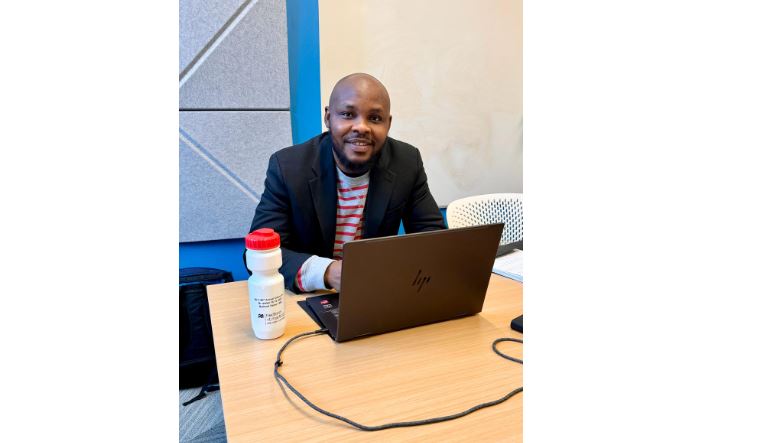
By Ayo Onikoyi
A Doctoral Researcher at Purdue University
In a world saturated with digital noise, where social media trends dictate the tempo of daily life, Nigeria faces an urgent public health crisis that remains dangerously overlooked—the rapid spread of health misinformation. From misleading tweets about vaccine side effects to WhatsApp broadcasts claiming herbal cures for COVID-19, false health narratives have infiltrated Nigerian homes, communities, and minds. As a scholar and practitioner of health communication with years of hands-on community-based experience, I argue that the way forward is clear: we must adopt a community-centered approach to confront and counter health misinformation at its roots.
Nigeria’s struggle with health misinformation became more evident during the COVID-19 pandemic. Working as a researcher on the COVID-19 Risk Perceptions in Oyo State project and during seminars and workshops in some institutions of higher learning, I witnessed firsthand the depth of misinformation among even well-educated segments of the population. From disbelief in the existence of the virus to mistrust of government health directives, these false beliefs were not just individual failings; they were symptoms of a broader communication gap between public health authorities and local communities.
This gap is further widened by the pervasiveness of social media. Today, health-related misinformation is no longer confined to traditional rumors whispered in marketplaces; it is shared virally via Facebook, broadcast on TikTok, and forwarded endlessly on WhatsApp. These platforms offer little regulation and cater to emotional engagement over factual accuracy. Consequently, misinformation spreads faster and deeper than verified health messages.
While governments and international agencies have responded with public campaigns and fact-checking platforms, their top-down strategies often miss the mark in Nigeria’s diverse and highly localized cultural contexts. That’s why community-centered approaches—those built on trust, cultural relevance, and face-to-face engagement—are not just optional. They are essential.
From the Classroom to the Community: A Lifelong Mission
Over the years, my academic and field experience has shown that community-based strategies are uniquely positioned to build resilience against misinformation. In my roles with the University College Hospital’s Women Working with Partners (WWWP) initiative, PASGR’s “Young Women and Men Aspiration and Resilience” research, and projects with the Institute for Media and Society, I worked on grassroots mobilization, health literacy, and communication outreach across Nigeria’s southwest.
One truth became clear: people trust information that comes from people they know. Whether it’s a market leader, a community radio presenter, a respected elder, or a young health advocate, the messenger matters. These community insiders serve as information brokers, interpreting public health messages in relatable language and bridging the cultural and linguistic gap between authorities and the people.
Community radio, in particular, has been an unsung hero in this fight. During my work with rural broadcasters in the South-West, I saw how vernacular programming, health jingles, and audience call-ins on local stations had more impact than polished English-language PSAs on national TV. The solution isn’t to dismiss digital media but to integrate it with local communication infrastructures that reflect Nigeria’s social realities.
Social Media: A Double-Edged Sword
Ironically, while social media fuels misinformation, it also offers an opportunity—if used wisely. In my co-authored publication, Audience Participation in Information Dissemination for National Renaissance, we found that young Nigerians are actively engaging with radio content via social media, often serving as secondary gatekeepers. That is, they don’t just consume content; they reframe, redistribute, and reinterpret it for their networks. Empowering youth with digital media literacy can turn them from passive recipients of misinformation into agents of truth.
However, this can only happen if we localize digital education and make it accessible. One-size-fits-all online campaigns will not work in Ibadan’s inner cities, Makoko’s floating slums, or Zamfara’s rural communities. We must co-create content with the communities themselves. We must also train health workers, teachers, and media professionals in the ethics of online health communications, something sorely lacking in current government responses.
Nigeria must institutionalize this model. Ministries of Health should integrate communication scholars, sociologists, and local storytellers into public health campaigns. Faith-based institutions—which command strong followings—must be mobilized not just as beneficiaries but as active partners in message design and dissemination. The current health communication infrastructure, which largely mimics Western templates, must evolve into one that speaks the language of the streets, the markets, and the people.
A National Call to Action
As Nigeria contends with rising cases of preventable diseases, low vaccination rates, and public distrust in health systems, it is no longer enough to blame ignorance or point fingers at “fake news”. Health misinformation is a symptom of a disconnected communication system—one that fails to engage the people where they are and in ways they understand.
The way forward is to reinvest in community-led health communication, build local media capacity, train grassroots advocates, and bridge the chasm between digital and interpersonal communication. The battle against misinformation will not be won in Silicon Valley or Abuja alone—it will be won in Bodija, Sango, Ajegunle, and across the thousands of communities where people listen first to those they know and trust.
As someone who has spent over a decade studying and engaging with Nigeria’s communication landscape—across media, health, and community development—I am convinced that the community-centered approach is not just effective; it is urgent.
If Nigeria is serious about safeguarding public health in the digital age, it must return to the community. That is where the real fight against misinformation begins—and where, together, we can win.
Disclaimer
Comments expressed here do not reflect the opinions of Vanguard newspapers or any employee thereof.