
By Ebunoluwa Sessou
Globally, the Day of the African Child’s, DAC celebration comes every June 16 of every year. Despite the celebration, African child still suffers some forms of challenges ranging from rape, sexual assault, and domestic violence among others.
The challenge of the African child varies from one to another as various stakeholders have contributed immensely to addressing some of the issues. In spite of the various interventions, it seems there is no end in sight.
The African Child is still faced with cultural biases, environmental sentiments, religious and ethnic biases even as his or her rights to education, health, good life, welfare, housing, expression are also being denied on a daily basis by those who are supposed to protect them.
The theme of the DAC 2023, “The Right of the Child in the Digital Environment”, as selected by the African Committee of Experts on the Rights and Welfare of the Child (the Committee/ ACERWC), was established under Articles 32 and 33 of the African Charter on the Rights and Welfare of the Child (the Charter/ ACRWC) for the commemoration of the DAC in 2023.
Speaking on the theme, Founder Bella Foundation for Child and Maternal Care, Bella Akhagba, who is also the publisher of’Too Young to Marry Magazine’ sponsored by EVOCA Foundation and Nommontu Foundation in Ojo area of Lagos state disclosed that the first conference initiated by the Organization of Africa Unity (OAU), honoured those who participated in the Soweto uprising in June 1976, when students took to the street to protest discriminatory practices.
Adding that, armed police officers responded by murdering hundreds of protesters. The day focuses attention on the barrier Africa children face in order to reduce inequality in education and other rights.
According to her, “There is high rate of child marriage which is a violation of the girl’s rights. It takes the community, the elders, and traditional leaders to rise up to the case.
“As part of our efforts to commemorate the 2023 DAC, we organized seminars on child marriage between aged 9-17 years in schools in Ojo area of Lagos state.
“The African child especially the girls need knowledge and skills to be able to advocate against child marriage in their various communities. When girls are informed it will help to change attitude and behavior which will eventually eradicate it in the nearest future.
“The project was aimed to inform and equip adolescents’ girls with the knowledge and skills to be able to advocate against child marriage in their various communities. When girls are informed it will help to change attitude and behaviour which will eventually eradicate it in the nearest future.
“The African Child is well exposed to his or her digital environment compared to what it used to be in the past, ”she said.
Also, the facilitator, Odonghanrd Dorinda, Gender Advocate, lamented that, Nigeria is one of the countries with the highest rate of child marriage.
“Child marriage is a violation of the girl’s rights. It takes the community, the elders, and traditional leaders to rise up to the case. There is a need to be careful when handling child marriage in the Northern part of Nigeria.
Quoting from the Concept Note of ACERWC on the theme, it revealed that, “Internet access and usage has been increasing globally. As of May 2022, there were about 590 million users (43% internet penetration) in Africa.
“These figures include children, who represent a third of all internet users in the world, and are increasingly exposed to the virtual environment. The ACERWC notes that the digital era has fundamentally changed the way in which children exercise and realise their rights.
Noting that the lives of children are mediated by the digital environment in ways that impact how they can enjoy their rights and how their rights maybe improved or transgressed, it is clear that the effect of the digital environment for children needs to be considered in the context of rights set forth under the African Children’s Charter.
“The relevant rights include not only children’s rights to protection from all forms of violence, but also their rights to participation and provision. In the absence of proper mechanisms of protection, children will be susceptible to greater risks of harm online.
“A child acting in the online environment is not different from a child offline, and the same rights those children have offline must be protected online. In that regard, the ACERWC emphasizes that the rights of children enshrined in the ACRWC also apply in the online context. Legislative, policy, and other responses must reflect this understanding”, it stated.
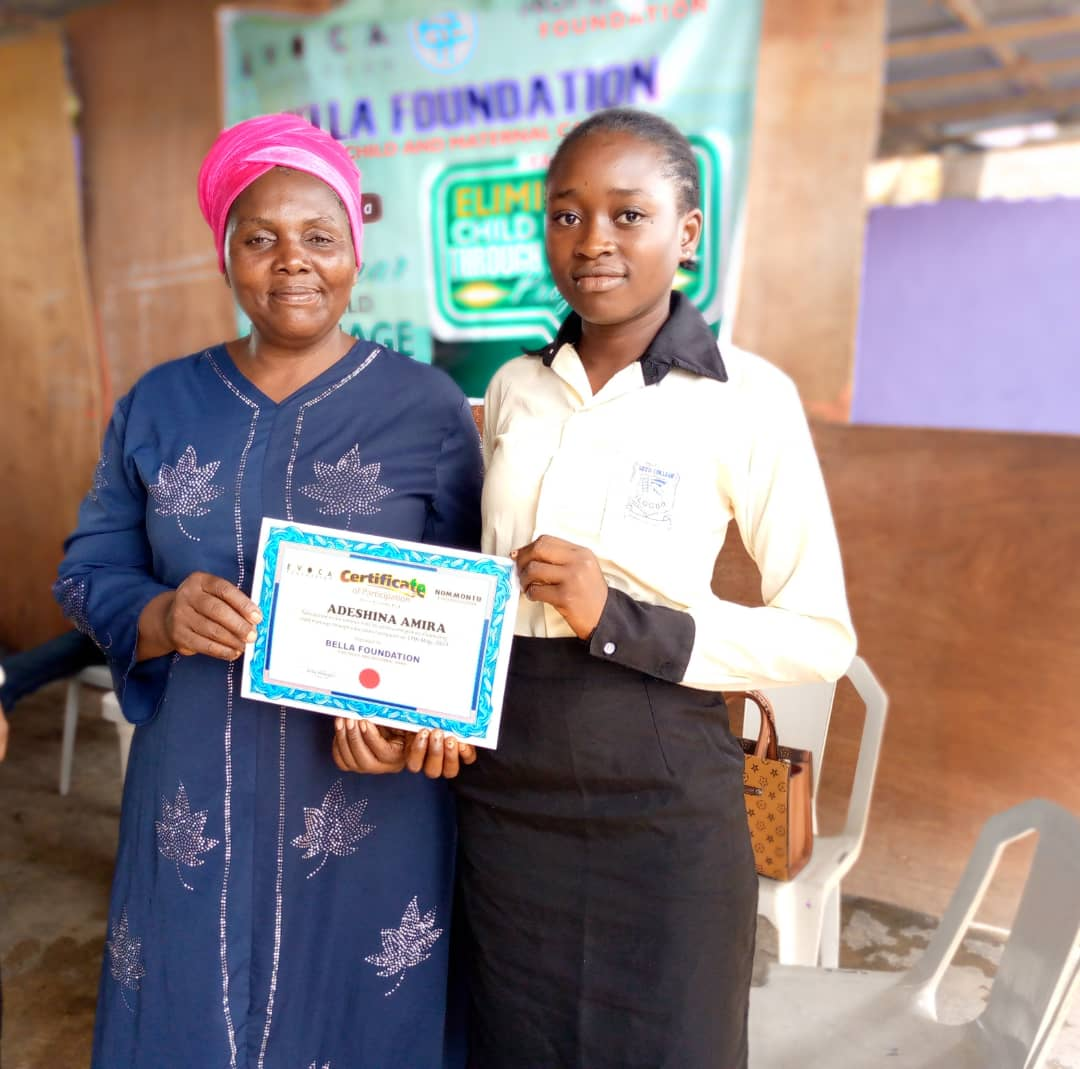
Highlights of the event was presentation of certificate of participation by the principal of Sozo College, to students during the seminar.
Disclaimer
Comments expressed here do not reflect the opinions of Vanguard newspapers or any employee thereof.