
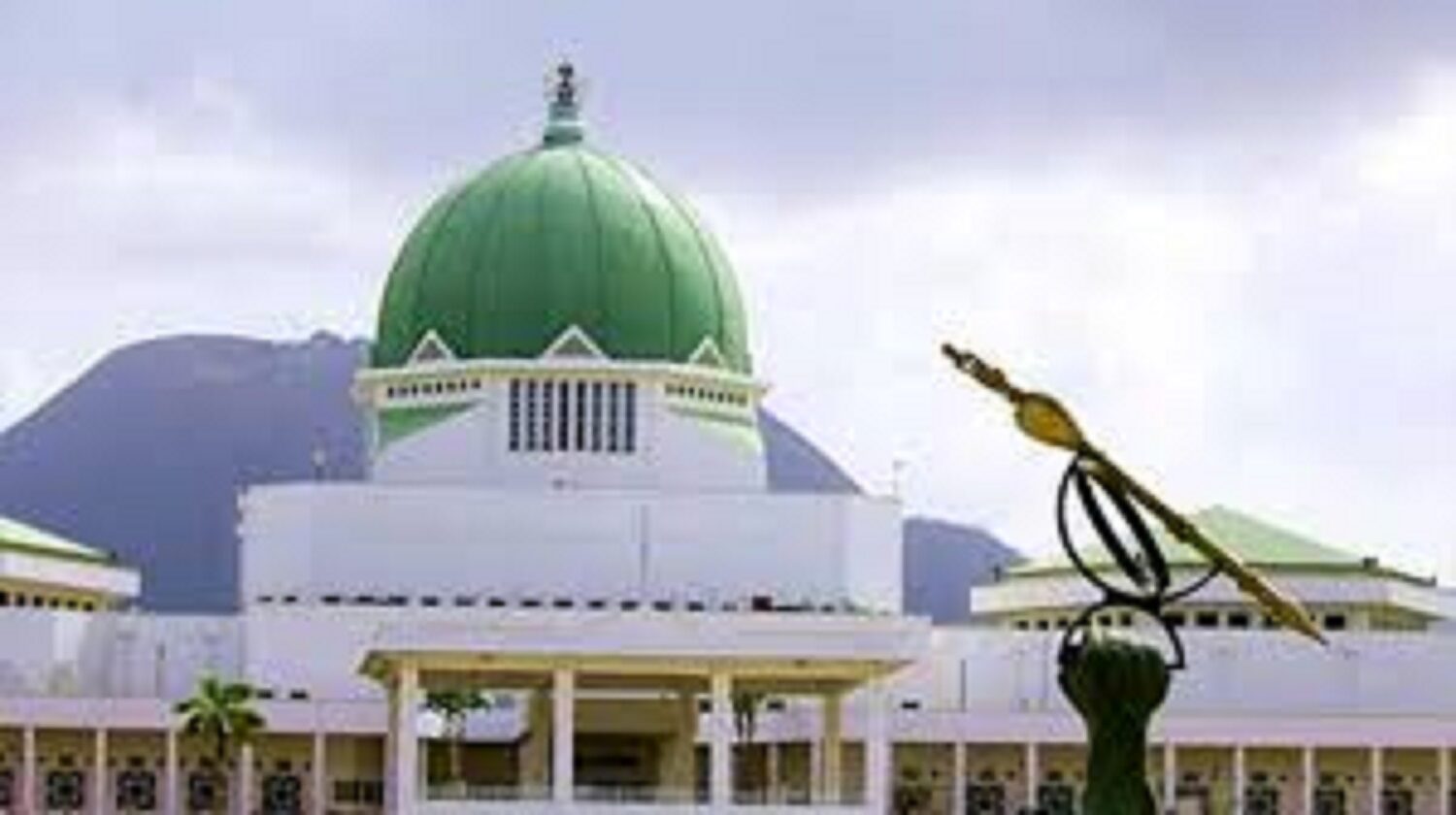
National Assembly
By Rotimi Fasan
IN all the negotiations, horse-trading, debates, controversies and intrigues that are heralding the inauguration and election of presiding officers of the National Assembly on June 13, 2023, the voice of the South-East has been either silent, muted or drowned out by others with stronger claims to the available offices on account of whatever they think were their contributions to the success of the victorious party at the polls.
The reason for this is not just about denying the South-East a seat at the table. Rather, it comes down to the exclusionary politics and aggressive bullying of others that the South-East has imposed on itself in the last eight years of the Muhammadu Buhari presidency.
All of this came to a head with the presidential election of 2023 that saw the region placing all its eggs in the political basket of one man, Peter Obi and his new-found platform, Labour Party, LP. Since the late former Vice President, Alex Ekwueme and ex-Biafran leader, Dim Emeka Ojukwu, led the way in the Third Republic the political home of the people of South-East have been the Peoples Democratic Party, PDP, and the All Progressive Grand Alliance, APGA. These have been the two dominant political parties on which the South-East has anchored its hopes of steering the ship of the Nigerian state both at the state and national levels.
At the state level, especially in Anambra, APGA has been formidable. It is largely a regional or perhaps, more appropriately, a local party that anyone hoping to be governor in Anambra must belong in. But in engaging national stakeholders and playing politics across inter-regional and inter-ethnic lines, the PDP has been the handmaiden of the South-East. It is the go-to party for Easterners who desire more than a mere fighting chance for the realisation of their political ambition.
That was and has largely remained the case until the middle of 2022 when Peter Obi, in deference to the desire of the Igbo not to play ‘second fiddle’ politics, left the PDP in a huff as the heat became unbearable and it dawned on him that he could not be the flag bearer of the party in the presidential election that held in February 2023. Obi, not willing to be Abubakar Atiku’s running mate a second time, made LP, a moribund platform and ‘place holder’ of political journeymen in transit to a final place of rest, his preferred stable.
His was far from an original move. Many politicians before him had done the same thing in times of personal crisis. They use and dump the party as the opportunity presents itself. It remains to be seen whether Obi who famously swore never to leave APGA, the platform on which he was twice sworn in as governor of Anambra, but thereafter made a beeline to the PDP and is now sitting, not exactly comfortably in LP, will behave true to what has become the tradition with displaced politicians in search of a temporary home. With the incessant ruckus between the new and foundation leaders and members of the party, it’s clear that things can’t be anywhere easy for Obi in Eluu Pee.
But that is where Peter Obi is presently hibernating and it’s apparently where all South-Eastern politicians (don’t ask me how I know this if you can’t help yourself) of any consequence are expected to be at the present time. For the Igbo right now, the Obi way is the right way and you’re either with him or on the highway.
This is the kind of exclusive politicking, fueled by herd thinking, that is currently animating South-East politics since the emergence of Peter Obi as a presidential candidate. It goes apace with calls for the dismemberment of Nigeria in favour of a Biafran state. Let’s be clear: while I believe that Nigeria’s unity is and should be negotiable, the South-East has gone about it in a manner that makes clear it wants to have its cake and eat it too. It demands Biafra with one hand and wants a president of Igbo extraction with the other.
It was my hope, one that I have a number of times advocated in this forum, that the position of president should be conceded to the South-East after Muhammadu Buhari. The moment he emerged, Peter Obi in my view stood the best chance of achieving this. He was by far the least problematic and most marketable of the leading presidential candidates.
His marketability was, however, undermined right from the beginning, perhaps even before the primaries, by the very people that appeared most sold on it- his so-called Obidient supporters who are no doubt overwhelmingly Igbo. Which is not saying that there is something wrong with that per se, yet it did foreshadow the identitarian politics that has been Obi’s most defining attribute. His support base has been largely Southern, Christian (preferably Catholic?) and Igbo in that order. Some of this he can’t help but he has deliberately and mischievously rode on all of them on the road to his eventual emergence as one of the three front liners of the just-concluded elections.
His position, as I said, has not been helped by his Obidient base with all its subterranean IPOB-inflected bigotry that wasted and still wastes a lot of time on negative campaign- arm-twisting, bullying and pouring invective on other candidates, their supporters and ethnicity, rather than highlighting the beneficial qualities of Peter Obi. They have at the end succeeded in silencing South-Easterners with differing positions from Obi.
The likes of Charles Soludo, Kingsley Moghalu, etc., would do well to watch what they say in order not to be labelled anti-Igbo. While potential and actual allies from other parts have been alienated, the Obi supporters who are not difficult to know or see by the way they interpret everything from the coloured lens of their political leaning, are sitting back, wishing the country all the worst possible and watching to see the country implode on anyone hoping to see a president other than Peter Obi. Not even a mundane matter of a Seun Kuti assaulting a police officer is explainable without an Obidient linking it to his political views on Obi.
Everything is personalised, falsehood and outright lies that are dangerous for inter-ethnic relations are peddled as scriptural truth and every opponent of Obi is treated as an enemy of the Igbo while those who support him are seen as ‘detribalised’ patriot on whom fulsome praises are heaped. It’s this kind of aggressive and insular politics that is making the South-East an onlooker in the current struggle for the leadership of the National Assembly where the North-West is inappropriately angling for two principal positions. The South-East must introspect and reposition beyond its base.
Disclaimer
Comments expressed here do not reflect the opinions of Vanguard newspapers or any employee thereof.