
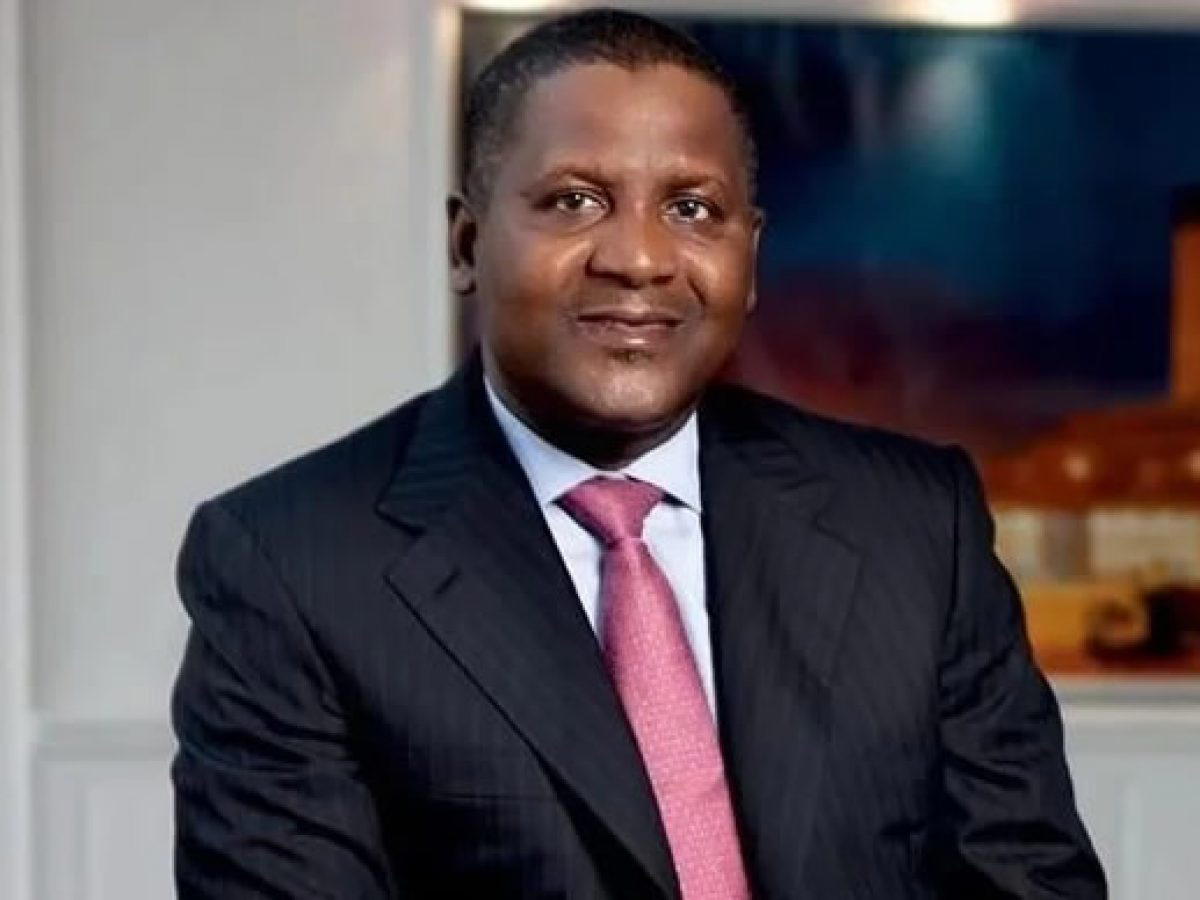
Dangote
By NICK DAZANG
A MOMENTOUS event will take place next week. And the event is guaranteed to add a sheen to Nigeria’s battered image and imbue its citizens with hope at a time of national despair. The event is the commissioning of the Dangote Refinery and Petrochemical Plant. The commissioning comes hot on the heels of the revalidation of Mr. Aliko Dangote, last year, as the richest man in Africa for eleven years running by Forbes magazine.
This good news is coming at the tail end of the lacklustre administration of President Muhammadu Buhari. It is also coming a year after the Federal Government’s concerted efforts to remove the subsidy on petrol, its suspension following outrage by Nigerians, and the realisation by the government that it was not judicious to withdraw the subsidy on the eve of a general election.
But lest we digress, the revalidation of Mr. Aliko Dangote, last year, as Africa’s richest man, was a matter of profound joy and pride for all Nigerians and indeed members of the Black race. Mr. Dangote’s success is an eloquent testimony to what can be achieved if one is farsighted, focused, ingenious, and determined. This is a confirmation that fortune favours the audacious, the savvy, and the self-driven. His success has certainly spurred and galvanized others. Already, not a few Nigerians point to Mr. Dangote as their mentor and inspiration.
Beyond the inspiration he offers, the self-effacing Mr. Dangote carries on unobstructed. He is the quintessential uniter of Nigeria and the African continent. His businesses are spread across the country, thus reinforcing our unity. And his cement companies are strewn all over Africa, thereby gluing the continent. Dangote’s validation, as the richest man in Africa, occurred at the most parlorish of times and while the COVID-19 pandemic still raged. It confirms the time-honoured saying that shrewd business people make their fortunes during adversity and hard times.
During the pandemic, billionaires across the world added a record $931 billion to their net worth, with Jeff Bezos, Elon Musk, Mark Zuckerberg, and Bill Gates leading the pack. Despite the pandemic, Africa’s billionaires became 15 per cent richer in 2021.
If the Forbes validation proved Dangote’s mettle as Africa’s foremost businessman, the Dangote Refinery, estimated at $12 billion, is an idea whose time has come. The refinery’s construction started in 2016. Its proposed commissioning, next week, will fill a void left by the comatose government-owned refineries in Kaduna, Warri, and Port Harcourt. It is also coming at a time when Nigeria refines its crude abroad, imports the refined products, and passes off the costs to its impoverished citizens. The Dangote Refinery is a complex that combines a refinery, a petrochemical plant, a fertiliser plant, and a subsea pipeline project. It is reputed to be the largest single train refinery in the world. It is expected to produce 650,000 barrels per day and directly employ 38,000 staffers.
The President of the African Development Bank, AfDB, Dr. Akinwumi Adesina, who visited the Dangote Refinery some 15 months ago, was simply wowed by what he saw. Permit me to quote him: “I am completely blown away…. I can’t believe what I saw…this project will reverse the huge sum the nation spends on foreign exchange. Aliko is quite an important and visionary business leader, and for anybody to have done what I have seen here, I think that person deserves world class kudos for that. I see a company that we will proudly call Africa’s growth accelerator company.”
According to an effusive Dr. Adesina, Nigeria imports about $57 billion worth of refined petroleum products, and we export $50.4 billion, thus leaving us with a balance of $7 billion. By his reckoning, the Dangote Refinery should be able to have a domestic market of $11 billion and save Nigeria $9 billion annually. The Dangote Refinery is thus a win-win for the company, for Nigeria, and for the West African sub-region. While wishing the Dangote Refinery Godspeed, a timely and healthy return on investment to shareholders, one must observe with disquiet that Mr. Dangote tends to invest in areas where he has near- or complete dominance. His ventures are, thus, monopolies. They determine prices for the consumer, for good or ill.
Dangote’s credentials as a nationalist and pan-Africanist are not in doubt, however. But relating to his refinery, we seem set to repeat the mistake we made when we discovered oil in Oloibiri in 1958. As soon as we were awash with petrodollars, we abandoned agriculture and manufacturing, which are crucial to our sustenance and economic security. Our economy became monocultural and dependent on oil. As Dangote Refinery comes on stream after several postponements, one foresees an eventuality where government refineries will be abandoned to their devices. A hint of the dire consequences of depending on one company for gasoline can easily be gleaned from the cement arena, where Dangote Cement and BUA Cement hold sway.
Even as we celebrate the advent of the Dangote Refinery with frenzy and excitement, no official statement is forthcoming about what the NNPC intends to do with our moribund refineries. Does it intend to revive them in order to compete with the Dangote Refinery? Does it intend to auction them outright, as canvassed by a presidential candidate?
Come to think of it, refineries, like major manufacturing concerns, undergo turn-around maintenance, TAM, on an almost perennial basis. What becomes of us when the Dangote Refinery proceeds on this inevitable rite of passage? Do we go back to our old way of refining crude abroad? Has the Dangote Refinery come to terms with the profusion of electric cars and the global transition from carbon to other sources of energy?
It is a good thing that the NNPC has been transformed into a limited liability company. As opposed to the 1970s and 1980s, when the NNPC was a professional juggernaut, the period from the 1990s up until now has witnessed a marked decline in its fortunes. The corporation has become a dumping ground for the frolicking wards of the rich and connected. Whereas the Saudi-owned oil company, ARAMCO, reported a record annual profit of $161 billion in 2022, we have yet to hear of any profit declared by NNPC Ltd.
With its commercialisation, the NNPC, like its peers such as ARAMCO, will do well to begin to look at other areas of investment in the energy ecosystem. To be relevant, it must explore the unavoidable transition from carbon emissions to renewable sources of energy. To achieve these tasks, it must be galvanised by an exalted vision, imagination, and the patriotic zeal of those who superintend over its affairs.
Dazang, a former director at the Independent National Electoral Commission, INEC, wrote from Abuja
Disclaimer
Comments expressed here do not reflect the opinions of Vanguard newspapers or any employee thereof.