
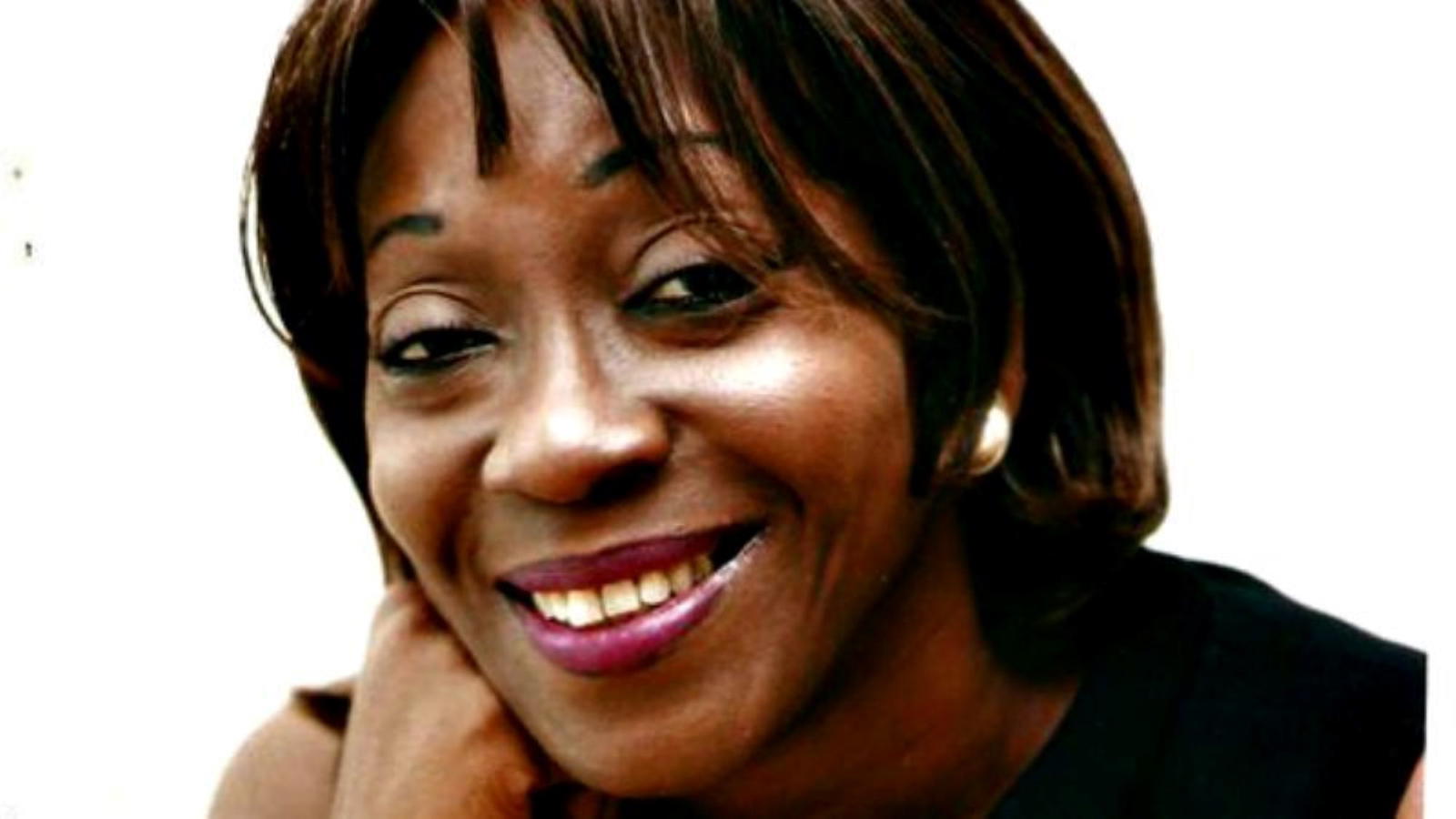
By Donu Kogbara
Last week, Professor Nenibarini Zabbey became the Project Coordinator of HYPREP, the Hydrocarbon Pollution Remediation Project, which is supervised by the Federal Ministry of Environment.
HYPREP was established to achieve the following objectives in my part of Rivers State – Ogoniland – and other impacted communities:
•determine the scope, means and modalities of remediation of soil and ground water contamination in impacted communities and remedy them.
•enhance local capacity for better environmental management and promote awareness of sound environmental management as well as ensure livelihoods and sustainable development.
•ensure security and promote peace building efforts in impacted communities.
•strengthen governance, transparency and accountability in the region.
This is a gargantuan task. Fortunately, Zabbey, a consummate professional and son of the soil, is up to it. A renowned expert in hydrobiology, he has extensive experience of remediation-related activities, specialising in biomonitoring and restoration ecology.
He was a senior lecturer at the Department of Fisheries, Faculty of Agriculture, University of Port Harcourt.
He is the first African recipient of the Association of the Sciences of Limnology and Oceanography’s Ruth Patrick Award – which was bestowed upon him in 2022 – for research and engagement with a critical impact on recovery of the Niger Delta ecosystem from oil spills and environmental justice for affected communities.
He has played active roles in the Nigerian civil society space and used to be the Coordinator of the Centre for Environment Human Rights and Development, CEHRD.
I don’t envy Prof. Zabbey because so much is expected of him in a difficult terrain. He will face many socio-economic, political, management, technical and scientific challenges.
I am sure that all well-meaning Vanguard readers will join me in praying that he receives all of the support he needs from the Abuja authorities…so he can satisfy his frustrated people, tackle his formidable responsibilities with integrity, compassion and dynamism…and succeed on every possible level.
Wonderful words
My friend and fellow journalist, Senator Babafemi Ojudu, recently responded to vicious attacks (mostly verbal but some physical) on Igbos by Yoruba irredentists.
Ojudu is Yoruba himself, so his words are particularly heart-warming and reassuring for those of us who yearn for TRUE Nigerian unity.
He also expresses disappointment in Igbo irredentists.
Excerpts from an essay titled: “Ado Ekiti, Okoli, and Our Social-Political Relations”.
…[We as a nation need to] reflect on the needlessness of the ethnic acrimony brought about by the last presidential election.
Personally, I have related perfectly with Igbos since my adolescence. My playmates as an urchin were Igbos and my best friend in the university, Austin Onuoha, is Igbo. We remain friends till today. I have had wonderful relationships with Igbos all my life.
I was however rudely shocked when, after the helicopter crash in Kaaba, people forwarded to me postings on Facebook by our Eastern brothers and sisters, who regretted I, Vice President Osinbajo, and other occupants did not perish. I was taken aback and could hardly understand that.
I am, however, knowledgeable and experienced enough to know that there are bad people everywhere, as there are good people. I also know that there are some of my own townsmen also who would have harbored sentiments of joy had I died in that crash…
…No matter where you hail from, some will love you and some will hate you. That is human nature…
We should however be careful of what we wish for, as two of my grandchildren are Igbos, while my younger brother, Tayo, is married to an Igbo lady, with four beautiful children we are proud of.
If I had perished in that crash, it would have caused misery to, both, my Igbo and Yoruba relatives.
Before Tayo went on to marry his Igbo wife, Angela, my father gave approval to it without reservation…I am from a very liberal family, just as many Yoruba families are.
My late mom, Mama Gani, was a Redeemer till she died, while my dad was a staunch Muslim…Growing up, we celebrated the festivals of Islam and Christianity.
My people of Ado Ekiti were exceptional in their relationship with the Igbos, as well as people of other cultural backgrounds…
Okoli was and is still a big player in the commercial business of my town and state. When the civil war broke out, the entire town went into a mournful mood because Okoli had to close his business and return to the East with his entire family, many of whom were our friends and playmates in the Ojumose area of the town.
The locals were not only pained that Okoli had to leave, they actually took part in all efforts to conceal his whereabouts and ensure his safety. He was loved by the entire community.
Following the blitzkrieg of negative propaganda, he finally had no choice, but to leave. I was informed by my father how he and people of the community made representation to the Kabiyesi about Okoli and his wares. The Kabiyesi made available a room in the palace and Okoli was assisted in packing his non perishable wares and moving them to the palace where they were kept till the end of the war.
He came back, took possession of his wares, and he and his large family continued to flourish in Ado Ekiti…and all speak my dialect better than some of the indigenes.
Currently, my grandparent’s home in Ereguru is occupied by Igbos and I don’t believe they are being asked to pay rent.
When I was in the Senate, I regularly had a dialogue with the Igbo community leaders in Ekiti, and once hosted them in Abuja. I was, however, taken aback when right in my presence, they boasted to one of my colleagues that without their support no one could win elections in Ekiti. I felt that to be very disparaging.
As I said earlier, I have two grandchildren who are Igbos. I have four nieces and nephews who have Igbo descent. I was amused one day when one of my nephews, at eight years of age, pulled me aside and asked: “Uncle, between playing football and music, which one is more financially rewarding?”
At that point I knew the Ekiti DNA has conjoined with the Igbo DNA. So do not be surprised when, in future, you find an Ojudu in pursuit of financial success, as opposed to academics and activism, which we are known for in Ekiti. Such is life!
I love my son in-law, Ugo, so much that I sometimes forget he is not my younger brother and that I didn’t give birth to him. In disagreements with my daughter, I often find myself picking sides with him.
North, West , or East, we must reestablish love amongst our people. The evil propaganda needs to cease. We should stop encouraging hatred. Mutual love and respect is what we should demand, not exclusion, not abuses, not war , not wishing death on others. Not that attitude of winner takes all.
I was told the story of a minister who had to give employment in his ministry and ninety percent went to indigenes from his state.
Haba! Isn’t that insane?
The story about Babafemi’s concern for Okoli brought tears to my eyes. Now I know where Babafemi got his unbigoted, detribalised, gentlemanly character from!
Disclaimer
Comments expressed here do not reflect the opinions of Vanguard newspapers or any employee thereof.