
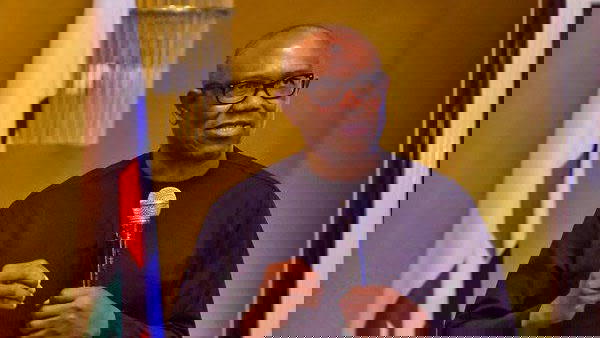
Mr Peter Obi
By Rotimi Fasan
THERE is something gravely dangerous about the way the Labour Party, LP, candidate in the 2023 presidential election, Mr. Peter Obi, and his supporters, especially his misnamed Obidients base, have gone about their campaign for Nigeria to reconsider the outcome of the presidential election that the Independent National Electoral Commission, INEC, had declared was won by the All Progressives Congress candidate and now president-elect, Bola Tinubu.
While Peter Obi can’t be held to be directly responsible for the conduct of his supporters, his tendency to turn a blind eye to it while highlighting the misconduct of supporters of other political parties, shows him up as being clever by half. It speaks to the divide-and-conquer, identitarian bent that has been the hallmark of his politics right from his years as governor in Anambra State.
The hectoring attitude of the LP supporters which predated the 2023 elections has all along been intolerant of other positions no matter how mildly stated. This attitude that many Nigerians have repeatedly complained about and which has got them exercised should long ago have been exposed for what it is but for the illusion, which is now being gradually dispelled, that the campaign of the so-called Obidients, that some have hastily called a movement (again for the stated reason that it was seen as a national campaign), is overwhelmingly driven by Nigerians of South-East, specifically Igbo extraction. This conclusion can be reached about the composition of the Obidient group even if it’s based mostly on the impression of their online activities, a fact that should not be surprising, as the internet is the primary home of the riotous horde.
This is, however, not the same thing as saying that the ethnic origin of the Obidients, which I insist is overwhelmingly Igbo, invalidates their claim for justice or rejection of the outcome of the presidential election while simultaneously upholding the result of the National Assembly election that was conducted on the same day and at the same time. It does, however, put in perspective the nature of their fight for the rejection of the election’s result and their insistence that Peter Obi, an Igbo, won the election even if the Peoples Democratic Party, PDP’s, candidate in the election, Atiku Abubakar, had more votes than Obi.
Just to be clear about the Obidients, I go on to re-state a point other perceptive Nigerians have made and which I previously made in this space: there is both direct and indirect correlation between the membership of Nnamdi Kanu’s Indigenous Peoples of Biafra, IPOB, and the most cantankerous wing of the membership of the Obidient group. That the sudden lull in IPOB agitations coincided with the emergence of Peter Obi as the LP presidential candidate couldn’t have been for nothing if not to pave the way for a Peter Obi presidency.
The gradual rise in IPOB activities since February 28, 2023, culminating with this week’s press release by IPOB that the Igbo should be allowed to leave as they are not wanted in Nigeria, is a mere dress rehearsal for the anti-government campaign that has continued to herald and will follow the inauguration of a new government as from May 29.
It’s important to dis-aggregate the composition/membership of the Obidient group and show its link to other groups, particularly groups with extreme ideologies, in order to make conclusive statements both about its agenda and its modus operandi. That a few media-vocal non-Igbo, Nigerian activists and agitators of whatever colouration (some of them posture as “detribalised” even where they have personal axe to grind with the APC or its presidential candidate) identify as supporters of Peter Obi’s presidential bid, does not necessarily make them members of the Obidient group or registered/voting supporters of the LP. Neither does being a member of the LP make anyone a member of the Obidient group. But so far, the Obidient tag seems to have been a convenient label for everyone and anyone who claims to be a supporter of Peter Obi irrespective of their diverse agenda and motivations. This is where the illusion of a national outlook or movement comes from. Otherwise, the core of the Obidient membership base and its agenda is very sectional. Which explains their impatience with anyone or position that is not an unqualified endorser/endorsement of Peter Obi. This lack of critical stance or distance which Obi not only enjoys but apparently encourages is the unifying element of the Obidient group.
Obi subscribes to a divide and conquer agenda, an identitarian kind of politics that plays different political sides against one another. As governor of Anambra, it was Catholics against Anglicans, then Anambra Igbo against non-Anambra Igbo groups at other times. Now in 2023, it’s Igbo against Yoruba and Christians against Muslims as his leaked audio conversation with Bishop David Oyedepo has shown. While affirming his right to have private conversation and to hold personal opinion, what the leaked audio demonstrates for me is the preference for opacity as opposed to transparency in public life which Obi shares with other Nigerian politicians despite the attempts to erase his past as a politician and rebrand him as the poster child of the new generation of Nigeria’s politicians.
What’s fake about the leaked audio that his associates have acknowledged as real and even gone ahead to identify certain people as responsible for the leak? The simple question which Obi shied away from answering is this: Did the conversation take place or not? Not even Bishop Oyedepo has denied that point outright. It took Obi several days to summon the courage to deny it apparently after pressure from LP party chiefs who have set it aside as “deep fake”. Obi’s silence until it was broken neither looked golden not befitting. It was a clumsy gesture that proclaimed agreement the conversation happened if not admission that he characterised the election as a war between Muslims and Christians. It can be said that Obi was the least problematic of the three leading candidates of the last presidential election. This, mainly on account of the fact he was the least experienced in politics and, therefore, carried the smallest political baggage. That is not to say he is totally clean- his record as governor doesn’t make him that clean. He is a political opportunist like other Nigerian politicians who hop from one political platform to another. Between 2006 when he was first elected governor and 2023 when he contested as the LP presidential candidate, he has been in the All Progressives Grand Alliance, APGA, which he said he would rather die than leave; the Peoples Democratic Party, PDP, and now Labour Party, LP, whose actual party chiefs before its hijack by the Obi group are now fighting to reclaim.
To be concluded
Disclaimer
Comments expressed here do not reflect the opinions of Vanguard newspapers or any employee thereof.