
By Victor Etok-Akpan
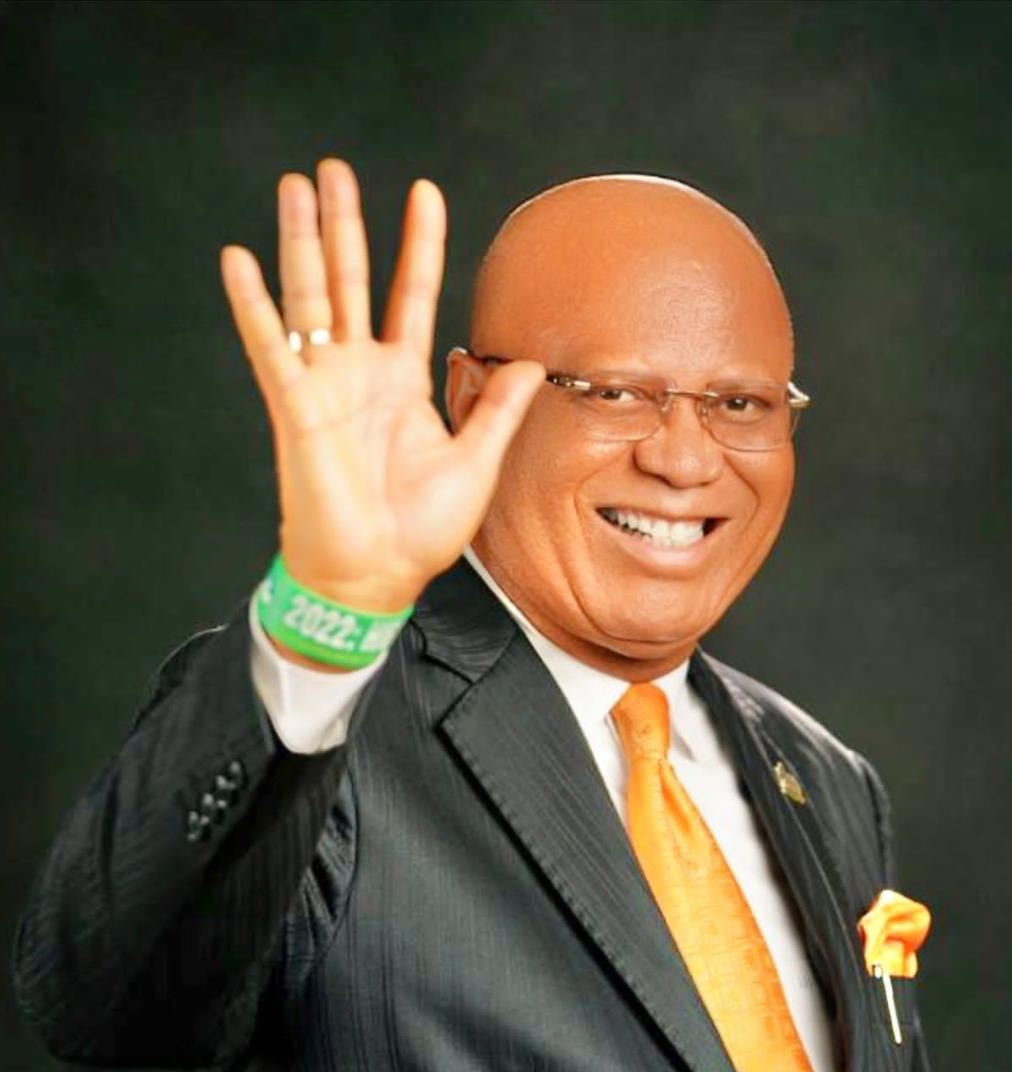
TRULY, the Akwa Ibom people are hopeful that the Governor-elect, Pastor Umo Eno, PUE, would, in keeping to his words,”run an inclusive government”, and such that, “it will not be a winner take all affair because no one will be left behind”. This is as, Akwa Ibomites are hoping that the tenure of PUE as governor of Akwa Ibom State, upon his being sworn into office on May 29, 2023, will be a “season of happiness” for the State.
That is in the light of his “ARISE” Agenda for the State to achieve peace, prosperity and the continuity with the development strides attained so far to the fruition of a productive livelihood for our success and therefore the promise for “happy days” ahead. This will complement the ‘DAKKADA’ mantra of Governor Udom Emmanuel’s administration on the re-orientation of the Akwa Ibom people to believe in their abilities on a “can do” spirit to achieve greatness.
To this end, the “ARISE” Agenda is based on a five-point programme of related development components on: Agricultural revolution, Rural development, Infrastructural maintenance/advancement, Security management and Education advancement. PUE, the governor-elect, considers the “ARISE” Agenda as basically his “contract with the Akwa Ibom people”, and that it is “robust” and “easy-to-digest” and ”will positively affect livelihood in the long run”; therefore, he stressed on the need for a leadership “with the capacity and the competence” to deliver.
Thus, in presenting an analysis of the “ARISE Agenda at an interactive town hall meeting with members of professional bodies and interested groups in the State, PUE pledged to “lead the people back to the farm” in referring to his agricultural revolution plans of the said Agenda, to practise agriculture at a “sustainable, commercial and export level”, backed with “well-managed and efficient agricultural credit programmes”, to make agriculture “the way to go”, from traditional to more modern agriculture, to boast our productive output, for domestic and foreign markets. Considerably, he maintained that his administration’s policy inclination will propagate the areas of our comparative advantage in agricultural cultivation, to re-store our agric-business in building our economy.
Consequently, PUE noted the areas of our comparative advantage in agriculture given the assessment needs of the different communities in the State on the ARISE Agenda such as for palm produce, with a plan to set-up palm oil mills in the catchment areas of the State for palm fresh fruit bunches, ffb, as an investment approach to encourage farmers to supply ffb to the mills in exchange for cash. Thereby, they will be motivated to revamp the yields of our natural wild palmgroves and some abandoned palm-plantations, dotted throughout the landscape in the State for positive outcomes.
Yet another agricultural demanding area of our comparative advantage in the State for due investment, is the fishing industry, with plans by the assessment needs of the “ARISE Agenda to provide trawlers, fishing boats/gears, storage facilities and the fish-craning industry, in developing our fishing activities to standards obtainable elsewhere in the developing countries, for greater earnings and an improvement in living standards for the people.
However, given the need to explore the “full value chain” of agriculture in various areas of interest, to our comparative advantage, including cassava cultivation and staple foods, as noted by PUE, he therefore considers agriculture “a gold mine”, which will create jobs as “a practical aspect” of running the State’s economy and for which we believe will bring smiles in making us a successful and a ‘happy’ lot and with pride for our achievements.
On rural development, the ARISE Agenda for the State is planned to create “a season of happiness” for our rural-dwellers, especially as efforts are to be targeted at checking on the said increasing rate of poverty and unemployment in our rural communities. To this effect, with the tenure of PUE as the Governor of the State we are to witness the provision of skills development programmes for our teeming under-employed youths in tackling the problems of job creation as a task which PUE stressed is “a must to put them back to work”.
Also is the prospect to introduce new small and medium scale enterprises, SME’s, into our rural communities, which would be followed up with efforts at connecting rural Akwa-Ibomites by providing for reliable and affordable internet access to close the digital divide and to help farmers and businesses in rural areas operate more efficiently and break into new markets as well as help create and keep wealth in rural communities as a way to grow the economy which in addition will create the needed middle-class of the society to stimulating the economy.
In fulfillment of this goal, modern living facilities such as markets, schools, health centres, all-seasonal roads, rural electrification, recreational facilities and so on, are expected to be made available within rural communities to bring about infrastructural and economic transformation across the state and to ultimately reduce the vexing rural-urban drift which is what PUE had spoken of, during his campaigns on the need to halt the rural-urban migration.
He noted that “it is a key component of any government” and acceptably, a check against the dreaded problem of creating the ”urban poor” populace in our towns and cities today. Therefore, an integrated approach to rural development will see to the calibration of various local communities to serve as sub-systems of our economic wheels of progress and development for prosperity of the State’s economic system at large. It will in this wise, gladden the hearts of our rural inhabitants and all residents of the state in general and keep us happy.
On infrastructural maintenance and advancements, Akwa Ibom State is known to be blessed with significant development and projects with our human endeavours in all fronts for our socio-economic well-being. These include the Oku Ikono fly-over, the longest in South-South region; the 21-storey Dakkada Tower, the seventh tallest in the nation; the best network of roads in the region and for leading in rural electrification, as well as constructing the most intelligent and smartest airport terminal in the region.
There is also the 1.15km link bridge at Mbo connecting to Esit Eket which is the longest bridge built by any state government. Others include the Ibom Industrial City, Liberty Oil and Gas zone, Ibom Deep Seaport, the Ibom Power Plant, the five-star Le Merriden Hotels, a number of strategic manufacturing companies such as the Syringe Manufacturing Company, the largest in Africa; the Electric Digital Metering Manufacturing Factory, the St. Gabriel Coconut Refinery Ltd, as well as numerous others in the oil and gas sectors undergoing due process.
In the light of these lofty investments as infrastructural and industrial facilities in the state, PUE considers it beneficial to identity with the programmes of his predecessors at the current level of development and likewise to take development higher for our common good in meeting with our social and economic needs for developmental strides, rather than buy into political and personal sentiments that would cause a reversal of the gains of the past years. In this connection, PUE has promised to resuscitate, complete and commission the Ibom Science Park project and other abandoned legacy projects to add up with the new industrial infrastructural projects that are to be undertaken for growth of our economy. Failure to do so will cost the state, especially the taxpayer, the loss of huge sums of money.
Etok-Akpan, a public affairs analyst and journalist, wrote from Ikot-Abasi LGA, Akwa-Ibom State.
Disclaimer
Comments expressed here do not reflect the opinions of Vanguard newspapers or any employee thereof.