
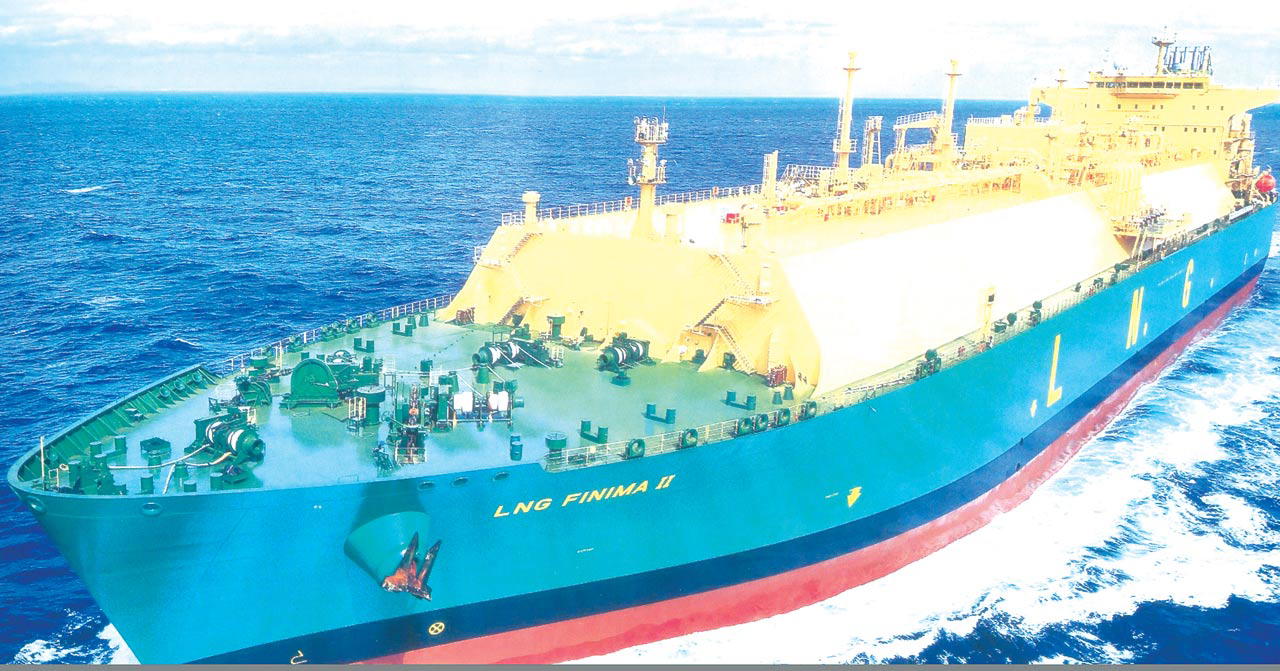
…as the NLNG intervention scheme clocks 15
By Emeka Anaeto
The evolution of Liquefied Petroleum Gas (LPG) popularly known as cooking gas, a major item in the household economy, has come a good distance from formative years.
The Nigerian Liquefied Natural Gas Limited (NLNG) was established on May 17, 1989 as a Limited Liability Company, to harness Nigeria’s vast natural gas resources and produce Liquefied Natural Gas (LNG) and Natural Gas Liquids (NGLs) for export.
Liquefied Petroleum Gas (LPG) popularly known as cooking gas is a very clean, versatile and environmentally friendly fuel, an essential commodity for life and living, convenient, portable energy source that is easy to transport and store. It is produced from petroleum refining of crude oil and extraction from natural gas with varying uses ranging from heating purposes, production of aerosol propellant, input to petrochemical industry and as a refrigerant.
The policies of the Federal Government initiated in 2005 leading to the 2007 intervention, is what has maintained the supply sustainability that we have in the industry today. These government’s interventions opened up and broadened the LPG domestic market that witnessed transformation from 2004 till date.
Effects Of the Intervention Scheme: Producers (notably NLNG) dedicated certain quantity of LPG for domestic market; Producers started accommodating smaller vessels into jetties; Increase of new entrants into the domestic LPG market, which boosted local economy via increase in retail outlets, increase in coastal storage facilities, and logistics fleet; and Increase in awareness and benefits of using LPG over competing fuels thus leading to increased LPG consumption.
NLNG’s role
In 15 years after the NLNG’s intervention in the supply of LPG to the domestic market under the NLNG Domestic LPG (DLPG) Scheme, the programme has generated over 250,000 jobs in the sector and created the much-needed foundation for what has grown over 1000 per cent. Not only has it helped reduce the use of dirty fuel sources for cooking, it has also stimulated growth in the industry by guarantying LPG supply, availability, affordability and enabling the development of a value network for a sustainable ecosystem towards a better Nigeria.
Between 2007 and 2021, NLNG has cumulatively supplied over 2.4 million tons of LPG into the domestic market, spurring a steady rise in annual market domestic market consumption in a market that was below 50,000 tons per annum in 2007 to over one million tons per annum in 2021 and still growing.
NLNG supplies about 80% of the local domestic cooking gas currently and looking forward to committing 100 per cent of its LPG supply for domestic use, which will be a major milestone in the journey of domestic gas supply.
Current Challenges
There is a high demand outstripping supply which has created sharp increases in the price of LPG. To mitigate this price surge, the LPG supply chain needs to be improved with the following: More producers to increase the quantity of LPG to the domestic market; Private entrepreneurs to embark on natural gas processing; Implementation of flare out program (NGFCP); Ensuring petroleum refineries are revamped and functioning; Reducing/waiving import duties and levies on LPG assets (e.g. equipment, chemicals etc.); and Regulatory aspect of LPG needs to be simplified by Nigerian Midstream and Downstream Petroleum Regulatory Agency (NMDPRA) particularly on processing of licenses, public enlightenment, and promoting equity investment in the LPG value chain
Looking forward to the decade of gas
In the run up to the decade of gas in Nigeria, the following should form key deliverables across the stakeholder fronts:
The Central Bank of Nigeria needs to ensure disbursement of loan facilities from special gas fund (National Gas Expansion Programme Framework) to competent investors in the LPG value chain.
LPG producers need to increase quantity of LPG to domestic market.
Government should encourage private entrepreneurs to embark on natural gas processing and Implementation of gas flare out program (NGFCP) to recover LPG
Government should facilitate and encourage building of new storage facilities
Government should increase speed of processing of licenses on LPG activities
Government should give incentives to investors in the LPG value chain
Dateline:
In 2003, Nigeria was producing large quantities of LPG but this quantity was exported while domestic consumption came mostly from import. Export production of LPG was substantial but nothing was reserved for domestic market due to inability to accommodate small vessels at loading terminals at NLNG and other export points. The Federal Government set up a Presidential Steering Committee on LPG (under the chairmanship of the Special Assistant to the President on Petroleum Matters) Alhaji Ja’afaru Parki, which carried out studies in conjunction with the World Bank.
In 2004, Federal Government through the Presidential Steering Committee took conscious and deliberate positive actions and policy framework to change the existing conditions thus it:
Directed LPG producers to accommodate lighter vessels to supply the domestic market.
The defunct Directorate of Petroleum Resources (DPR) was mandated to provide regulatory framework and a sensitization program was embarked upon.
Facilitated the entry of new customers into the LPG domestic market; Nigeria LPG Association (NLPGA) was reorganized, recognized and encouraged to participate fully in opening up and developing the LPG market.
Carried further actions to boost all activities in the LPG value chain and waived import duties on LPG and equipment related to it.
In 2005, NLNG commissioned a study to investigate opportunities for supply of LPG to domestic market with the objective to make LPG available reliably, at an affordable price with the vision to establish partners for all constituent activities to downstream supply point. The scope and main objectives were to update on the state of infrastructure in the LPG sector, provide options for NLNG entry into the Domestic LPG market.
In 2006, the government under Chief Olusegun Aremu Obasanjo (GCFR) drafted the Nigerian Gas Master Plan as a major interventionist concept to move the gas sector from its essentially dormant status in 2006 to a market-based system with willing sellers and willing buyers, realising the full potential of the sector for the benefit of all Nigerians. However, it was obvious that the major players will be more interested in the global market and this led to the Domestic Supply Obligation (DSO) Policy. Achieving a rapid growth in supply to drive the market was unlikely to happen on its own with the current structure of the sector which was dominated by oil-centric International Oil Company’s (IOCs) with little appetite for domestic gas market development. The DSO Policy was necessitated to jump start supply to the domestic market. The thrust of the DSO was to create a base load of supply by intervention. However, beyond this threshold, it was expected that the basis for a fully competitive market would have been established and market forces will thereafter drive the growth of supply and demand in the market. In essence, the DSO Policy was a transitional policy intervention aimed in the short term at driving supply availability to a level that could sustainably support a fully competitive gas market. The DSO legislation required all associated and non-associated gas reserves holders to dedicate a specific volume of gas supply to the domestic market based upon their gas reserves, their total production and their level of flaring. Domestic supply obligations are broken down annually to a production obligation by year based on the reserve entitlements of each player.
In 2007, the journey of the Domestic LPG supply program started with six off takers in no particular order of preference: Hyson Nigeria Limited, Le Global Oilfield Services, Linetrale, Greenfield Integrated Services, Harig Oil Supply & Trading Co, and Chimons Gas.
In 2008, the Nigerian Gas Master Plan was introduced aimed at achieving full blown domestic market, adequate infrastructure blueprint and domestic gas supply obligations.
In 2021, the LPG domestic consumption hit 1.3 million MTPA and was projected to grow by the end of the year 2022 except for the imposition of new taxes and levies. Retail outlets are expected to further increase substantially.
In 2022, the current list of offtakers from NLNG has since grown from six in 2007 to 42 in 2022 including; A.A Rano Nigeria Limited, Banner Energy Limited, Basumah Limited, Benigine Universal Nig Ltd, Borkir International Limited, Bhakor Consult Limited, City Gas Nigeria Limited, Ecogas Energy Resources Ltd, Equus Trading & Logistics Ltd, Falcon Kinectics Limited, Gasland Limited, Gas Terminalling Global Operation Limited, Grenigas Limited, Himma Merchants, Lubran Limited, Macrich Oil & Maritime Service Ltd, Masters Energy Oil & Gas Ltd, Mayak Services Limited, Mt Ventures Limited, Nevic Gas Limited, Nnpc Retail, One Gas Limited, Ovh Energy Marketing Limited, Petrocam Trading Nigeria Limited, Second Coming Nigeria Limited, Sentax Oil & Gas Services Limited, Sequence Oil & Gas Limited, Sixxco Oil Limited and still counting.
In 2026, the Domestic LPG industry study commissioned by NLNG in 2016 projects growth of up to three million tons per annum in 2026, subject to the implementation of various intervention programmes across the value chain, NLNG intensified its advocacy drive with the government aimed at facilitating the implementation of specific industry and policy initiatives necessary for the attainment of this projected market growth and development.
Disclaimer
Comments expressed here do not reflect the opinions of Vanguard newspapers or any employee thereof.