
…Says it’ll bring pain to Nigerians
By Dapo Akinrefon
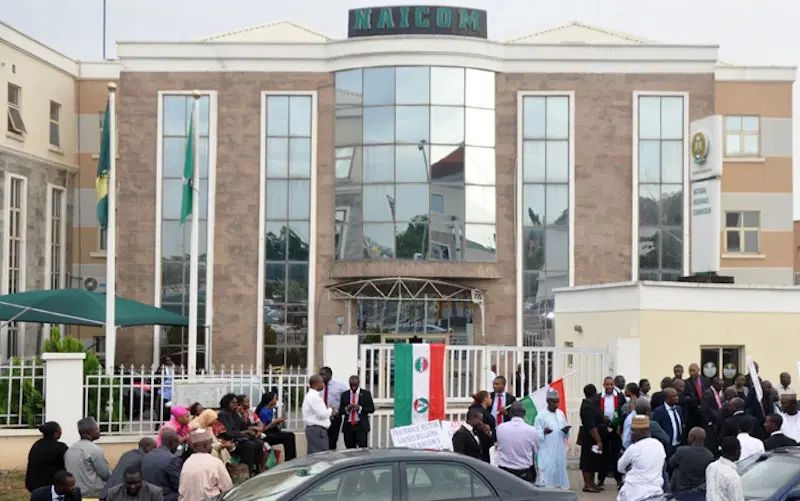
The pan-Yoruba socio-political organization, Afenifere, on Wednesday, urged the National Insurance Commission, NAICOM, to rethink its recent decision to increase the minimum insurance cover from N5,000 to N15,000 noting that the rationale behind the hike “is difficult to fathom.”
According to the directive issued by the Insurance Commission last Thursday, private car owners who were paying N5,000 premium per vehicle for N1 million Third Party Property Damage (TPPD) limit, are now to pay N15,000 for N3 million TPPD, while staff busses owners are to pay N20,000 premium per vehicle for N3 million TPPD.
The increase is to affect other brands of vehicles that are supposed to take insurance covers.
The commission warned that failure to abide by the new directive by insurance firms “shall attract appropriate regulatory sanction.”
Afenifere, in a statement by its National Publicity Secretary, Mr Jare Ajayi, stated that a review of service charges is not strange nor is it restricted to “our clime here.”
Ajayi said: “Some agencies of this government seem to derive pleasure in inflicting pains on the people of Nigeria. The National Insurance Commission now came up with an unprecedented hike of over 200 per cent in the amount of money a person has to pay to get the minimum insurance cover.
“This was done at a time when another government agency, National Bureau of Statistics, NBS, described 63 per cent of Nigerians (i.e. 133 million) as suffering multi-dimensional poverty just as unemployment is at an all-time high. With cost of living so high, with personal income dwindling so much and with uncertainty so pervasive, why would it be now that NAICOM would raise the cost of insurance premium?.
“Part of the Mandates of NAICOM is to protect insurance policy holders. But legion are Nigerians who are lamenting over the horrible experiences they are having in the hands of most of the insurance companies in the country. “Many could not get their claims from their insurance companies despite several efforts made. Many died in the process while many abandoned the claims because they could not get it years after.
Thus, NAICOM, which is prepared to ‘sanction’ insurance companies that fail to enforce the new tariff has not been known to sanction these companies when they fail to meet their obligations to their clients who make claims on them– thus raising the question as to whose interest exactly is NAICOM out to protect?
“NAICOM ought to concern itself first with whether insurance companies are fulfilling their own side of the contract entered into with their clients before it arbitrarily jerked up the fee for insurance covers.
“It is a matter of serious concern to us that NAICOM, like some other government agencies here, appears to fatalistically gloat when policies are put in place to bring pain to Nigerians. Otherwise, why should motor owners be asked to pay 200 % more than they have been paying for an insurance cover – especially when it is known that such high cost would be passed on to the poor Nigerians who patronize the motorists.
“From the available record, India’s Insurance Regulatory Authority agreed to that per centage of increase because no review was done since 2020 due to Covid-19 pandemic. Even with the present fee of less than 20 per cent, a client can still get discounts.
“In Nigeria, besides discounts that are not given at least on the Third Party Motor Insurance, claims are also not faithfully honoured. Indeed, the third party policy is regarded as a ticket to enable the motortist escape being penalized by traffic agencies like the Police, Vehicle Inspection Officers, Federal Road Safety Corps etc.
“January is always a time when a lot of money are paid out in terms of school fees, rents etc. It is inconsiderate of NAICOM to come up with this increase at this time. “The hike should be reversed. If there is going to be an increase at all, it should be around five per cent. The India example cited above should be used as a guide. Government agencies should stop their policies that are inflcting pains on Nigerians.”
Disclaimer
Comments expressed here do not reflect the opinions of Vanguard newspapers or any employee thereof.