
By Chris Ekpenyong
The erratic power supply in Nigeria is generally believed to be the bane of economic and industrial development in the country.
Many factors including government inconsistent and misguided power reform policies; inefficiency in power generation, transmission, distribution and consumption; and the incompetent work force of energy companies have been the reason for the near collapse of the sector.
Nigeria is Africa’s largest economy, but also has one of the widest energy gaps in the world.
With a growing population, Nigeria urgently needs to improve its power sector.
The country’s current installed capacity is reported at 12,500 megawatts, but in practice is only 3,200 megawatts.
The government’s aim is to boost electricity access from 45% today to 90% by 2030 which will drive even more demand.
Government privatized part of the power sector in 2013, hoping to promote efficiency, attract private investment, and increase generation, but this has yet to deliver results.
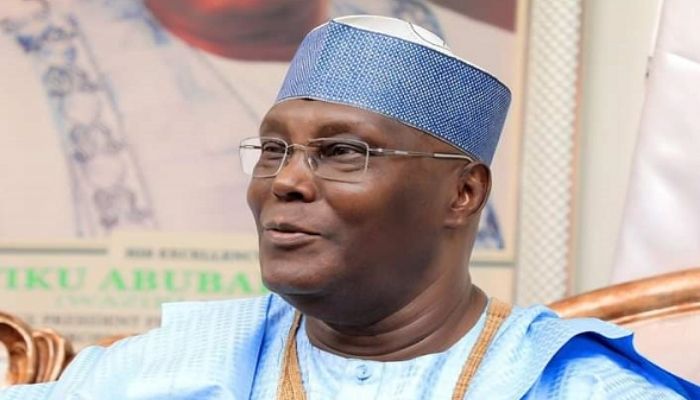
All Progressives Congress, APC, has failed woefully, especially in the power sector with the number of grid collapses we have experienced so far. It is pertinent that the incoming President which by the grace of God is Alhaji Atiku Abubakar should take a holistic look at the power sector.
Solving Nigeria’s erratic power problem necessitates better governance and management of resources.
The power problems of Nigeria are littered at every of the three tiers of the power sector; generation, transmission and distribution. Therefore, solving electricity problems in Nigeria has to go beyond oratory. It requires policies, capital infrastructure investment and sustainable maintenance which must be vented at the three tiers.
I know Alhaji Atiku Abubakar has said in his manifesto that he will remove the entire electricity value chain from the exclusive list and give states the power to generate, transmit and distribute electricity.
This will be the starting point of stable power for Nigerians but I will also like to make the following recommendations as someone who has been a key player in the power sector for more than three decades.
There is a need for the country to have data-driven discussions on key solutions to the myriad of challenges facing the electricity sector.
There are issues bothering on infrastructure, distribution of available megawatts of electricity generated and banking on alternate sources of energy to solve the country’s electricity challenges.
It is important to have solutions that are backed up by data and not just assumptions.
Transmission and distribution lines in Nigeria are dilapidated thereby causing an infrastructural gap for the power sector.
Some other issues facing the country’s electricity sector include poor gas supply and hydropower sources refusing to fire up as they ought to.
Nigeria is not producing enough to meet the growing demands in the country.
There is a need to have policies that help the energy sector and the importance of monitoring key players in the sector.
For instance, with respect to distribution; distribution companies fail to supply electricity appropriately. Even the electricity generated by Nigeria is not properly distributed.
There is a need to monitor the distribution of electricity to customers to ensure that the power supplied to distribution companies is properly distributed in the ways that it should be. Also, distribution companies should be restructured in a way that allows retailers to take part in the distribution process of electricity.
For instance, many distribution companies do not even know when consumers are not enjoying power supply.
To ensure maximum distribution of the power generated in the country, there is a need to bring retailers into the play.
This way, distribution companies supply power to retailers who in turn make it available to consumers.
These retailers should be the one responsible for billing and reaching out directly to consumers. We would be bridging a distribution gap doing so and winning the confidence of consumers while utilising what we produce more appropriately.
In addition, there is a need for Nigeria to diversify its source of supply, we need to encourage renewable energy sources. More Nigerians need to be brought into using alternate power sources. We cannot rely on just one source of power, we must diversify and have a blend of non-renewable/renewable energy.
Nigeria has a population of over 206 million people and energy from the national grid is barely 4,500MW daily. There is a huge need to invest in energy in Nigeria. If this problem is solved, Nigeria is on its way to development
The nation should attract investment to the energy sector, conduct power asset inventory and audit to determine priority investment needs across the value chain and funding to replace or repair assets.
Resolve long standing government liabilities to the electricity sector and create fiscal rules for future payments to prevent debt buildup.
Increase the capital allocation for the Transmission Company of Nigeria (TCN), including an analysis of its budget performance. We should also consider privatization of Transmission Company of Nigeria, TCN.
The next President should solve barriers in the gas-to-power value chain, launch a federal coordination mechanism covering gas supplies, generation, transmission, and distribution and enforce existing penalties for payment default along the value chain.
He should plan for renewable energy integration, complete development of the 14 planned solar plants, invest in new grid infrastructure to facilitate integration of intermittent sources and integrate mini-grids into DisCo networks to supply power to underserved areas.
The next leader should boost revenue collection to support DisCo viability, update tariff schedule to synchronize the payment expectations in the Multi-Year Tariff Order (MYTO) and the financing plans of GenCos, TCN and DisCos, utilize data analysis to allocate available power, invest in new IT systems for DisCos to enable revenue collection, management, and transparency and conduct an independent assessment of the power sector value chain to ensure accurate estimation of costs for electricity delivery and tariff adjustments.
He must assemble the best minds from the power sector who have participated and understands the challenges and are prepared to proffer solutions to revive the sector,. especially those who have had years of experience in rural electrification because every form of development will succeed if it’s done from bottom to top. Stable electricity should start from rural electrification
This is my widow’s mite for the incoming President of Nigeria, Alhaji Atiku Abubakar.
*Ekpenyong is the senator representing Ikot Ekpene Senatorial District in the national assembly and former deputy governor of Akwa Ibom state )
Disclaimer
Comments expressed here do not reflect the opinions of Vanguard newspapers or any employee thereof.