
By Jimoh Babatunde
With Critical Applications for Nuclear Reactors, Aerospace, and Advanced Manufacturing
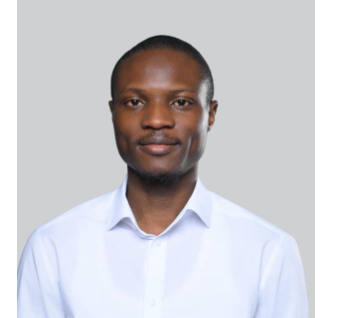
Ridwan Olalekan Olabiyi, a distinguished Nigerian expert and Research Associate at Arizona State University’s School of Computing and Augmented Intelligence, has achieved remarkable international acclaim for his groundbreaking research in advanced manufacturing and thermal engineering.
His innovative work on inverse heat conduction problems (IHCPs), published in the prestigious ASME Journal of Heat and Mass Transfer, offers transformative solutions for critical applications in nuclear reactor safety, aerospace systems, and industrial manufacturing.
The research, first presented at the ASME Heat Transfer Summer Conference as part of the James V. Beck Memorial Symposium on Inverse Problems, was selected for full journal publication due to its significant impact on the field. The work introduces a novel Bayesian spatiotemporal modeling approach that significantly outperforms conventional methods in reconstructing heat flux from temperature sensor data.
Inverse heat conduction problems are fundamental challenges in advanced manufacturing and thermal engineering, requiring the estimation of unknown heat fluxes from indirect temperature measurements. These problems arise in diverse applications including additive manufacturing process monitoring, nuclear reactor safety systems, aerospace thermal protection, and marine propulsion systems.
Olabiyi’s methodology explicitly models spatial, temporal, and interaction effects in temperature data—relationships that previous methods neglected. This innovation enables more accurate heat flux reconstruction, which is essential for quality assurance in additive manufacturing processes and safety monitoring in critical infrastructure.
In an interview following the publication, Olabiyi explained the significance of his work for U.S. infrastructure: “The United States operates 93 commercial nuclear reactors that generate approximately 20% of the nation’s electricity. Accurate thermal monitoring is essential for reactor safety and extending operational lifetimes. Our methodology provides enhanced capabilities for predicting heat flux in reactor components, pressurizer surge lines, and coolant systems—directly supporting the safety and reliability of America’s nuclear fleet.”
He further highlighted aerospace applications: “For the U.S. aerospace and defense sectors, thermal protection systems are critical for spacecraft reentry and hypersonic flight. Our approach enables more accurate reconstruction of heat flux profiles from embedded sensor data, which is vital for NASA’s reusable launch vehicles and the Department of Defense’s next-generation hypersonic programs.”
On the impact for American manufacturing, Olabiyi noted: “Additive manufacturing is transforming U.S. industrial competitiveness. Real-time thermal monitoring during metal printing processes is essential for quality assurance. Our Bayesian framework provides the uncertainty quantification that manufacturers need to certify parts for critical applications in aerospace, automotive, and medical devices.”
The research also holds particular significance for Nigeria and Africa, where thermal power plants operate at efficiencies of only 27-34% due to inadequate monitoring capabilities. “I’m passionate about using technology to solve real-world problems, particularly in Nigeria and across Africa,” Olabiyi said. “Our methodology could enable power plants to implement advanced condition monitoring without expensive equipment modifications, helping address the energy poverty that affects over 100 million Nigerians. My goal is to contribute meaningfully to both American technological leadership and Africa’s industrial development.”
Olabiyi’s achievement exemplifies intellectual excellence and global impact, positioning Nigeria prominently on the world stage through transformative scientific contributions to advanced manufacturing and thermal engineering.
Disclaimer
Comments expressed here do not reflect the opinions of Vanguard newspapers or any employee thereof.