
.
By Eyituoyo Amuka
What is Climate Change?
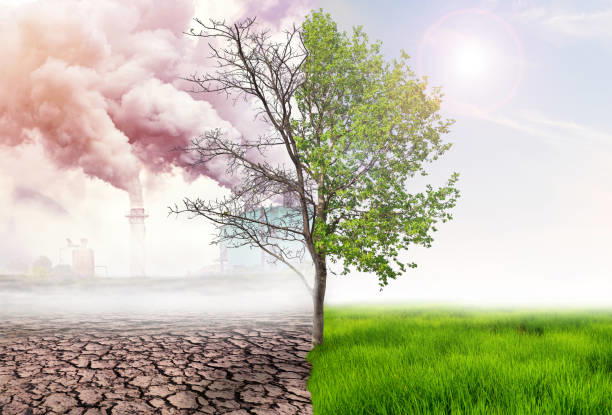
The United Nations defines Climate Change as “long-term shifts in temperatures and weather patterns. These shifts may be natural, such as through variations in the solar cycle.” In simple terms, long-period shifts in climatic such as temperature and weather patterns can affect climatic changes in the environment.
Although recent years and studies since the 1800’s have shown that anthropogenic activities have triggered some weather pattern changes, including changes in weather and temperature. The long-run impact of human actions has further accelerated these damages, thus seriously causing catastrophe to its climate and environment. According to research, several emissions due to man’s actions have been the driving factor of climate change. These emissions emanate from human activities such as fossil fuels use like coal, oil, and gas burning, deforestation and land-clearing, garbage landfills, agriculture, land use, and improper emissions from industries, buildings, and transport vehicles are the main emitters. The gases emitted are greenhouse gases that act like a blanket surrounding the Earth and trap the sun’s heat raising the temperature. Greenhouse gases emitted include a high number of Carbon-dioxide(CO2) and Methane caused by emittance from transport vehicles, burning of fossil fuels, and deforestation, among others.
What are the impacts so far?
Climate change is not just only about warmer temperatures. The warm temperature is only just the beginning of the effects these changes would bring. The continuous and unchecked rise in emissions has led to a 1.1°C change in our temperature since late 1800. Earth is a system, and a change in one aspect has knock on effects elsewhere. Around the world, many people experience climate change in different ways. Climate change affects geopolitics, the world economy, and unwanted migrations. These changes have affected rainfall and precipitation, severe heatwaves, and destroyed nature and economic and social systems.
In Africa, the emissions causing climate change are surprisingly minute compared to the rest of the world, but the impact is the most intense. Countries such as Sudan, Ethiopia, Niger, Chad, and Nigeria continue to experience severe flooding. According to research, between 2030 and 2050, 250,000 additional deaths caused by malnutrition, malaria, diarrhea, and heat stress are expected. In other parts of the world, climate change consequences include severe wildfires, melting polar ice, rising sea levels, catastrophic storms, and decreasing biodiversity. Climate change affects other things, such as our health, capability to produce food, safety, housing, and work. Individuals living in certain areas are already vulnerable to climate change. These areas include small island nations and people living in developing countries. Due to factors such as high levels of illiteracy, bad governance, and little or no actions and policies to effectively manage climate change, they are the most prone to the effects of these damages.
Nationally Determined Contributions and their Effects so Far
Nigeria’s Nationally Determined Contributions (NDC) are pillars that help the nation show a planned and achievable pathway to its global commitment to fighting climate change. This global commitment utilizes certified sustainability measures to help limit and reduce the effect of global warming and fight the extremities of climate change. Nigeria, a developing society, is among the top ten most vulnerable countries to experience the fangs of Climate change. With this knowledge, actions, pledges, and goals have been put in place to assure that these effects are adequately absorbed and damages reduced to the barest minimum.
The Nationally determined contributions (NDCs) were developed at the Paris Agreement in 2015 by 196 countries. These agreements were conceived to help improve and fast track a reaction towards sustainable development, aimed at putting a cap on global warming to 1.5 to 2 degrees Celsius above pre-industrial ranges. Each country has unique NDCs particular to its social environment and climate change impacts. These NDCs are updated every five years per the Paris Agreement to help ensure that climate change actions committed to cutting down greenhouse gas are per the Paris Agreement.
Nigeria, one of the 196 committed members of these agreements, developed its own NDCs to help impact climate change effects on its environment and society. The country’s commitment is to reduce greenhouse gas emissions by 20% and 45% with international support. As a call to action, the government and other stakeholders developed and finalized a Sectoral Act Plan for the enactment of the NDCs in identified sectors which include:
• Energy
• Oil and Gas
• Agriculture and Land use
• Power
• Transport
Nigeria’s goal by 2030 is to have attained certain feats in fighting climate change and global warming. These feats using Sectoral Act Plan (SAP) and the NDCs include:
• 30% energy efficiency by 2030
• Off-grid solar plant power generation of 13GW
• End of gas flaring by 2030
• Reforestation to ensure a greener country
• Climate-smart agriculture
• Car to bus to reduce gas emissions
• Improved electricity grids
All of these are to ensure that by 2030 Nigerian unconditionally reduces greenhouse gas emissions by 20% and 45% with international support.
Government Actions and Impacts
The government on every level, federal, state, and local, has a huge role to play in ensuring this feat is achieved. Recently interim changes have been made to the NDCs as expected. Already the government has updated the NDCs as per the 5-year update agreements. En route to COP26 in 2021, the Nigerian President updated its NDCs and identified some need targets for the 2030 goal. These interim targets include:
• Eliminating the use of Kerosene Lighting by 2030
• Increment in use of buses for public transport
• Reduce crop residue burning by 50%
• Waste management
The latest addition, Waste management, is a laudable addition. This is because improper waste management and dumping affect greenhouse gas emission numbers and prove to be one of the problems in our environment.
In Nigeria, greenhouse gas emissions come from agriculture, forestry, and other land use. When global gas emissions are calculated, Africa contributes about 3% of the total emittance and endures the most effect from the harm of climate change. Nigeria (and Africa as a whole) are already vulnerable to climate change and global warming and inadequate financial resources, lack of technical know-how, and capacity to respond to these climate change effects. Hence help is needed to access the necessary funds to fight this battle.
The government’s mindfulness to include this target should be applauded more actions are suggested. With the plans, the policies, and the goals set, Nigeria is still below par in dealing with these Climate Change impacts. It begs the question;
“What is wrong, and Where do we start to get it right?”
With the numerous plans and attention by the government, Why are these targets looking less feasible to achieve? Why has our battle against climate change been more difficult? Why are the lesser emitters the most vulnerable to these effects caused by the heavier emitters?
All of these questions and topics have been addressed at the Paris Agreement and are the questions COP is designed to answer. It is necessary to state the fault lies between the government and developed countries. According to the Paris Agreement, the fight against global warming and climate change harm is a global one, and not every region, country, society, and continent would experience the same level of damage although we are all responsible for these changes. It was agreed that financial aid and assistance be given to the developing nations by the more developed countries. This financial aid is said to be about $100billion per year as at 2020, these pledges have not been fulfilled in earnest by the wealthier countries . Thereby leaving the less developed and poorer nations behind in this fight against time and climate change impacts. The provision of these funds would have helped countries in Africa finance mitigation plans in the fight against climate change. The absence of this pledges has simply deepened our challenges and perpetuated this two tier system of the climate-adaptable and climate-adaptless countries.
Even when there has been financial aid from other stakeholders in the private and institutional sectors, they have not translated to optimal spending in mitigative plans in the pusueance onf our 2030 climate change goals. Without doubt, a lack of accountability has been a major setback in even Africa’s capability in addressing climate change.
In other to win this war, the government needs to be stricter in the way funds are spent when they do come, ensure every regulatory body is well deployed to task, and ensure every project it embarks upon is sustainable and audited. Also, it is imperative that pledges and agreement from rich countries be honoured to assist vulnerable countries tackle these other factors impeding their progress.
Call to action and Policy in Nigeria.
Nigeria, as of 2020, has a total number of 126.9 million greenhouse gas emittances in its environment, with the energy sector claiming 60% greenhouse gas per capita and about 3.37 million tonnes of CO2. By 2030, the number of greenhouse gas emittances would rise to a 31% increase total of 435 million tonnes of greenhouse gas effect. Giving this due importance, consciousness and actions by the government, policymakers and stakeholders would be a good step in curtailing this increase. What to make of the Nigerian 2021 Climate Change act?
The first stand-alone climate change legislation in West Africa which was designed to tackle the climate change effects in Nigeria. Simple answer, more action is needed to attain the realistic goal set by the policymakers, and these actions include:
• Guard and revitalize Ecosystems: create strict and penalty-motivated laws to punish offenders, thereby instilling discipline in ensuring an environmentally conscious society.
• Invest in small agricultural methods and agriculturalists: large agricultural entities practice large-scale farming and tend to neglect procedures that aid soil and environmental sustainability practices. Meanwhile, small-scale farmers consciously pay attention to these procedures and imbibe more sustainable means to protect the piece of land they farm on. The government should support these small farmers and close down farmers that do not have sustainable practices as a principle.
• Encourage Green Energy: plans to improve the energy-saving efficiency of the nation are vital to reducing fossil fuel usage, helping the country tackle climate change, and limiting further emittance into the environment.
• Youth Inclusion/Community Impacts: children and youths are the most vulnerable but they are also the greatest change agents the country has. The government should ensure they are considered stakeholders in any and every conversation concerning Climate Change and sustainability. Youth Inclusion might prove to be the greatest impact in this drive for a sustainable world and environment.
• Recycling Space: improper waste management provides a huge headache when greenhouse gas emissions are considered. Without adequate waste management, greenhouse gas emissions would keep rising. Adding Waste Management as an NDC is a good step by the government because asides from reducing greenhouse gas emissions and saving the environment, proper waste recycling and management can be a source of greener and more renewable energy for the country. Thereby solving the 30% energy efficiency by 2030.
• Climate Finance: this is a call to every stakeholder out there ranging from the government (federal, state, and local), Investors, Private sectors, Individuals, Communities, multilateral finance institutions, and civil societies to adapt climate finance actions and projects as this would help to provide funds that seek to help support climate change mitigations and adaptation plans. Implementing this measure would be a grassroots solution and ensure that every unit is carried along from the family to the community at large.
The government is not alone in this struggle, members of the society, from the smallest unit, the family, to the most complex and impactful, must imbibe and implement climate adaptation practices.
These environmental and economic challenges Nigeria is faces with are multi-layered and interwoven. We must also work together to ensure the sustainability of the only home that we have. Life on earth.. can be good.
Disclaimer
Comments expressed here do not reflect the opinions of Vanguard newspapers or any employee thereof.