
.
*Attributes menace to lack of political will by govts
By Joseph Erunke
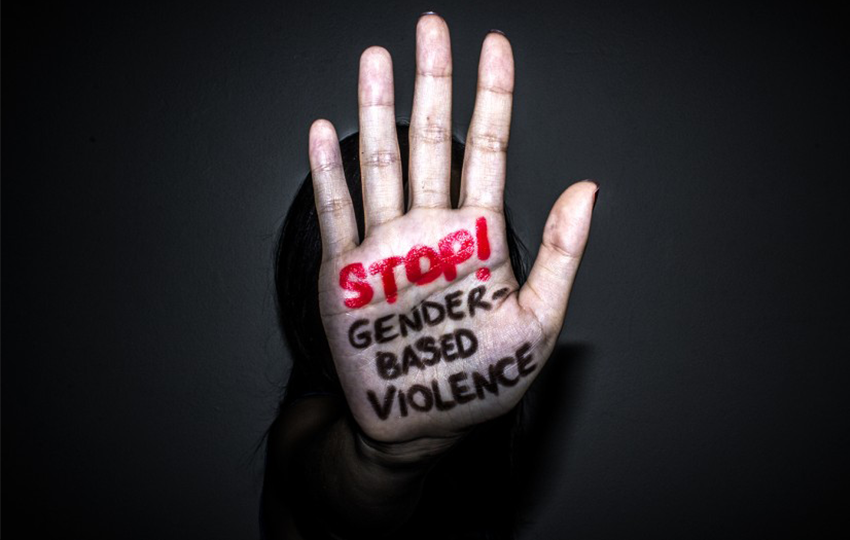
ABUJA-A women advocacy group operating under the aegis of Women Advocates Research and Documentation Centre,WARDC,has raised concerns over the continuous violence against women and girls in Nigeria even in the face of domestication of Violence Against Persons (Prohibition) Act, VAPP Act by state governments.
But the civil society oganisation,blamed the development on state government which it noted,lacked political will to implement the VAPP Act.
Besides,the non-governmental organisation said the improper coordination among various government institutions was a factor to the unwholesome act.
WARDC Executive Director,Dr. Abiola Akiyode-Afolabi, who said these, Thursday,in Abuja, at a two-day National Consultation and Agenda Setting Meeting on Implementation of VAPP Law in Nigeria, regretted that only four states have been able to domesticate the Act.
The occasion,organised by WARDC and funded by the African Women’s Development Fund,AFWD,was meant for women organisations across the 36 states and the Federal Capital Territory,FCT.
Akiyode-Afolabi, who disclosed that although only four states were yet to domesticate the VAPP act aimed at reducing Gender-Based Violence (GBV), Nigeria has made little progress in terms of implementing the law.
According to her, the absence of a special court to hasten access to justice for survivors also serves as a barrier to justice for GBV victims and survivors
Sh said: “Despite the VAPP law, the data is still not good enough because there is the issue of political will. A number of factors had driven the prevalence of the incidence of GBV, some of which are the deeply rooted cultural beliefs, perceptions and norms, community acquiescence and stigmatization.
“We must reckon with the reality that violence against women is escalated gender-based violence. The lockdowns and quarantine measures enacted as a result of the COVID-19 pandemic, along with the social isolation they have caused, contributed to an alarming increase in physical, psychological, sexual and economic violence against women.
“Sustainability of GBV intervention is also undermined by limited funding, the absence of public budget allocation for GBV enables reliance on donor funding which in most cases are time bound. The nature of GBV is recurrent and outlives the timeline for donor funding.
“At the Community levels traditional patriarchal norms still persist and fan the embers of GBV. Religious and traditional institutions that are key players in attitudinal and behavioral changes are rather perpetuators or sympathizers with perpetuators of GBV.”
Stressing that the pandemic has revealed the stark inequalities in Nigeria particularly limitations of GBV prevention and response interventions prior to the COVID-19 outbreak,
Akiyode-Afolabi said there is a need for specialised courts to address Sexual and gender-based violence across Nigeria.
She called on stakeholders to intensify advocacy for adoption of the VAPP act across all states in Nigeria and public budget allocation for implementation of the law.
“As an organisation, one of our plans is also to meet an annual basis to see which state has done enough and which state has not done enough, then we can do some kind of peer review mechanism amongst ourselves to be able to push the agenda of zero tolerance because where we want to get to is not to continue to see violence against women, but to have a zero tolerance to violence against women.
“We want to get to a level where women and men live in Nigeria without any form of fear of violence in the home or outside the home or fear of being battered or being raped. That’s our long term goal”, she added.
Disclaimer
Comments expressed here do not reflect the opinions of Vanguard newspapers or any employee thereof.