
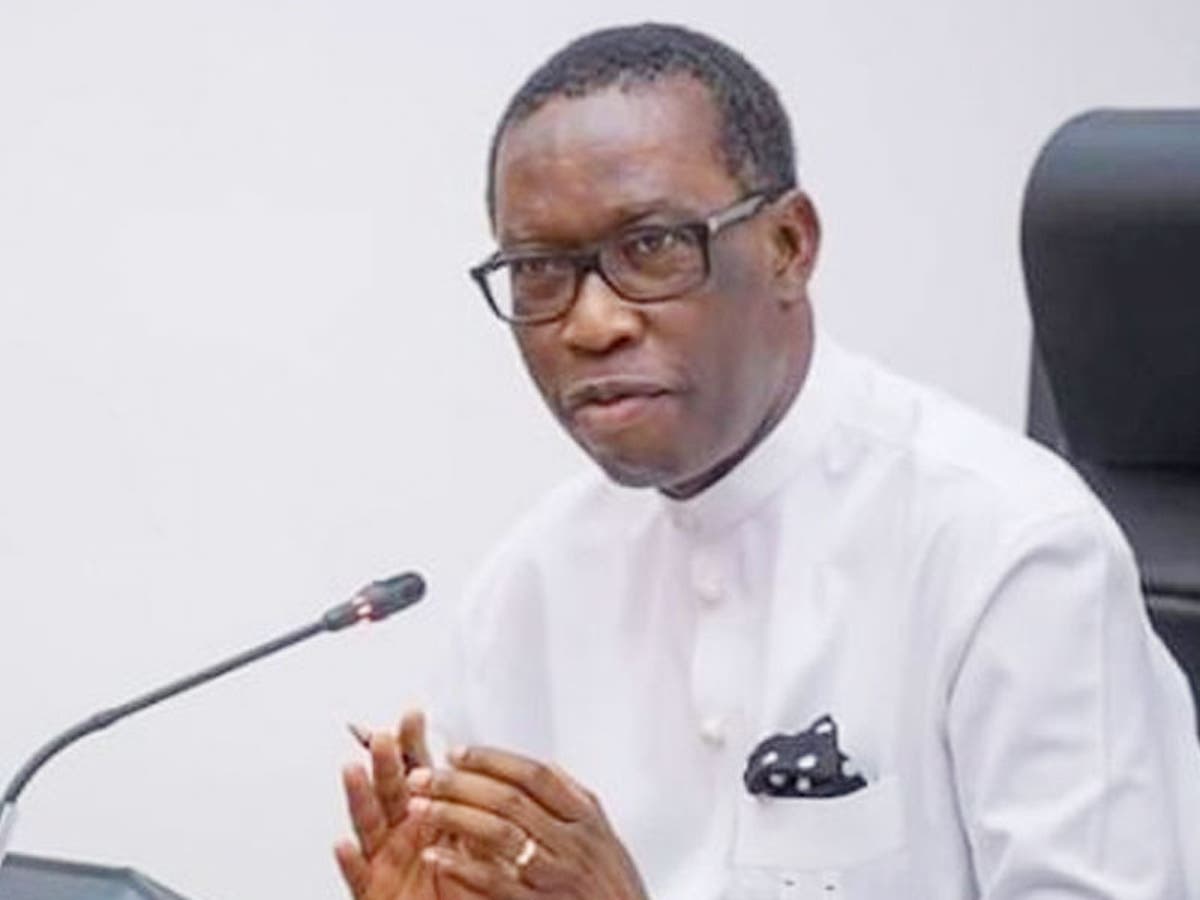
Ifeanyi Okowa
By Senator Ifeanyi Okowa
The second part of this piece published Monday posits that our desire for societal transformation begins through transformed individuals
AS ambassadors for Christ (2 Cor. 5:20), we have a responsibility to model Christ before the world so that when people see us, they see Christ. Our lives ought to be distinctively different from those of non-Christians.
A Christian is known by his commitment to inner purity and moral excellence. That means that we are to “be blameless and harmless, the sons of God, without rebuke, in the midst of a crooked and perverse nation, among whom ye shine as lights in the world” (Phil 2:15). Daniel and Joseph are great models for Christians in the marketplace.
Indeed, the term Christian was first used to describe the believers at Antioch because their lifestyles mirrored that of Jesus Christ (Acts 11:26). As the salt of the earth, we are expected to have a cleansing, seasoning, and preserving effect on the world around us. Where that is absent the society plunges into moral and spiritual decay.
The tragedy of our day is not that Christians are not to be found in all spheres of public life; it is that they are not always what they should be. And of course, an unholy church cannot win over an unholy world. God frowns at the conduct of some “having a form of godliness but denying the power thereof (2 Tim. 3:5) We must not put up a false front putting up an outward appearance of faithful followers of God when we are in public but remain unchanged when we are in the private. We must walk before the Lord in uprightness and integrity of heart (1Kings 9:4), as the Lord charged King Solomon.
Serving Others – John the beloved wrote: “But whoso hath this world’s good, and seeth his brother have need, and shutteth up his bowels of compassion from him, how dwelleth the love of God in him?” (1 John 3:17) This scripture makes the strong case for Christian compassion. In a world wracked by disease, poverty, pain, and suffering, Christians have a marvelous opportunity to demonstrate the grace and mercy of our Lord Jesus Christ.
Many of our churches deserve commendation for complementing the efforts of government through the building of hospitals and schools to enhance access to good healthcare and quality education, as well as the establishment of food kitchens to feed the hungry.
I can only encourage these churches to keep up the good work and encourage individual Christians to emulate the good examples of the churches by intentionally rendering assistance to the poor, widows, and the vulnerable in their spheres of influence.
It is in our service to others and the society that the world will see God’s mercy and grace in action and be drawn to our faith. We must bear each other’s burdens, and continue to do good unto all men. (Galatians 6:2,8-10). We must as a call to duty lift up those that are bowed down (Psalm146:7-9) and give support to the weak (Roman 15:1-3).
The rich amongst us, must not trust in their riches, but trusting in the living God, should be ready to distribute to others that they may be rich in good works. (1 Timothy 6:17-18). Believers are to serve one another in love. First John 3:18 further admonishes us not to “love in word, neither in tongue; but in deed and in truth.”
The Christian must be conscious of what is expected of him in his relationship with God. Every kingdom has a way of life. We must live the lifestyle of Jesus Christ – A life of sacrifice, love, compassion, humility, devotion, moderation, faith, and fellowship. Apostle Paul in his letter to the Romans says “Be kindly affectioned one to another with brotherly love” (Rom 12:10).
The Christian must as a charge realize daily that he is morally responsible to God and those around him/her. He or she must put God first in everything (Matt 10:37) and be submissive to the will of God. In Ephesians 4:22-24, we are admonished to put off the old man, “which is corrupt according to the deceitful lusts; And be renewed in the spirit of your mind; And that ye put on the new man, which after God is created in righteousness and true holiness.”
There is the need for daily introspection: a self-examination and the putting out of our lives, things and actions that are not godly (Eph. 4:25-32; Eph. 5:1-7). The Christian life is one of obedience. The proof of our repentance and faith lies in our willingness to search out God’s will and to live in conformity with it.
We have a duty to pray, forgive and be diligent. Where we fall short, we have an advocate before the Father, Jesus Christ the righteous. It is a responsibility therefore for all Christians to regularly examine themselves to see if they are in faith (2 Cor. 13:5 and Lam. 3:40). Our introspection must be founded on the gospel, lest we take the path of hypocrisy.
(Psalm 139:23-24 and Psalm 19:14). The Christian is also morally responsible to his family. There is the need for mutual love and respect towards one another in the marriage covenant, and the need to bring up the children in obedience to God and the parents (Ephes 5: 22-29 and 6: 1-4).
Responsibilities to Christ and the Church: – We need as Christians to devote ourselves to God by engaging in practices that inform and enhance our relationship with Him. We ought to develop the habit of personal devotion, expressed in a daily quiet time, a time committed to hearing God through His word and to speaking to God through prayers and worship.
We must study the word to equip us (2 Tim 2:15). You cannot access the spoken word, if you do not value the written word, neither can our faith grow. If we are to be renewed in the spirit of our mind, and to put on the new man, which after God is created in righteousness and true holiness and to put off the old man (Eph. 4:22-24), we must cleave to the Bible daily.
We need also to exhort one another, not neglecting the assembly of the saints, steering up love and good works (Heb. 10:22-26) and, as commanded by our Lord Jesus Christ, we need to be partakers of the Communion (1 Cor. 11:23-29).
Giving:- The Christian should give sacrificially unto the work of Christ through the Church and to the saints (2 Cor. 9:6-7 and 1 Cor. 16:1-2). Diligence:- Every vocation has value and dignity in the eyes of God. Let us, therefore, honour God in the work we do. He expects us to be diligent in the work He called us to do and bring Him glory.
We must therefore as Christians show good example in our workplaces and wherever we are called to duty, that we may be shining examples to the glory of God. The life of the Christian must mirror the life our Lord Jesus lived while on the earth. “He that saith, l know him, and keepeth not his commandment, is a liar, and the truth is not in him. But whoso keepeth his word, in him verily is the love of God perfected: hereby know we that we are in him.
He that saith he abideth in him ought himself also so to walk, even as he walked” (1 John 2:4-6). And as the Lord Himself declared, “If any man will come after me, let him deny himself, and take up his cross, and follow me” (Matt 16: 24). God has committed unto us the ministry of reconciliation. Even as we are reconciled unto the father through the blood shared for us on the cross, we are ambassadors for Christ and must daily live as such.
Second Corinthians 5: 17, 18 says “Therefore if any man be in Christ, he is a new creature: old things are passed away; behold, all things are become new. And all things are of God, who has reconciled us to himself by Jesus Christ, and hath given to us the ministry of reconciliation.”
Accountability: – We are to give account of our gifts, talents, position, and whatever resources God has committed into our hands for “it is required in stewards that a man be found faithful” (1 Cor. 4:2) and the gifts and callings of God are without repentance (Rom.11:29). Hence, we ought to walk in the consciousness of this truth as our responsibility to God and man.
The Lord Jesus said: “I am the vine, ye are the branches: He that abideth in me, and I in him, the same bringeth forth much fruit: for without me ye can do nothing” (John 15:5). In Him and from Him only, are we able to draw strength and courage to take up our responsibilities as assigned unto us from the day of our calling. Hence, we must cleave unto Jesus Christ for His enabling grace. The final point I want to make is that we must participate in the political process. We do this in three main areas.
Voting – Christians must exercise their right to vote and elect the leaders that will govern them. Statistics are hard to come but it is doubtful if 50% of eligible voters in the church come out to vote on election day. I say that because many Nigerians seem to have convinced themselves that votes do not count. But I hasten to add that they that so think are greatly mistaken. Votes count. I repeat, votes count. Refusing to vote is what gives room for the bad guys to manipulate the process.
I, therefore, call on every Bible believing Christian to go and register to vote. And on election day, go out and vote. Don’t be deterred by the long queues or the hiccups that normally happen. It’s just one day out of 365 days in the year. I believe we can all afford to pay the price to elect the right people into office.
If we fail in this civic responsibility, we lose our right to complain about bad governance or incompetent leadership. How are we to vote? We should prayerfully assess the various candidates and vote for those with demonstrable capacity to lead, proven track record in leadership, probity, and the moral backbone to withstand temptation and shun corruption. What we must not do is vote for a candidate along ethnic or sectional lines; we should not even vote on religious and denominational basis because there are hucksters who use religion for political gain.
Advocacy – I desire to see faith-based NGOs take the lead in fighting for social justice, advocate for the right persons to be elected to office and set agenda for governments at national and sub-national levels. The mandate of advocacy presents us with the opportunity to speak truth to power. Earlier in this paper, I said Christians should desist from the habit of criticizing and condemning political leaders.
However, that is not to say we should be mute when they are violating the rights of the people, engaging in acts inimical to good governance, or impoverishing the people through unpopular policies. We must let our leaders and representatives know where we stand and hold them accountable to God’s standards of truth, righteousness, and justice.
Proverbs 31: 8-9 commands us: “Open thy mouth for the dumb in the cause of all such as are appointed to destruction. Open thy mouth, judge righteously, and plead the cause of the poor and needy.” As citizens, our options and power to act may be limited but we cannot afford to keep silent when things are going wrong.
Of course, there is the need to be constructive and respectful in our utterances and actions, but what we must not do is to keep silent in the face of evil. As the saying goes, “the only thing necessary for the triumph of evil is for good men to do nothing,” According to Elie Wiesel, Roman-American writer, and holocaust survivor, “neutrality helps the oppressor, never the victim. Silence encourages the tormentor, never the tormented.”
Participating in Partisan Politics – Lastly, we participate in the political process by encouraging Christians who feel led to contest for elective offices. The emphasis is on the word “led.” Now, there has been a lot of debate about this issue. On one hand are those who feel politics can easily compromise our Christian testimony and bring reproach to the body of Christ. And they have a point. The conduct of some professing Christians in the political arena has helped to reinforce this view. Their argument is hinged on these two scriptures. John 17:16: “We are not of the world, even as I am not of the world.”
2 Cor. 6:17: “Wherefore, come out from among them, and be ye separate, saith the Lord, and touch not the unclean thing; and I will receive you.” Based on these scriptures, it is the submission of this school of thought that our faith is not compatible with politics.
On the other hand, those who canvass for Christians to be actively involved in politics believe that having Christians in the corridors of power provide the best opportunity to shape public policy in favour of godly values and righteousness because “righteousness exalts a nation, but sin is a reproach to any people” (Proverbs 14:34). Hence, it is their conviction that the more Christians we have in politics and governance, the easier it will be for this to happen.
Addressing the 22nd Biennial Delegates Conference of the Joint Council of Knights (Anglican Communion) in Ughelli, Delta State, in November 2020, on this issue, I said thus: “Each side has its merits. It is true that politics, whether in Nigeria or the United States of America, can be full of dirty intrigues, power play, lies, and backstabbing.
But nowhere does the Bible support insulation or isolation of God’s people from politics. If we are to be the salt of the earth and the light of the world as Jesus declared, we cannot do that by running away from politics. Salt has a cleansing, seasoning, and preserving effect. Just like you put salt into soup to make it tasty, Christians must be involved in the political system to have any hope of reforming it or the society.
“The Greek philosopher Plato once said that “one of the penalties for refusing to participate in politics is that you end up being governed by your inferiors.” Romans Chapter 13 emphatically declares that God ordained human government, so it would be quite illogical for His children to be excluded from it…. It is evident from the whole counsel of scripture that God fully expects His children to participate in every facet of human life here on earth to enforce His will….As Christians, politics is not what we do as an ambition of the heart but out of a sense of calling to serve in that sphere of life. If God is the one leading us, we can be sure of His sustaining grace. That is the secret to the success of Joseph, Daniel, and Esther who served in idolatrous kingdoms of their day. So, it is important for me that we are sure of His leading and guidance before we jump into the partisan political arena.”
I conclude this discourse with 1 Peter 4:10 “As every man hath received the gift, even so minister the same one to another, as good stewards of the manifold grace of God.” This scripture, for me, sums up the concept of Christian responsibility for “He died for all, that they which live should not henceforth live unto themselves, but unto him which died for them, and rose again” (2 Cor. 5:15).
Ultimately, if whatever we do does not translate to winning of souls and expanding His Kingdom on earth, we have failed in our responsibility for “I, if I be lifted up from the earth, will draw all men unto me” (John 12:32). It is on this note, the Primate and distinguished clergy, that I wish you fruitful deliberations at this meeting.
Senator Okowa, Governor of Delta State, presented this keynote address to the standing committee meeting of the Church of Nigeria (Anglican Communion), at the Diocese of Evo, All Saints Cathedral, Rumuokwurusi, Obio, Port-Harcourt, February 22, 2022
Disclaimer
Comments expressed here do not reflect the opinions of Vanguard newspapers or any employee thereof.