
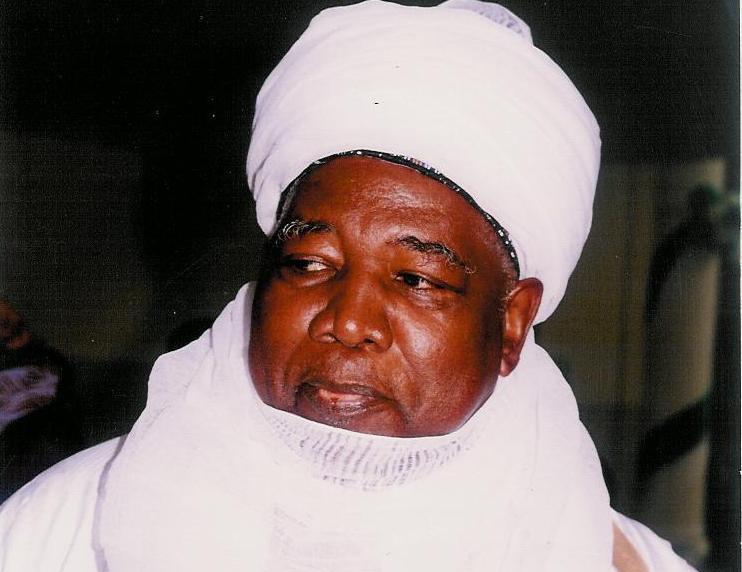
Ibrahim Tahir
Being the third part of Dr. Tahir’s address to the Constituent Assemby on December 14, 1977, where he made a case, through a motion for constitutional amendment, for a return to parliamentary system of government. The second part was published last week.
SIR, I would like, before speaking on the substance of the Motion, to point out that it has been suggested in various circles that an amendment of this nature would imply starting the whole work of drafting the Constitution again and that it would take another year.
I hold that, in all humility, to be an untruth because the import of what I am proposing is merely an amendment of the various sections of the 1963 Constitution which has an imperfect parliamentary character to conform more specifically with the parliamentary democratic form of government.
Doing this, Mr Chairman, will not take this House more than three weeks if this amendment is accepted. Mr. Chairman, Sir, I begin by asking the House to amend the title to read: “The Government of the Federal Republic of Nigeria”, for the following reasons which will form part of my main arguments. The title is the Executive. Mr Chairman, Sir, in the sort of democracy that the Draft Constitution proposes to commit to Nigeria, the notion of a separate institution called the Executive is a contradiction.
“The fact, Mr. Chairman, is that in a democracy the right to govern is an indivisible good which belongs to all of the people in the country. So, when you extract a principle called the Executive, you are, in fact, splitting the people’s will. The only way, in my view, that you can properly conduct democratic government is to reflect in the structure of the government itself the very principle that the will of the people is collective and indivisible. To that extent, therefore, what we should address ourselves to is the Government of the Federal Republic of Nigeria rather than an institution within the government called the executive.
“In point of fact, Mr. Chairman, the notion of the Executive is itself, to a certain extent, not more than legal fiction and merely an administrative instrument and should not, in my view, be extracted in this way and be created as a separate institution for which the Constitution should provide.
In any case, Mr Chairman, it seems to have escaped the members of this House that the concept of the executive, as far as we know, in the evolution of democratic government originated in a situation in which the countries of Europe, whose institutions we are copying, were ruled by absolute monarchs. It was this absolute monarchy which in the political philosophies of that time, notably the ideas of John Locke, who was indeed the first man to propose it, led to the concept that there should be the doctrine of separation between the Executive, the Judiciary and the Legislature. He did so precisely because, at that time in history, democracy itself had not fully evolved and kings ruled with absolute power.
ALSO READ: Ibrahim Tahir revisited on key issues (2)
“They appointed the Judges and they made the laws and a limited franchise allowed the people to have some kind of expression of their will. To that extent, Mr. Chairman Sir, when you extract the executive all you are doing is really proposing that Nigeria becomes a diluted absolute monarchy rather than a democracy.
“I wish also to point out to the members of this House that the first ever Presidential Constitution which pretends to democracy is the Constitution of the United States of America and it is quite clear that the Constitution makers of the United States of America, at that point in their history, when they broke away from the rule of King George III, simply took the Constitution of England in the 18th Century and married it with the Constitution of Imperial Napoleonic France and produced their Presidential Constitution.
“So, Mr. Chairman, there thus seems to be sufficient ground to argue that, in point of fact, this proposal is a proposal for a return to the 18th Century Monarchial Europe rather than 20th century democratic government.
“Mr. Chairman, under a proper democracy – and democracy did not attain its full expression until the adoption of universal franchise in 1941 in the United Kingdom followed by the rest of Europe – the right to govern is not the property of any one institution save the people, as segregated in the body of their representatives in the House of Parliament and it is the expression of this will that allows a group among parliamentarians to represent the rest of the parliament and, through them, the people to conduct the affairs of the community.
“To that extent, therefore, if we are committed to democracy and we hold the freedom that we pretend to support in other sections of the Draft Constitution, we cannot do anything other than to revert to full-blown democracy and not to have an elected monarch with a chained parliament.
“Mr. Chairman, furthermore, it is my humble opinion that far from meeting the good intentions which the proponents of this form of government advocate, in point of fact, this proposal will, in fact, make the situation worse because all it is, is a recipe; looking at it very carefully, you will see that it is a situation of conflict in situ – and what seems to be belouding the minds of most of us is the fact that the thing is only on paper, it has not yet been thrown out among the masses of this country; the institutions themselves have not taken root and matters have not come to them yet.
READ ALSO: Ibrahim Tahir revisited on key issues
“I submit that there are a number of areas of conflict – the conflict, first of all, is between the President and the Vice-President. According to those who operate this system and operated it longer than us, the Vice-President is not worth a pitcher of spit, to quote Lydon Johnson.
“If as some people have been proposing, the Vice-President should have his own position and his own sanction, all you are going to do, Sir, is either not to create the useless office whose incumbent is going to be frustrated and you will create a constitutional assassin for some people’s proposal from elsewhere or that you are going to make two power nights, the Vice-President and the President, and this places us right where we started.
“Secondly, there is a situation of conflict between the President and his Cabinet on the one hand and Legislative Houses on the other. I do not wish to detract from the obvious political maturity of the people of this country and certainly not the members of this House.
“However, I put it to the House, with all humility, that I do not see how we can avoid in this structure of government a situation in which all powers, all patronage and all the capacity to affect situations are put in a box called the Executive and those who are supposed to tell the Executive and those who are supposed to tell the Executive what to do, who do so in part, at the sufferance of the Executive, will not fight with great vehemence in order to ensure that they retain what semblance of credibility which the population and this country, in this provision, seek to accord them.
“There is yet another area of conflict, Mr. Chairman. In a parliamentary democratic system of government there exists the position of every institution – what I call the core institutions of stability, the bureaucracy, civilian, military, the Police, et cetera and those who have the mandate of the people to govern – and these people are Executives a definite, well-defined place which gives room for no ambiguity whatsoever.
“A Permanent Secretary in a Ministry in a parliamentary democracy knows exactly the beginning and the end of his role as a protector of the public interest as the chief adviser to the Minister. In this particular form of government, Mr. Chairman, an appointee Minister and a career bureaucrat are but two contending bureaucrats in the same role and in the same function”.
Disclaimer
Comments expressed here do not reflect the opinions of Vanguard newspapers or any employee thereof.