
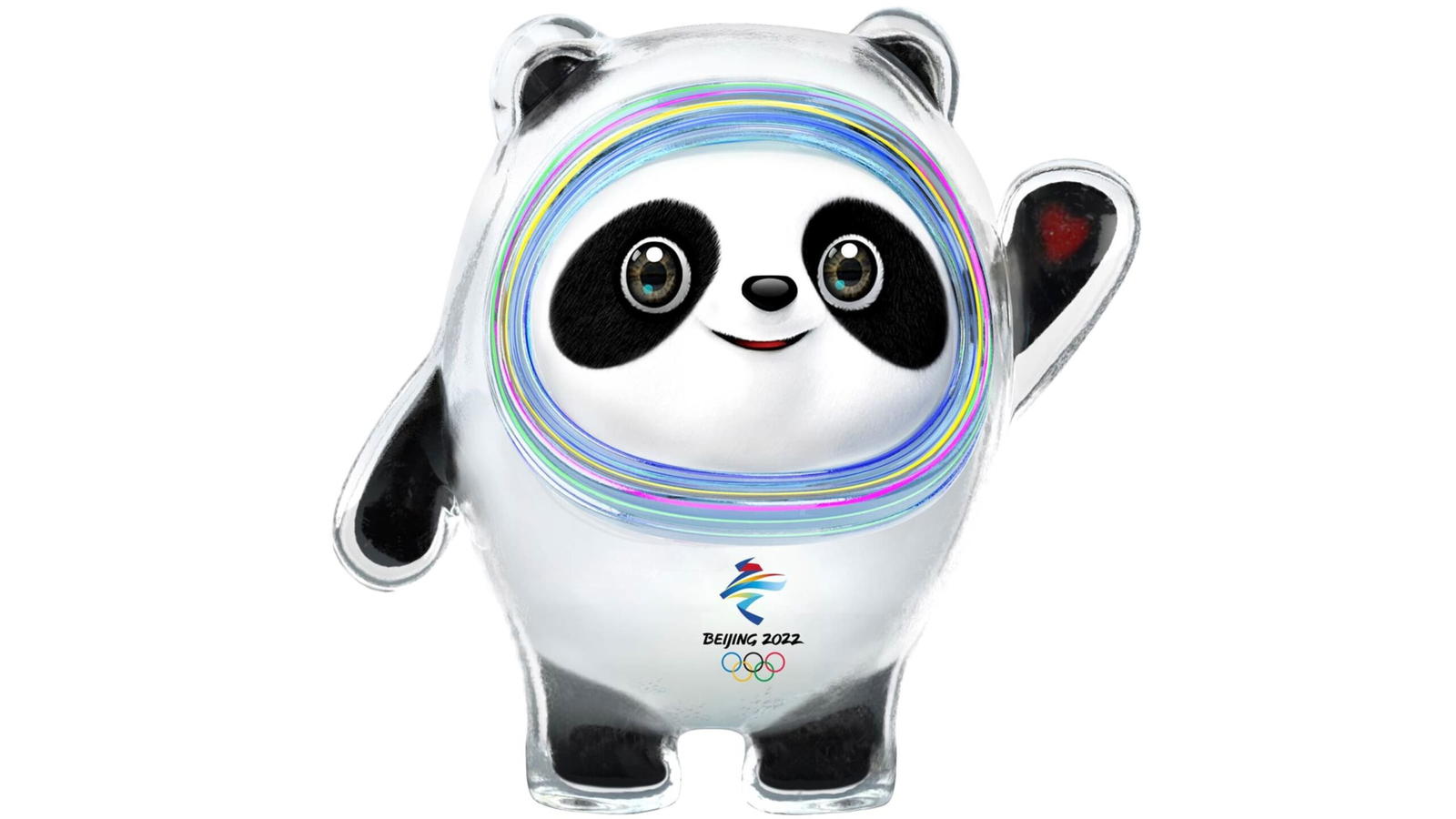
The next Winter Olympics will be hosted by Beijing in February 2022. It will be the first Winter Olympics in China with Beijing being the first city to host both the Summer and Winter Olympics.
The mascot for the Winter Olympics is a panda named Bing DwenDwen wearing a shell made of ice. There is an understandable excitement in China. But Beijing 22 has been fraught with concerns and controversies.
Beijing was not a favourable destination to host the Winter Olympics. Concerns were raised that Beijing, being one of the most polluted cities in the world, had unpredictable snowfall. There would not be enough snowfall for the different games in the Winter Olympics.
Snow would have to be transported which could have severe environmental consequences. Since most of the games will be hosted in outdoor venues, there was also health concerns of the athletes.
The promotional song, ‘The Snow and Ice Dance’ was alleged to be very similar to the song, ‘Let It Go’ from the Disney movie Frozen.
Many Tibetan protestors opposed China hosting the Winter Olympics and criticized the International Olympic Committee (IOC). Tibet, known as ‘the roof of the world’, was annexed by China in 1950. China negotiated an agreement with the 14th Dalai Lama wherein China’s sovereignty was accepted but autonomy was granted to the region. Tibetans have time and again revolted against the Chinese occupation.
The Beijing Summer Olympics Torch Relay became a flashpoint in April, 2008, a month after the violent protests in Tibet. China is accused of repression and violation of human rights in Tibet.
In 2019, a collection of internal government reports, the Xinjiang papers, were leaked. These papers were regarding the Chinese government’s policy regarding Uighur Muslims. The Uighurs have been facing extreme human rights violations. Reports of forced sterilization of the Uighurs in China have been labelled as ‘genocide’, due to which US, UK, Canada, and Australia declared a diplomatic boycott of Beijing 22 in 2021.
The Hong Kong protests against the Anti-Extradition Law Amendment Bill in 2019-2020 added more fuel to fire. Hong Kong was a colony of Britain after China’s defeat in the Opium Wars and was handover to China in 1997 on the condition that the existing democratic system will be maintained.
The Bill was seen to be suppressing the democratic system and a move by China to be more controlling of Hong Kong. Protests have become violent with many arrests, injuries and deaths.
US wanted the Winter Olympics to be shifted out of China because of the coronavirus outbreak which started in the Chinese city of Wuhan. There were allegations that China had deliberately leaked the virus from its labs.
China was also not cooperating with the investigation team sent by the World Health Organisation (WHO) and was allegedly concealing information about the first wave of Covid-19.
On Olympic Day (23rd June 2021), Taiwanese, Chinese, Tibetans, Uighurs, Hongkongers and Southern Mongolians staged worldwide protests in 50 cities calling for a mass boycott of Beijing 22. On 7th September 2021, human rights groups also called for a boycott of broadcasting Beijing 22 over human rights issues.
Peng Shui, an Olympic tennis player, disappeared in November 2021 after levelling charges of sexual harassment Zhang Goali, a high-ranking member of the Chinese Communist Party (CCP) and former Vice Premier.
Her social media post about being coerced for sex over a period of 10 years has been deleted. Chinese authorities have not acknowledged her allegations and have refused to comment.
Though several video clips have emerged showing Peng with friends and the IOC announced that their President had a video call with her, the sporting community is still worried and demands China to give an independent proof of her safety and well-being.
Despite all the controversies, preparations for Beijing 22 are in full swing. Recently, China has initiated a crackdown on the unauthorized use of the Olympic logo or names of athletes, viewing it as intellectual property infringement.
Chinese authorities will be keeping a close eye on factories and e-commerce sites for Olympic trademark violations. The campaign aims to put “high pressure” on any such violations and “to enhance awareness of the whole society to respect and protect the intellectual property rights of the Winter Olympics,” a CNIPA director, Zhang Zhicheng, was quoted as saying by Xinhua.
Custom Officials at Beijing announced that they had seized 100 fabric patches having the Olympic logo. The sender could not prove that the IOC had authorised it.
Disclaimer
Comments expressed here do not reflect the opinions of Vanguard newspapers or any employee thereof.