
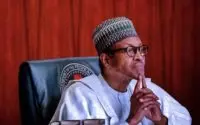
President Muhammadu Buhari
ON Tuesday December 21, 2021, President Muhammadu Buhari’s letter declining assent to the Electoral Act Amendment Bill 2021 was read on the floors of both chambers of the National Assembly – the Senate and House of Representatives. President Buhari’s veto of the election bill marked the 201st time he was failing to assent to a bill since he came to power on May 29, 2015. It was also the fifth time he was rejecting an electoral bill.
Of the 287 bills passed by the Eighth Senate led by Dr Bukola Saraki, 160 were vetoed by the President. In the current Ninth Senate only 10 of the no fewer than 50 bills have become Acts of the Parliament.
READ ALSO Christmas: Reps’ minority caucus not happy Nigerians can’t afford basic needs of life
Although, 200 bills had been vetoed in the past, the latest bill is raising much dust in the polity because of what it portends for credible, free and fair elections in the world’s largest black democracy and the long road Nigeria has travelled in search of amendment to the electoral law.
The 2010 Electoral Act (Amendment) Bill 2018 and the Fourth Constitution Amendment Bill were among the 200 bills earlier rejected by President Buhari. The Electoral Act (Amendment) Bill 2018 was rejected four times. The first rejection was on the grounds that by stipulating the order of general elections, it usurped the functions of the Independent National Electoral Commission, INEC. In 2019, the last rejection was premised on the fact that the elections were too close and changing the rules would generate confusion.
In rejecting the 2021 Electoral Act Amendment Bill, President Buhari anchored his stand on the imposition of direct primary as the only mode of selecting candidates by political parties via Section 87.
According to him, the imposition of direct primary on political parties has “serious adverse legal, financial, economic and security consequences which cannot be accommodated at the moment, considering our nation’s peculiarities”, adding that: “It also has implications on the rights of citizens to participate in the government as constitutionally ensured.”
Specifically, he outlined seven major grounds on which he declined assent. According to him the conduct of direct primaries across the 8,809 wards nationwide would result in a significant spike in the cost of conducting primary elections by parties, increase in the cost of monitoring such elections by INEC, who must deploy monitors across these wards each time a party is to conduct direct primaries; impose financial burden on political parties; stifle smaller parties without the resources to mobilise their members for direct primaries, thereby undermining the sustenance of multi-party democracy in Nigeria; and create more security challenges for the already stretched security agencies, among others.
With the rejection of the bill on account of direct primaries, some 158 sections that include a provision for electronic transmission of results by the INEC, and which empowers the electoral body to overturn results declared by its agents under duress, among other crucial provisions that addressed some major drawbacks in the Nigerian electoral process over the years, are under threat.
This is the reason the polity is astir. What happens to these salient 158 sections? It is also the reason all eyes will be on the National Assembly as it resumes on January 18, 2021. There are two options before the lawmakers. One is to override the President. Can they muster the number – 73 senators and 240 members of the House of Representatives – to do so?
The other option is reworking the bill to remove the controversial Section 87 and re-sending it to the President for assent.
Whatever option the lawmakers choose, time is of essence. To deepen democracy, there is need for transparent and credible polls, which also need a good electoral law. To be effective for the 2023 general polls, the new electoral law should be ready and tested at the June and July 2022 Ekiti and Osun governorship polls. The National Assembly and President Buhari can’t afford to fail Nigeria the sixth time.
Disclaimer
Comments expressed here do not reflect the opinions of Vanguard newspapers or any employee thereof.