
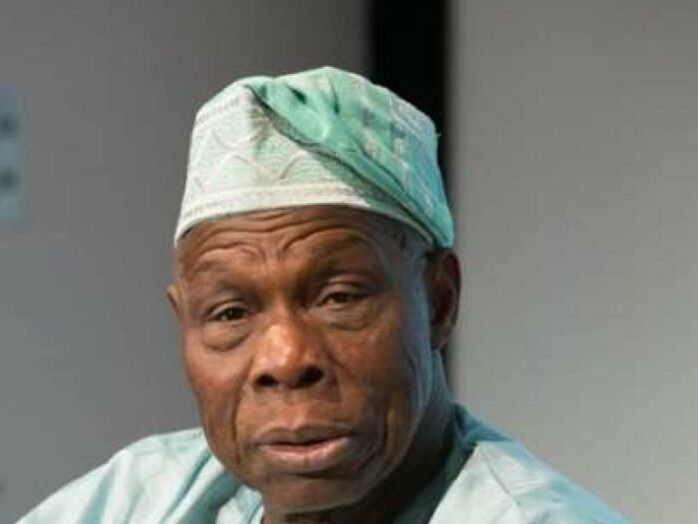
Chief Olusegun Obasanjo, a foremost military and political leader who served as Nigeria’s military head of state from 1976 to 1979 and later as the democratic president from 1999 to 2007, in an interview with Fidelia Salami, Chairman, Board of Directors, Delta State Tourism Board, gave insights towards moving Nigerian tourism sector beyond its present state. He, thereafter, proffered solutions for a viable tourism sector.
By FIDELIA SALAMI
WHILE in office, your administration engaged the services of the United Nations World Tourism Organisation, UNWTO, for the development of the Nigerian Tourism Development Plan, NTDMP. What motivated you to take that initiative, and why do you think subsequent administrations decided to abandon the implementation of the Tourism Master Plan?
Let me tell you the one that is mine and then the one that is others; you ask others about their own. For me, the totality of the economy of the country, of a community must be handled in such a way that citizens of that community can benefit from it, and I believe that tourism is one sector of the economy that should not be ignored, especially when you look at what can be generated from tourism and tourism-related businesses because hospitality is tourism-related.
Even food in a way is tourism-related, culture is tourism-related, and when you look at how this can serve the purpose of employment generation, wealth creation, then you will see that it is an area that must not be ignored.
And what they call tourism, there is no place that you do not have something that can be of tourist attraction. It depends on how you package it. Even food, you package it. We have lots of food in this country. Then we have the sea, beautiful beaches, we have forests, we have hills and rocks.
We have the rain forest areas in part of Cross River. We still have in that area primary forest, the one that has not been cut down. So we have Plateau, we have Mambila, Obudu, and all that. And then, when you get experts to package it and develop it, some countries earn as much as 50 per cent of their revenue from tourism. We may not be able to do that much, but there is no reason why we should not earn a substantial amount of revenue from tourism.
You have been in agro-tourism for decades now. How would you assess the industry in Nigeria and what impact has Obasanjo Farms made both nationally and internationally, talking about bringing in foreign investors into the country and generating foreign revenue.
Well, investors, generally, are hard-headed calculators. They watch and don’t underrate them. I give you an example: when I was President, there was a friend of mine in New York, he had made his fortune in minerals, he was a billionaire. I called him one day and said: look why don’t you come and invest in Nigeria and he laughed at me. And I said why are you laughing at me?
He said what do you have that will convince anybody to come to Nigeria? I said we have everything. He said, where is it?
And he got me to do the right thing. He said: Look, the first thing you need in the mining industry is very clear legislation and you haven’t got that. And it is true we haven’t got it. And I said okay: Advise me. He said go to the World Bank, they will give you a model and you bring it home and you put it into your own condition. He said that’s number one.
Number two, you must have a map that shows what you have and what you don’t have and all that. And he said to me: Look, those of us who sit in New York, in London, in Frankfurt and take decisions on investment, we normally have more than 50 per cent certainty that our investment will bring good returns. And unless you have all these things, which we can study and we can look, and you must also create a conducive atmosphere for investors and for investment. Your legal situation will run your country in such a way that investors can say yes, even when we have a dispute; I will get a fair hearing. And so what I did was, I went to the World Bank.
The World Bank gave me a model and legislation. We hadn’t legislation. Then again I went to World Bank and I said look I want money, and the World Bank gave us money; but we had to also add money to be able to have a map of what we have, state by state. And so that is the way it works for investors. The genuine, legitimate, honest investors will go for that sort of thing. But there are crooked investors that probably could go for less and they will probably be cheating as well.
May I go back to the Tourism Master Plan, please? So far only Lagos State has a tourism plan. It’s sad to note that only one of the 36 states has a tourism plan. I am from Delta State. What actually should we do, sir?
I think every state has something that can be called a tourist attraction. I mean every state. That they could not look into it, taking advantage of what they have is sad, so unfortunate. I won’t say at this stage know how many states have a tourism plan or a document. You would know because that is your bread and butter. But I will go back to when I was Military Head of State. I gave each of the 19 states money to prepare a master plan for tourism. And it was then I really came to realise that there is just no state that does not have anything that can go by. I remember in Kwara State, they were talking of a number of things: rocks and other things. Here in Ogun State, for instance, the first newspaper started here in Abeokuta.
That is something of an attraction. Olumo Rock, we have heard about Olumo Rock; but what are we making of it as a tourist attraction? You have adire that is indigenous here in Abeokuta; what are we making of it? You can go on and on and on. It’s not a splash; it must be deliberate, consistent and follow-up. And any state you mention, there is something that is worthy of a tourist attraction. That it’s not done, is a pity. So what can we do? They should wake up.
I have a passion for this sector and we are changing the narratives. I know that the government has given us a soft pedal and we need to monetise our creative abilities and assets. How are we creating awareness, what are we supposed to do?
Awareness is that, first of all, you must realise that tourism is not a tangible product. When you go to the market and you go to buy a piece of yam, you can see what you are buying; a bag of rice, you can see what you are buying. A bag of garri, you can see what you are buying. But when you go for tourism, you are essentially buying service. So, first of all, that service must be good because what you are trying to sell, others are trying to sell also.
Why should I come to a country for tourism when I can be kidnapped? Can you give me two reasons why I should come to a country for tourism when I can be kidnapped when I can go to other places where I will be safe and secure and all that? So you see, our insecurity then tells on a number of things. It ramifies on a number of things and we may know it, we may not know it, but that is the way to look at it. Why should I want to come to a place for tourism when I am not going to have a comfortable vacation, why?
So, all these have to be there. You talk about awareness, again tourists are biased, and you have this thing to talk about: buyers beware. Now you have to beware as a buyer. Why do I go to a place and say well, the first thing I would do is, what is there, what can I get, how can I get it? That is, so the awareness, yes, but we have to put our house in order. There’s nowhere you go that you can’t get tourist attractions. And again, it depends on the package. You have to package it.
Why do you think the Nigerian corporate organisations do not want to invest in the tourism sector, looking at collaboration, public-private partnerships, PPP?
The private sector? I won’t agree with that. The man who is acclaimed as the richest African is Aliko Dangote. He started his investment in Nigeria. I know how he started and almost everything he has got into moving things in Nigeria. After that, he started going to other parts of Africa.
Again the problem is: don’t let us deceive ourselves. Sometimes, immediately after independence, the feeling among the civil servants had been that the private sector is people who reap where they do not sow. And part of it, I won’t say all of it, was what led to the government going into areas of production and things like that. Along with that, there were not enough Nigerians who could go in. But today, we have Nigerian people going into anything in the private sector. Now, we could.
When I was military head of state, there was no Nigerian that could think of going into the refinery. Today, Aliko Dangote is building one of the largest single-unit refineries in the world: 650,000 barrels per day. So, we have people now who are doing that. What we should do is encourage them. And then, I always say that money for development in Africa is out there.
The problem is: how do you attract that money. I am not talking of loans now because some of the loans we are taking are unreasonable; But I am talking of investors coming, who will make sure that what they are investing in will be sustainable and will be profitable. What do we do about that?
Even the infrastructure we are talking about, people will put in their money to develop roads and toll the roads, and if the terms and conditions are right, 25 to 30 years, they would have made their money and then the roads would be referred to the government. These are some of the things.
What motivated you to promote tourism in these premises despite the fact that you have Olumo Rock in Abeokuta. It is said that if you want to hide anything from the Black man, you put it in a book, and you have right here Olusegun Obasanjo Presidential Library, a museum, wildlife zoo, man-made lake, cultural centre, etc?
Well, you got part of it right. One of the things that we don’t do well is: we don’t keep records well. One of the things that we don’t do well, and I don’t know if you have gone round, you would see the archives, it’s on the exhibition floor; then the floor after that is an archive. You can see we have digitised over three million documents, over three million documents digitised. We still have about the same number; it’s a continuous exercise so that you can just press a button and recover(a document). That is one; the second place in the exhibition. For eight years, I was going around the world; people were giving me things and all that.
Those things they were giving me, what do I do with them? Really they were giving me those things because I was President of Nigeria. They were in a way, if you like, given to me because of Nigeria. Now, what should I do? They should be preserved. They should become a monument for the nation so that when you go round, you see what it takes; what was I given in Ghana or why did they give me this? You can see it. So that anybody who comes here will also go through my own background.
Now the point is: how do we preserve things? How do we learn from history? Okay, I tried to recreate my prison cell. Now, who wants to do that? Oh, Obasanjo went to prison. Now when I say oh, when I was in prison, even internationally I go to meetings and I say yes. Then what did the prison look like, what lesson did you learn from it? Why were you not heartbroken? Why were you not devastated? Okay, and then gather and take courage.
Look, however bad a situation may be, if Obasanjo can weather the storm, I can also weather the storm. Now, so it’s a number of things we take to one. As you have said, the exhibition we put there, where children can come, dress as an engineer, and as they are going out, they can take their photographs. They will feel like: why can’t I become an engineer? After all, look at me. You want to be a teacher; you want to be a lawyer, but everything we can do to inspire.
And you talk about changing the narratives, everything you can do to make our own, talk about our own lives, but positively. We should not bother over the bad things, the bad things have happened; it’s unfortunate. The bad things are still happening, it’s unfortunate. But then what can we do about them? We can change and we can write our own narratives, and be honest about it.
Disclaimer
Comments expressed here do not reflect the opinions of Vanguard newspapers or any employee thereof.