
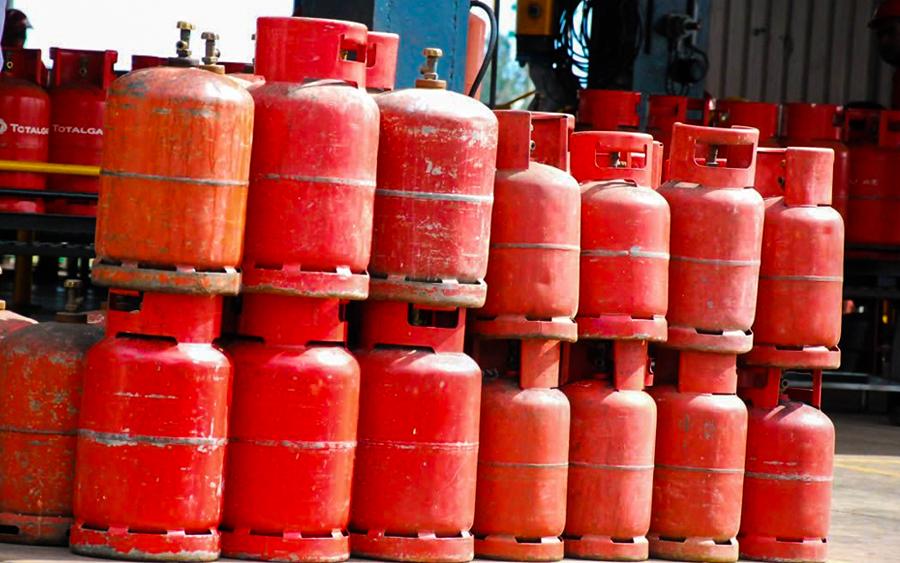
The Federal Government has been tasked to grant fiscal incentives to local producers to enable them to fund infrastructure development, reverse the Value Added Tax, VAT, improve access to Foreign Exchange, rechannel export cargos to domestic consumption and eliminate all forms of extortion as part of new options required to achieve stability in the sector.
In an interview with Energy Vanguard, weekend, President, Nigeria LPG Association, NLPGA, Mr Nuhu Yakubu, attributed the shortage and high prices to issues such as the recent introduction of Value Added Tax, VAT, the difficulty associated with getting access to foreign exchange and extortion at various locations in the value chain.
He said: “We have been discussing with the government to grant fiscal incentives to local producers to enable them to fund infrastructure development to improve local production. Incentives include low interest bearing intervention funds, reversal on VAT on imported LPG, etc.
“Since over 50 to 60 per cent of domestic consumption is sourced from imports, we have equally argued for reversal on the recent policy of VAT on imported LPG.
“Equally, due to the fact that domestic consumption is heavily reliant on imports, we have argued for Federal Government to grant improved access to forex for LPG importers.
“We are also discussing the possibility of allowing more export cargo to be channelled to domestic consumption, bearing in mind, however, the export contract obligations of respective export producers.
“We have called for zero-tolerance for extortion at depots and terminals by unions and associations.
“These extortions by way of levies have become too much and now constitute a significant percentage of retail pump price build-up. These are some of the areas we are currently advising the government on.”
However, data from the Petroleum Products Pricing Regulatory Agency, PPPRA, indicated that more LPG has been supplied across the country this year compared to the corresponding period in 2020.
The data showed that as of August 2021, 740,675.72MT of cooking gas, indicating an increase of 9.6 per cent, was supplied in 2021 compared to 675,814.72MT supplied in the first eight months of last year.
The PPPRA data also indicated that despite having one of the world’s largest gas reserves and leading exporter of Liquefied Natural Gas, the bulk of LPG consumed in Nigeria is imported from the global market.
According to the latest data, in August 2021, 55.4 per cent of the 85,264.803MT supplied nationwide was imported from the USA, Algeria and Equatorial Guinea while 44.6 per cent was sourced locally.
Decade of Gas
In any case, the rising prices constitute a serious threat to the Federal Government’s plan to increase the usage of gas as the energy of choice in the nation.
ALSO READ: Factional Plateau Speaker, Sanda declares Ayuba wanted, suspends him, 5 others
The price of a 12.5kg cylinder of cooking gas which sold for more than N4,000 at the beginning of the year, has risen to more than N7,000. The government had in March this year declared 2021 to 2030 as Nigeria’s decade of gas with the target of having the economy powered mainly by gas.
MOMAN
However, the chairman of Major Oil Marketers Association of Nigeria, MOMAN, Mr Olumide Adeosun, has joined other experts to call for the discontinuation of VAT, arguing that it would continue to discourage LPG penetration in the nation. He said:
“Unfortunately, we still don’t produce sufficient domestic LPG; so we have to do a lot of imports and we are seeing a spike globally in the price of LPG.
“Domestically, what can we do? I think there have been discussions around the VAT levied on the product.
“One of the big discussions going on right now is how that can be eliminated because the tax naturally creates a barrier to the objectives of the Decade of Gas, which is to increase the penetration and adoption of LPG, among other things, as an alternative to biomass. So, we are hoping that there will be some headway being made in that direction.”
Prospect
The situation would likely change in the medium and long term when Nigeria LNG Train 7, expected to increase Nigeria’s LNG production from 22 million tonnes to 30 million tonnes yearly by about 2025 becomes a reality.
Already, the NLNG Limited, disclosed that it will increase its allocation of LPG to the domestic market from 350, 000MT to 450, 000MT by 2021, adding that the move aims at supporting the Federal Government’s plan to deepen LPG (cooking gas) penetration in Nigeria.
According to the company, the desire of the NLNG to deepen LPG penetration in Nigeria is aimed at creating a healthy life for Nigerians by giving them access to a clean source of energy for cooking.
It also stated: “In 2007, the total consumption of LPG in Nigeria was about 50, 000MT. Today, it is about one million metric tonnes and NLNG’s contribution is 350, 000MT.
“We have approached our board to get a mandate to increase NLNG’s contribution to 450, 000MT from next year. That is a very positive contribution from NLNG.”
Disclaimer
Comments expressed here do not reflect the opinions of Vanguard newspapers or any employee thereof.