
.
*Cites Abia, Anambra as case studies
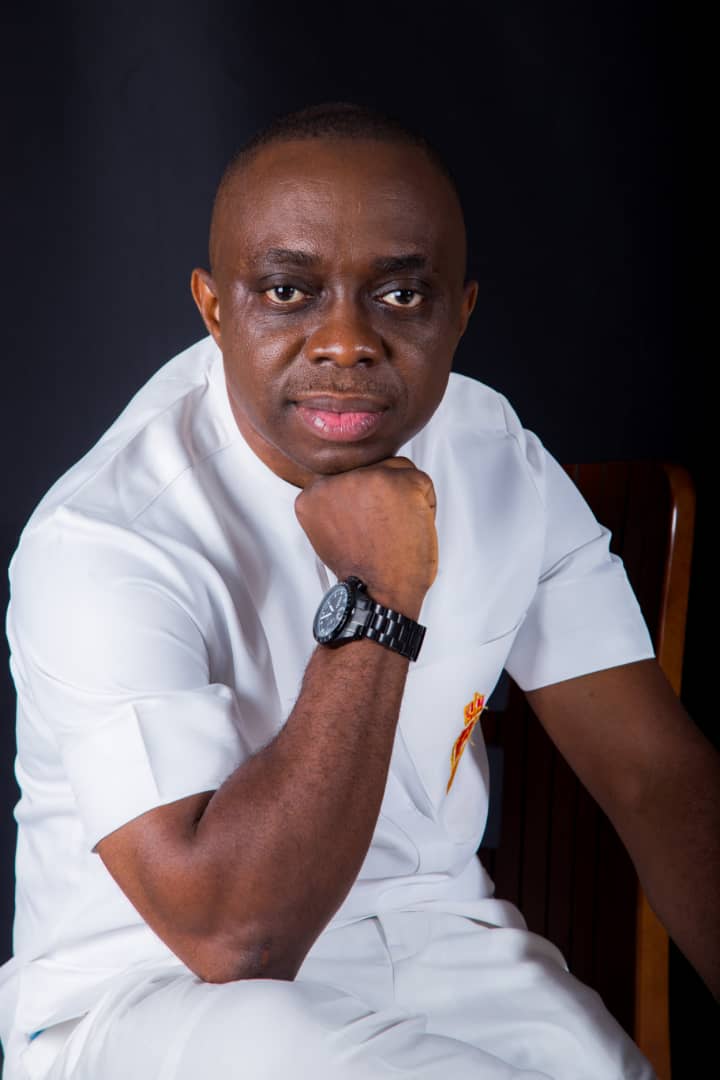
Mac Chidinma Atasie is an entrepreneurial and strategic business leader with years of extensive experience and unique capability in business strategy development and execution, finance, payments, ventures, general management and public-sector governance.
Atasie is the current Chief Executive Officer of Nextzon Business Services Limited, a Management Consulting firm.
In this interview, he bares his mind on various issues including his transition from science to management consultancy, forays into business incubation in Nigeria, his work with the public sector, especially state governments, including Anambra and Abia, where he has been involved in creating strategies in turning around Internally Generated Revenue, IGR, of both states significantly which has helped them in implementing reforms and funding of projects. Excerpts:
By Kennedy Mbele
You are a graduate of microbiology and yet a guru in management, spanning academia and top businesses, what is the link and how was the transition?
I think that the best thing that can happen to anybody is to live his or her mission. If you realize what you are built to do and follow it successfully, you will enjoy your life. You need to see me in a strategy session, I come to life, I am excited, people in the room mostly have the answers but they are not putting their hands on it, I help close the loop. I was meant to be a medical doctor by my mother’s advice. She was a nurse and I believed everything she said. So, when she said medicine, I said great! I still think she was a great mother with the ability to make you believe you can jump this building.
I usually tell my story of how I got my first and only bicycle, which is still in my house in the village. The first time I took an examination in primary one, I failed because I did not enter the examination hall, I was a playful child and at home, every effort to teach me failed because she was my mother.
So, when I failed she got a cane to flog me but somehow, she got the news that I cried and was very unhappy. I was five years old and she said because you cried, I believe you know what you’ve done.
So, the next time we went to another location because she was a community nurse who was transferred frequently, I took the third position in the class and the next term I took third, again. My mother went to my teacher and asked my teacher ‘Is that my son’s real result?’ The teacher said yes; and those were primaries one, two and three and at the end of primary three, I kept taking the third position and she said she was tired of this third position. So, she now said if you take it first, I will buy you a sports bicycle.
I went to primary four in my new school and asked them who is number one in this class, they pointed at him and I called him and said you are taking first for the last time in your life and of course he never smelt the first position again until we took our First School Leaving Certificate
For me, I was willing and able to take that medicine; several of my mates in Federal Government College (FGC), Okigwe scored over 300 in JAMB but I got nearly 270 and the University of Nigeria Nsukka said no to my result. So, somehow I entered Microbiology and believed that I would change to Medicine.
I read like a medical student and scored all the ‘As’ and my HOD refused to release me, he said he won’t release his best student but my uncle was Dean of Faculty of Medicine in UNIPORT, he said bring your result I will take you if you score XYZ and we sent the result and I got the opportunity there but between the VC’s office and his office the transcript disappeared so I concluded I am not meant to be a medical doctor.
I wouldn’t have enjoyed it as you are not going to be theorizing on someone’s stomach. You need to tell him this is a hernia and this is how to remove it. I am not interested in that type of exactitude; I want to imagine things.
You don’t solve problems by creating new things by doing what people have always been doing, you must do things differently. My journey from Microbiology to business came as being who I should really be, one of the lucky humans that are doing what they are meant to do; I need to be a problem solver, I need to be creative to make things happen in a different way. Now that has manifested in this journey. By the way, I am not just a Microbiologist, but I also have a Master’s degree in Pharmacy and I worked in Nigeria Breweries for a short time and this will interest you. At NBL, the Director of Human Resources after interviewing me asked what do you want to do, I said management.
He said yea, we know you are coming as a management trainee which means you are positioning as a manager in future but today what do you want to be, a brewer, marketer or management person? And, I said a management that’s administration. Last on my list of choices was being a brewer but he took me as a brewer because I am a microbiologist. The day I resigned he said I knew you would resign. Where are you going? I said Accenture. Accenture was then called Andersen Consulting which was paying me lower than Nigerian Breweries but I wanted to go to Andersen because It is where I thought I could learn on diverse problem-solving opportunities.
I could still go and solve the breweries problem and by the way while still in Accenture, we worked for Seven-Up Bottling Company Plc, that’s like a brewery, right?. But this time, I was able to work for SBC at the highest level, the then CEO at night and I will still be inside their office in Ijora, he will come and call me ‘’kekere’’, rub my head and say I want that solution tomorrow morning because he knew I will crack it so my point is that’s what I love to do and that is problem-solving.
When you say schools, I think the most important school I attended was the “Accenture School of Business” because every day in Accenture you are learning new things because I was working with CEOs of massive organizations. You are talking of UBA, First Bank, I would present concepts to the Board of First Bank on marketing. Which other training is bigger than that engaging well-informed captains of industry? I will be involved in teams transforming NAHCO, participating in a team that is checking what the aviation industry is like, so by the time you have done five years in Accenture or NEXTZON, that may be like 10 years of MBA. so that’s how I built my business acumen.
The first 12 months in Accenture I handled a project for NNPC working with top-flight Accenture Managers and Partners I handled financial projections that touched on dollar-based infrastructure, Eleme Petrochemicals, Kaduna refinery etc doing work at the highest levels so I have attended schools that would shape my way of understanding business at Accenture.
Of course, if you talk about Cranfield, I did a course on logistics and if you ask me that would be one of the next most important steps for Nigeria, how to have a sophisticated and efficient logistics infrastructure in Nigeria where you have modern warehousing, modern way of tracking transportation, lots of things that will make the movement of goods from one place to the other low cost because transportation is a key reason why a business can succeed or fail.
It is typically macro- country-based, not you saying I want to go and do my own transaction, it will be limited if there is no rail line, roads are blocked or are bad; so a nation must find a way to improve its transportation sector. It is a key productivity enabler; so that is what it is, I have moved from Microbiology to business because that is where I can express myself and that is business consulting, business driving. At my current level, I assist Chief Executives to achieve their objectives.
One of the biggest Chief Executives in banking says jokingly that I decrypt him, so he has his dreams and I bring it down and I’m able to convert it to how people can use it so I work with them very closely to make things happen. Of course, I also run and have other businesses and business units, as well as, sit on boards of various companies, so I apply my skills equal to the executive roles I play. The other schools are Cranfield, Wits University in South Africa and Stanford.
Why is it that you consulted for both Anambra and Abia, while Anambra is making headway, Abia is disappearing from the map?
I am involved in the IGR of both states. Both have moved IGR by between 3 and 5 times over the time of the current leaders. In today’s Nigeria, IGR is indeed a key enabler for delivering dividends of democracy given the challenges around FAAC AND JAAC.
The improvements in IGR have led to various degrees of reforms by the two states because that’s how projects are funded. It will be wrong for me to say scope for improvement does not exist for any, but there is visible progress.
If we take a few indicators of performance (roads, airports, cleanliness, performance in exams, GDP, FDIs, IGR), we can begin to see that progress is happening in both locations. Firstly, both came in with market-driven development blueprints. So, they came prepared. In all honesty, I did not approach any to engage my company in putting the strategic blueprints together. They thought such was key to their success.
Indeed, it is critical to note that what I did was provide a planning framework, ask the right strategic questions, provide historical and futuristic information and suggest (in some instances) options adopt. Both came in with a clear vision and passion to make change happen. But it is right to note that both are different states and execution dynamics vary; so will results at any point in time.
Our friend Professor Pat Utomi, there was something I saw recently on his programme, Patitos Gang, and I sent him a message and said Oga this might be about two, three years ago. Have you been to Aba recently so a month after the state invited him, while he was there, I exchanged messages with him and said I heard you are in my state and he said yes o, I asked him what do you think, he didn’t give me any negatives but said he will revisit it on his platform?
The current Governor mentioned in an interview recently that a key achievement was the entry of some high-class fast-food companies and people started laughing; do you think they will go there if the environment was useless? So, it is the action of the government that enables people to come.
You are going to start having good hotels coming, businesses and lots of other businesses that will make life better coming into Abia State so if you ask me, I think what he has achieved is to rebase Aba society, the Abia society.
If you take the opportunity to visit the state you will see that we have moved it forward, so it is still quite low but nothing succeeds like success.
The fact that we are beginning to attract interest, a year ago, Abia was the third state in attracting foreign direct investment.
Why will anyone invest in a dead place? If you ask me, I will say something is happening, that’s my view but more importantly, he has put in the effort to push the leather sector. Leather has the potential to deliver a larger economy for us via export. I was in a preparatory meeting as we are going to Kano to meet the German fund GIZ and Kano leather cluster on how Aba can collaborate on the leather industry.
The whole world consumed $365 billion worth of leather, belts, handbags, boxes just in 2019. That amount is nearly as large as Nigeria’s GDP; shoe alone in the world.
We have Aba shoes talked about but then we sell only to ourselves and to the poor; shoes should be $25 – $40 but our own shoes are N5000 as a very expensive pair of shoes.
What he has done is that he has set up a factory that is fully automated and that can compete with any other factory in the world from a quality point of view.
That’s what you expect a leader that wants to elevate the quality of standard of the people to do. It means that the over 100,000 shoemakers can now begin to explore how to play in the international market.
They will stop selling shoes of five dollars and start selling shoes of 40 dollars; gradually we will start bringing money into the country.
Gradually more of our shoemakers in Aba will be wealthy enough to employ more people to do great stuff. So if we can do what Vietnam, China and other countries did in the shoe sector I think we can go places and I am using shoes as an example.
I am basically saying he is focused more on how do I create businesses that will emancipate my people? And you can see a few things, it is not easy because when previous governments were there FAAC was very high but now there is not much FAAC, even NNPC is not sending money so we must find a way to grow our IGR but I believe the best thing is to put your money in productive sectors because those are the sectors that will make people pay their taxes. I can tell you that 90 per cent of collectable taxes are not collected because there is a system you have to build; you don’t just start collecting taxes but moving from tripling and quadrupling amounts collected.
I think that shows there is progress. In the next year, it should get to N3 billion per month. In the past, people thought that paying taxes is an offence against them but they are beginning to realize that we are doing this for ourselves.
Everywhere in the world, it is the money you bring that the government uses to serve you, but long and short of it is bringing the private sector into governance.
It works, it may work faster somewhere but it is a marathon. I am hopeful that what the current administration talks about and has in the economic blueprint will result in the delivery of an elephant – ENYIMBA. Not a sprint!
With this pedigree in problem-solving and working with numerous chief executives that hold the Nigerian economy, why haven’t you proffered solutions to job creation and we are still having a high unemployment rate?
There is me Mac and job creation in my businesses and there is me Mac and the creation of jobs in the country. I think as we speak between myself and the companies I own we have at least 200 people that work for us directly on our payroll. We just started the alumni association of NEXTZON.
I’m sure we also have over 200 people that have passed through NEXTZON excluding the various other companies NEXTZON owns or is affiliated with. The key business I have commercialized is called business incubation. We have incubated over 20 companies.
In Accenture, we incubated Inter switch and a few others while I was Head of Ventures & e-Business. In NEXTZON we incubated Chams Consortium Ltd which led to the new national identity number NIMC the federal government had concessioned the rollout of the national ID programme to two different groups. Chams Consortium which my company owns 35 per cent, Chams Plc owns 65 per cent or thereabout; that was an investment that led to the National ID programme that we have today because as at 2011, using my influence I used to walk into Central Bank, and I was like their staff, at a point I was the most valued client of Sheraton in Nigeria because every week I will spend three or four days with the DG of NIMC, we had gotten the CBN to assist banks to adopt the NIN for KYC in banks. Everywhere in the world, every human being is a digit, you are a number and numbers can’t be faked.
If you are 101, you are 101 and even if you have a twin, the twin must be a different digit from you. If not, you can confuse anybody.
What that programme wanted to do for us was to modernize Nigeria identity architecture, I put in my innovation, my time to bring it to be so by 2011 CBN had written to all the banks after four years of investment after President Obasanjo had given us the mandate if allowed to continue, there was no longer any need for any other identification methods in Nigeria. Do you know how many jobs that would have been created? It has in any case created jobs because you know the number of people involved in the NIN programme doing biometrics, that’s massive.
The BVN came because two weeks after that announcement, that is how the efforts of 2007 to 2012 was lost as it was stalled because the BVN came in to focus solely on banks and the CBN withdrew the directive given two weeks earlier to banks to use the NIN for KYC from February 2012.
The jobs my efforts have led to are in the 100s in NEXTZON, Chams and Interswitch which are everywhere in the world. The Inters-witch guy got the idea, gave it to his boss and they came to us for a business case and I did my best, convinced our South African partners and the Nigerian partners and we collectively convinced the big banks in Nigeria. The first cheque setting up Inter-switch I collected through Mr Longe and gave to Mitchel and Inter-switch is everywhere in the world and that is my mindset.
I want new things to thrive and that’s the capacity to create something new and I have been involved in creating global/large organizations. You talk about inter-switch, you talk about Satrack for tracking vehicles which I also have equity in and you talk about education portals, several young men in their 40s and 50s became billionaires/millionaires through the deployment of education portals.
The very first one was in UNIBEN which I brought to bear through the former Standard Trust Bank, I used to be CEO of Heirs and we had a business that started the education portal with Standard Trust Bank funding the first one in UNIBEN. Today, everyone has an education portal so a lot of my innovations have led to many people getting jobs.
I don’t believe that the only way to create jobs is to go directly and hire the person; create the industry.
You talk about the agency sector, we went to Columbia 2011, came back after a study and did a white paper that Central Bank adopted that led to rolling out of Agency for financial institutions in Nigeria and I am sure you know there are loads and loads of financial agents who act as bank branches but they are one-man shops, that is the creation of value/jobs as we speak.
So, I think it is the use of concepts, conversion into business ideas that people can subscribe to that is my claim to fame in terms of creating jobs. With this now, it will be nice I go and check how many of my efforts in companies we incubated have created how many jobs directly and indirectly.
What of working with decision-makers to deliberately find solutions for job creation in such a manner that would attain critical mass and pull our youths out of the labour market?
I break it for you into the private sector and public sector. If you go into the private sector, I think I have worked with some of the biggest banks in the country and you know that banks are big employers of labour.
I am glad to work for them. Heirs first project outside Nigeria was to establish a bank and it has given me a chance to be a part of their success story which includes job creation. I show how scale is important otherwise someone else will buy you over very easily and you become nonexistent.
So, from the private sector, those that have asked for my support in strategy, I work with. In the public sector working for Anambra, I supported two investment-led agencies.
The truth is that when it was time for his second term, a key selling point was the number of jobs created because he didn’t go in to run the public sector the way it was usually run, he went in to create an environment that would create jobs. The number of hotels grew by three to four times; nightlife came back, people were busy.
So the ANSG set up ANSIPPA, Anambra State Investment Promotion Protection Agency which I’m on the board of. We set up another one for small businesses (ASBA) – two agencies set up to make sure we create jobs and those are where the jobs come from, not by the government directly employed; it is by the private sector thriving, the private sector being productive. So how did he do it? Before going there, there was a blueprint.
If you check his focus on the shoe sector, building roads that lead to markets and open up all entrances into the state, they all go to speak of that blueprint so my normal thing which is planning, the Abia Governor’s focus is still on opening the state for private investment. A review of the presence of the private sector shows progress too.
Remember you can’t plan to be everything so you must have a dream.
Each of them had a dream that was economically propelled and focused. That dream had specific things they will do, not everything because when you want to do everything you keep your hands open and everything will fall out, So, they have four, five or six things they planned to focus on.
I’m going to focus on this economic area because at the end of the day it is the economics that will fund the activities, not Abuja, not borrowings and by the way, you can’t borrow if you can’t produce to pay back.
People will lend to you because they know there is a way to pay back. So, they both had economic blueprints that are the concept of pillars and enablers.
The pillars are things that your state will do very well and give to others. Remember a key reason that Nigeria is on its knees is that we don’t sell anything of value to other people. We sell oil and the oil we sell is at the bottom of value creation. When you dig something out of the ground, that is what God has given you it may be worth one naira and if you translate it to the next intermediate product to another product, by the time it gets to a point it will be worth a thousand times the original value.
What has happened is know-how and machinery are what we are lacking. We did that in the 70s by the way, we had the know-how, we had machinery, car making, battery making, fridge making but what did we do with them? We sold it to ourselves.
Who becomes rich selling things to himself? At that same time, China was very poor but they sold their products to the world in the 70s, 80s; also, South Korea sold to the world, everybody wants to sell to the world so you can buy their own things but as long as you are selling mostly to yourselves you will be poor.
You must make something of value and sell to the world but when you just dig out what God has given to you, in fact, we get others to dig them out for us, we just rely on “it is our own”, they dig it out for us, take to their own country, process and bring it back to us. So, gradually from a dollar is equivalent to 90 kobo now a dollar is equivalent to N500 so we gradually died because we exported nothing to the world so that was what I sold to my principals.
I said you must find something your state will do and export to others. Remember that when you are exporting, you are also using it. So, productivity, which is my way of measuring the success of the government was what I took in.
I went in with private sector behaviour into those governments which are that you must have a proper plan, a blueprint, you must have a way of ensuring you are resourcing the focus areas to get to where you are and they manifested, When the rest of the Nigerian economy in 2017-2018 had negative GDP, Anambra had one point something GDP because they were productive.
If you go there, there are street lights. In fact, the moment you enter Anambra you see light everywhere which means people will work at night and the more you work the more productive you are.
We had a focus on job creation but not by the government giving you the job, it is by the government enabling people and once you start telling your own story you are blowing your trumpet. Anambra State wants to do rice, there are many big rice farms in Anambra, they said they want to export vegetables and they did, many people raised papers and made over $5 billion.
I must say I am lucky to be known by Governors who take my concepts and the entire planning process seriously. It gives me fulfilment. Abia has a special focus on shoes, garments, palm oil etc. Basically, you see the potential outcome as the focus becomes a success in Aba. There is an emerging ecosystem of shoes motivated by this plan and the historical positioning of Aba in shoes and garments – ENASCO which I chair, footwear academy, Clinton, etc all award winners. Economic focus is key.
What creates satisfaction for you?
Solving problems. Once I see a smile on someone’s face. I actually will be very upset if I am sitting with you and telling lies against you but if I know we can help you even if you are my enemy and I refuse to help you. I like to succeed and I like to win, I don’t like being a failure, seeing people smile and winning, doing something that has never been done and succeeding. I want to do great things, win and make people happy.
Assuming you are consulted on the silver bullet to fix the economy and take us out of the quagmire we are in now, what would that be?
Number one for me is export. There is no way we can lift up Nigeria without a marshal plan for exporting value-added products and services and it has to be a marshal plan that we are not going to leave to the people to decide what to export. We as a country will decide on the following five things we want to be number one, two or three and on how to make it happen, these are the areas that the country has greatest comparative advantage and we make that area able to do it.
The new policy, infrastructure, everything so in five years we should target Nigeria / Abia to be exporting $5 billion worth of shoes and expect our President, Governor or Head of export to drive it; why won’t it happen? It will because I understand what it takes.
In life, you buy things because there is a good value which is function and beauty, it covers your body and it is fine, it is affordable, it is not because your brother produced it, and so I believe that Nigeria must have a marshal plan on export.
That plan defines the specific things to focus on, products and services, things we can compete in and I don’t think we can compete at the rocket science level, for now, going to the moon, no, too early, I don’t think that we should compete today being the ones that will do vaccines today no, too early but there are basic things the developed world is moving away from that they must still consume, let’s go there.
Making shoes, clothes, putting vaccines together, processing wood because we have loads of non-performing palm trees, so let us look for those things we have a comparative advantage to export.
If you export, you aggregate capital because that’s the problem we don’t really have capital. No white man will give you the capital to research, why not research and bring it to you here because it is that research that will make you a great nation? So, the more you export to areas they don’t want to handle the more capital you can aggregate.
So, you now ask the next question: what rocket science or complex areas should I go into? Assembling? Why not, find the best ways to do those things we can do.
So, I would say, you have Kano and Aba, you link them together. If shoes generated $365 billion globally last year we target say 10 per cent and that is $36 billion and that’s Nigeria’s external reserve from shoes alone and we do garments, it is not complicated, we just buy machinery that is readily available and we have cheap labour, $100 a month is cheap, I don’t know any other country that has as low as $100 a month wages with the kind of skills our boys in Aba have.
So, if you are able to have a marshal plan to get the world to buy shoes from Nigeria, and allied leather products, you can have $40 billion a year, it is possible. if you fail, you fail but have it as an objective, have it as a target, find out what it takes, make it happen. That’s what I will expect and choose five areas like that.
By the way, America is the largest consumer of shoes in the world and we should go there and I think they do like six pairs per person, we do one pair per annum, they buy at higher rates of $40-$50 and we do N5000 so why should I do the same thing and focus on cheap market? I will rather focus on the international market.
Now America has a special act that favours Nigeria’s shoe industry, we have a discount when you are exporting into America, we also have a discount when you export anything leather and a few other things. Why not have an arrangement where the tanneries in Kano move their leather to Aba and create export organizations that will go into America and find markets supported by the government? If we truly produce the quality they want to be supported by the government I would expect our leaders to set targets. It is like when you are preparing a company for international rating, we make sure that we know what they need and meet it.
it is not impossible to meet what the American market needs and what you can export into America you can export into other parts of the world, that’s our challenge and I think we can do it. China’s focus on that sector is dropping. Why not let ours grow? It is all in our hands to make it happen. Tough but desirable and doable.
The second is decongesting the civil service and upgrading it. You can’t give what you don’t have. What happens is that you have civil servants that have the same level of capacity forever, some states are trying, some are not and they expect that the government will do the needful but remember that you can’t pay experts peanuts. At the various levels in our country, we don’t pay our civil servants well because there are way too many for the kinds of jobs they do in some areas and are way too few in some other areas.
There is a need for realignment but more importantly is that we must remove those that are not creating value, not by sacking them as that will create a different kind of problem. If you look at the CBN and other types of interventions, there is a lot of money for intervention running into hundreds of billions of naira.
If you ask me, some of those monies should be used to provide capacity for civil servants that are willing to exit to go and do business so at some point we were told that we import toothpicks, why not have a cluster where we produce them in Nigeria? It is not rocket science, you just need machines, working capital and managerial skills.
Those of them that want to go get money from the intervention funds and fund these areas have a consultant like me / NEXTZON that will help them run the operations altogether in a cluster and they make toothpicks available for Nigerians and neighbours. You can do that for many simple sectors that are amenable to import substitution.
If we have someone that studies these things and says these are the import substitution areas that are not rocket science, we have these areas that we are going to support these people and we guarantee it from their pensions. If you leave we support you but if you don’t leave you to keep earning your salary but we will base everything on technology and if you are not skilled you have to be forced to leave.
We should professionalize and prune the civil service for competence. In countries that are doing well like Singapore, the civil servants earn as well as those in the private sector. A perm sec in the civil service earns the same thing as a Director in a bank, that’s the type of thing I want to see. That means we have to do it with a human face, decongest the civil service; enthrone competence, interest and passion.
The third layer will be the psyche of the people. We believe the government must dash us money, and the government on its own believes that people can survive on very low pay. There are so many psychological things we have to work on; a national orientation that will help us focus more on the business aspect of governance is what I would like to see.
Let people know we can actually do better than we are doing and that you don’t need the government to give you money. If you have a business plan that is bankable, there are funds for you.
Some parts of the country don’t even know about these intervention funds. I will therefore suggest a mass reorientation state by state where each state will be competing with each other and encourage them that we can do well and to do that, you must change and put them into groups that will make them strong enough to succeed.
Corruption, you can’t deny that it derails us; electricity and other infrastructure but remember that it is money that makes these things happen. Having said that, I believe that the electricity problem will be solved when the political will is there. The Abia one has been solved if you ask me, the Barth Nnaji platform issue has been resolved; I suspect between now and the next year, you will start having light 24/ 7 in at least nine local governments in the state, Aba, Isiala Ngwa, Ukwa, Obingwa etc and then we have three gas pipelines in Aba, Shell gas pipelines. That tells you we have access to power if we see the market.
If you see the market, money will come. People know our people are entrepreneurial but we need to package our businesses so people see how we can really produce valuable things.
The resources to make things happen are there. If you look at Aba again, there are about seven other states that don’t have warehouses. The real businesses are here. if we can truly modernize our warehousing environment that will help. So, I think one is the export market, two is professionalizing the civil service, three is reorienting our people and four is fighting corruption. We should focus on those five areas as the silver bullet you talked about but if one silver bullet, then my choice is export.
Apart from the African Growth and Opportunity Act, AGOA, what other external things can Nigeria leverage to enhance its economic rebound especially through export?
AGOA presents discounts for some Nigerian businesses that want to export into America, leather, garments and some of our Agric. products are among this but you know America has very high standards. The key problem we have had so far is meeting those standards and I also feel the key thing is what I mentioned earlier, mindset. Our people don’t really believe that they can export into America, The next big problem is the size of our operations, they don’t want tiny businesses because anyone that wants to buy from you will need continuity.
Their retail chains and other businesses want regularity. I think my first message is as a country and as businessmen, we need to fully understand this AGOA opportunity and similar ones and know the areas that if we focus on, we can get good results and we should know that the cheap labour and low value of the naira we have now give us an advantage.
If we, therefore, have a focus on specific areas of the American market our nation must reduce the challenges of exporting from here like customs issues, excessive roadblocks by police and various other things that affect documentation of exports. We must as a policy try to streamline them and address those under this marshal plan.
There must be pipes between our factories and the markets when they land in America so you quarantine them from the weaknesses of the Nigerian system not that they are open to everything else. Because we know export will help us, AGOA will help us.
The ICT space is another. There is nothing that says that our low-cost labour cannot be an advantage because you can be anywhere in the world and if you have access to broadband technology, regular electricity you will be in a position to cost-effectively and provide outsourcing call centre services.
Broadband and services we can do but under a marshall plan. It is just having the knowledge and the skill to package your proposals to make sure you attract the right funding and get that thing done. Nothing is easy but we must define new targets and make them happen.
You are a trustee of the Tina Atasie Foundation, in what areas or sectors will the Foundation’s intervention be focused on and how can its services be accessed?
Tina Atasie Foundation is my wife’s foundation but being my wife’s means it is also my foundation because if it doesn’t keep to its mission, it will affect my own credibility and personality.
The focus is to give back to society. Philanthropy appears to be one way to support society in a place like Nigeria. It is done everywhere but too many people rely on the few people that have something. If you don’t have a structure to achieve that you will be ineffective like a drop of water in an ocean. So, what I say to her is it will be nice if there is a structure around your philanthropy.
You want to help but put a structure to it, call it a foundation, define a focus; she wanted it for widows and their children and I said not just widows but women. Recently she did a scholarship examination because again I said I don’t want her to give money for money’s sake, I told her to find the smartest children who are most endowed and support them because that support will have a ripple effect on our people, so do a proper test of the various interested persons.
She supports the women when it comes to farming, she supports the youths and does things at group levels. The essence of setting up the foundation is to ensure you are part of shoring up people’s lives in our own part of the world. I think they are doing well.
Again, talking about business incubation, this is one area banks should focus more on but you are already successful in it as an individual, what interests you about businesses in Nigeria that you put in resources to make it succeed?
I solve problems and I like challenges and designing new things. I don’t incubate a business that exists already. If a particular business is already in existence there is no need to ask me to do anything about it because that would not be creative enough. Mine is taking up an entrepreneurial idea, turning it into paper, finding money to go into it and then grooming it until it becomes a success. That’s what I like doing. It is like a chicken or premature baby you put in an incubator and nurture.
So, what I try to do is to professionalize supporting startups in a way we can get results. It is not philanthropy though before I entered that space it was largely philanthropy. People support you to start a business because they like you. Yes, I will like the idea and the money that will come out more.
The World Bank gave us a grant in 2005 to develop our incubation model because they liked the idea we had so that was the impetus we had to now do over 20.
That person who could not have been able to attract funding without talking to us because I am a strategy consultant, I am able to understand what you want to do, link it to market opportunity, link it to money that can be made and go to potential investors and say I have something I want to put your money in but its high risk because it is a startup. You have a 20 per cent chance of success so, based on that we want to take 50 per cent of the company.
Between us and the person that brought the idea and the one that brought the cash, we provide you with what is needed to succeed in the business. I used to provide my funds first. Angel Investing started like that.
I do this because who else will understand a new business idea better than a strategy consultant? So, it is a natural part of the business I do. This is my proposition on export. I mean it. I am not theorizing. What we did with Inter switch I want to do with leather shoes but Inter switch wasn’t export it was to help attract investors.
I now want to get people interested in exporting shoes. Next week, I am meant to have the first Angel investor meeting in Aba, Lagos investors are meant to ATTEND but I have to move it forward because of this trip to Kano. I have seen the NEXIM people and told them this shoe thing we are talking about. It is time to take it to the market. Let’s stop talking and they asked ‘what about the money? And, my response was that all of you can bring money.
Let’s start small, there is a huge market out there. What does it take them to buy? It is a good quality lower price so let’s make it happen. I chair a factory that can do 5000 pairs a day; that’s fine and a good starting point, the more demand comes we put up another line in the same factory till we have a competitive ecosystem in Aba for shoes. We have training facilities, you have a polytechnic that should be churning out people with skills in that sector but remembers their wages are low and it is easy to make that happen.
I really want to leverage this past experience in business incubation to incubate the export businesses that we are going to set up because once you succeed others will come. I am not asking you to set up your own factory.
The World Bank said we will support you. We already have our factory and over 100,000 shoemakers that use scissors and we are saying come and work together and the World Bank said if they come together we will give them funding and luckily for me the Nigerian NBTE leaders ran into me and the guy said I am in that team and we are making progress and we are going to build a practical export business, it will match oil if we get it right. People wear shoes, so why can’t they buy our own if we are cheaper and good? Let’s make it happen.
I don’t want to see the limitation everybody talks about, but let’s see the market first make them happy and we remove the limitations one by one.
All our schools have nchuanwu and other different researches they have done but because I have an MSc. in Pharmacy, so I know about plants they have done researches on some but we are not commercializing them but we are importing GNLD and Forever Living products so there is so much we can get from the structure I am setting up and you will be shocked at what will happen but I want to start from the shoe industry and see what we are going to do with it. Success will attract more interest. Nothing good comes easy but yes, we can if we think we can.
Disclaimer
Comments expressed here do not reflect the opinions of Vanguard newspapers or any employee thereof.