
Governor Babajide Sanwo-olu’s led administration in Lagos State has left no one in doubt about the seriousness in achieving his six point THEMES’ agenda, particularly on provision of affordable accommodations for the teeming populace of over 25 million people as he moved to reduce the barrier to home ownership in the state by upscaling up the housing delivery performance and subsidising the cost of homes in the state.
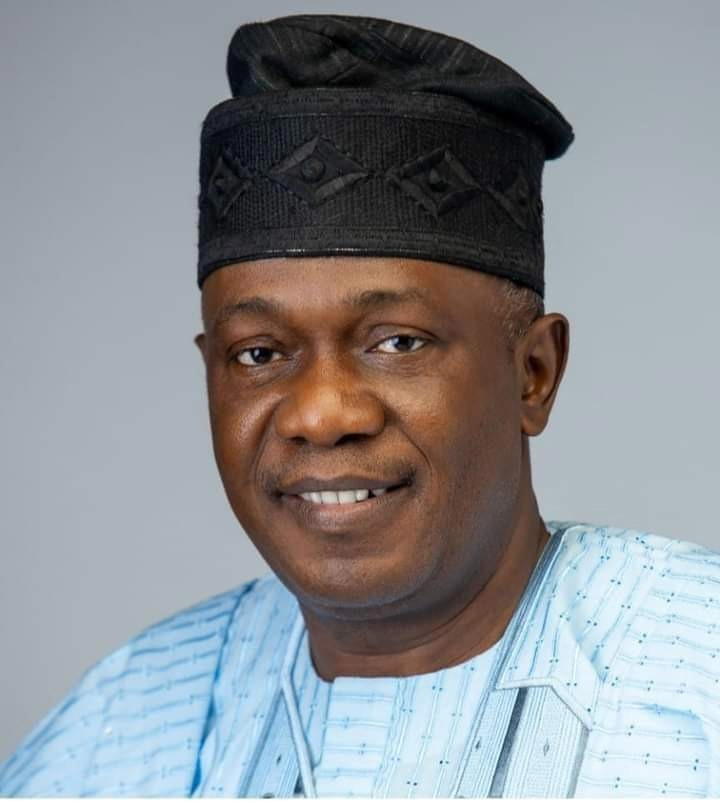
The arrowhead of this project is the state Commissioner for Housing, Mr. Moruf Akinderu-Fatai, in this explosive interview with, Assistant News Editor, Olasunkanmi Akoni, speaks on the journey so far in Lagos as it concerns housing: Excerpts:
Where is housing situated on six pillars of THEMES’ agenda of Gov Bababjide Sanwo-Olu
On the THEMES’ agenda of Governor Bababjide Sanwo-Olu’s vision, we are on the pillar of Making Lagos a 21st century economy, that’s where we are at the Ministry of Housing.
Tackling housing deficit in Lagos
You see people are just brandishing figures in terms of deficit with spurious figures of over 2 milion, this is something that doesn’t exist because its difficult to compile when it comes to the issue of Lagos and the reason is that people from all over the country as well as outside the country, Niger Republic, and countries in west Africa zone they come to Lagos for prosperity, so, as we speak, every minute people troop into Lagos with plans not to return. What that means is that as government we must continue to meet up and even be abreast, try to see how we can tackle the challenges.
We are talking about Lagos by 2050 and in my view we must begin to think vertically because land space is so small, about 0.3 per cent of land mass in Nigeria, smallest in terms of density, is choky. That’s why we must continue to solve that problem trying to meet up those concerns and we must put policies in place. Before now, under Alhaji Lateef Kayode Jakande, when so many houses were built to meet up with the challenge then and as at that time the private sector were not really in the system, it was purely government.
The present situation is, we do not only build houses but durable apartments in such a way that people will be proud of the environment, irrespective of level and status. One of the major things we are doing is to subsidize the cost of these homes especially for the low income earners that’s why we are projecting the arrangement of subscriber paying 5 per cent of the total cost and pay the balance over the next 10 years at the simple interest rate of the apartment at 50 per cent, not compound interest. Then, those house we target are also subsidized for instance, Ikorodu scheme newly commissioned, selling around N9 million for two bedroom flat, one bedroom, N4 million. If you compare that with the real cost, you know its subsidized and its something we want to escalate.
Having successfully completed and commissioned ten housing estates in the past two years, and working hard to deliver our various ongoing schemes, we are moving forward to implement strategies that will improve access to decent homes in the state.
As we speak, we are building in Agbowa, of 660 units, at subsidized rate, and pay back over a period of 10 years. Also in Badagry, 252 units, at rent to own policy, its there already. We have Sangotedo, 1,180 units, we will also be coming up with 480 units, rent to own in Ibeshe, it will be ready in the next one month or so.
But, looking at the population, viz-a-viz the housing units its not yet commensurate even though, we are doing everything to scale up bridging the gap in housing deficit in the state by providing affordable accommodation to the masses, that is the low income earners. But there is no way with the present situation and strategy that we can meet up with the deficit.
That’s why we are doing a lot of work behind the scenes. We are looking for technology to accelerate cheaper schemes. We are also looking at the private sector. Meanwhile, the private sector we have today are those interested in high network buildings, so we are trying to identify those among them that are interested in providing houses for low income earners.
Looking at our budget again, it something we have to share with such important sectors like; Health, Transportation, works and Infrastructure, employment generation, among others, that’s why Mr. governor has continued to encourage us by giving us all necessary supports, particularly in the provision for low income earners, in such areas like: Ipaja, Ayobo. Governor Babajide Sanwo-Olu has directed that cost of homes built by the state should be lower than the market price to make home ownership easier for the people, government is seriously working at having more homes available for residents before the end of the year.
We are engaging multinationals along with other Ministries, Departments and Agencies to build and support the financing of buildings in the state. This is the viable option, given the fact that land is a limited resource in the state.
State’s housing schemes, which ware being financed through direct budgetary allocation are located in: Odo-Onosa Ayandelu, Agbowa, Sangotedo Phase 1, Gbagada and Omole Phase 1. Other schemes that were being constructed through direct budgetary allocation include: Egan-Igando, LASU, Ita-Marun in Epe and Ajara.
The State Government has completed various Housing schemes located at Igando, Lekki Phase1, Lekki Phase 2, Igbokushu, Nob Oluwa, Idale Badagry, Iponri, Igbogbo among others, while rounding up works on six others sited at Odo-Onasa/Ayandelu, Resettlement Scheme Agbowa, Sangotedo Phase1, Omole Magodo, Gbagada and Ibeshe which is being built by the Lagos State Property Development Corporation.
Hopefully, the six schemes that are at various stages of completion in Odo Onasa-Ayandelu, Agbowa Resettlement Scheme, Sangotedo,Omole/Magodo, Gbagada and Ibeshe will soon be commissioned while others at LASU Ojo, Egan- Igando and Sangotedo Phase2 are also receiving attention towards speedy completion.
These schemes with others at Itamarun Epe and Ajara in Badagry as well as joint venture schemes will yield over 7000 homes by the third anniversary of the present Administration.
The State Government is looking into the issue of accessibility of decent homes through a multidimensional approach that will reduce these financial barriers to housing.
Major housing challenge
The major challenge we are facing in the provision of housing units in the state and Nigeria in general is the lack of purchasing power by our people. For example, you are supposed to sell at N15 million, Mr. Governor is magnanimous to give it at N10 million since is for low income earners, you still discover that, one bedroom flat which goes as low as N6m is difficult to meet up because it will take a level 14 officer to afford at 5 per cent simple rate over 10 years. If you are taking 33.3 per cent of the civil servant salary because we did the calculation that what you are taking home from your salary shouldn’t go beyond the 33.3 per cent, so that you can have other incomes for other needs. So, calculating the 33.3 per cent off the salary, it will take a level 14 officer to get a bedroom apartment of government scheme in Lagos. That means the mortgage system itself is not yet robust. With the kind of mortgage system that we can pride ourselves in should be the one as low as 2 to 1 per cent over 25-30 years, which we are not there yet.
What is Sanwo-Olu doing
However, what Sanwo-Olu’s administration is striving at is taking a holistic manner, not a matter of building houses alone but also looking at escalating investments in housing sector, from all over the globe that’s why we are working on the Mortgage Law which is before the House of Assembly, it will soon be passed into law. Also working on the Rentage Law. And the combination of the two laws is to protect the lenders and borrowers. It will also help when you are building your homes, government can’t build houses for everybody that’s why we are encouraging the private sector. The present law protects the tenant. So, what the rentage law is going to do is to protect both the landlord and tenants. In the event that you can’t pay it will state the mode of payment because the landlord also pay taxes to government. The law will stipulate all agreement concerning moving in and out of a rented apartment so that there wont be any crisis in the event of any disagreement.
It’s not everybody who have the power to buy houses. Some people want to rent why some people want to buy. So all these have to be taken care of. And how do you take of that when you don’t have solid rentage law in place that takes care of both parties. What government is working at is that there is no arrangement of paying for 2-3 years rent. We are also encouraging private sector to come onboard with a kind of efficient and effective mortgage system backed by law.
Workers are not paid yearly but monthly, so, if its monthly arrangement it is system that can work easily. It will help a lot and captured more people into the scheme, otherwise we will continue to have tax fraud and evasion where people can’t find a place to put their heads.
Also, the state government is fine tuning a financial mechanism tagged Lagos Affordable Housing Development Trust Fund. A financial product that will bring succour to both property developers and intending home owners.
The fund will reduce the challenge of financing housing development as well as empower people particularly the low and medium income earners to access housing without undue financial stress.
The housing challenge in Lagos is complex because of the continued and uncontrollable influx of people from all over the nation.
The Lagos Affordable Housing Development Trust Fund which is being prepared in collaboration with Arctic Infrastructures is the State’s response to the need for financing products that are domesticated to solve our peculiar housing challenge.
The provision of mass and social housing is a key agenda of the state government premised on a structured financing mechanism that is based on predictable population growth.
We have to formalize the informal sector through cooperative associations and artisans guilds so that majority of our people can take advantage of a financing product that supports instalmental payments.
Also, inline with our passion for progress in the sector, funding is needed and assistance from our development partners will be highly appreciated.
The uniqueness of the financing package is the fact that it will be targeted at low income earners and the informal sector and can be accessed by both construction companies and homeseekers and will be made up of contributions made by both public and private sector. The fund will also cater to training and capacity building and upgrading of artisans, development of innovative building technology, sustenable housing developments and renewable of slums.
The suggested funding from government is expected to be sourced from contributions by local governments, subventions, infrastructure development charge, Housing fund surcharge and Lagos Pension fund.
Private sector contributions can be in form of grants and donations from both local and international organizations.
In disbursing the fund, part of the financing will be used as Housing loans with repayment plan of 20years. This will be channeled through micro finance banks with cooperative societies serving as intermediaries. Construction fund will also be granted to developers having vertical construction with sustenable energy idea.
The idea of a Trust for the financial product is to ensure accountability, credibility and sustenablity.
Other plans that are being worked out by the state include: an allocation structure that will reach the masses so that homes are not hijacked by the rich, continued maintenance of existing schemess to prevent rapid dilapidation, provision of homes for young professionals, introduction of cost saving techniques to reduce cost of building homes and increasing sustenability of future Housing schemes.
That why Lagos State is committed to continue to work relentlessly until more Lagosians are brought on the home ownership ladder. Building more homes is our way of improving standard of living , increasing economic engagement through provision of construction jobs and also opening up our rural areas.
Disclaimer
Comments expressed here do not reflect the opinions of Vanguard newspapers or any employee thereof.