
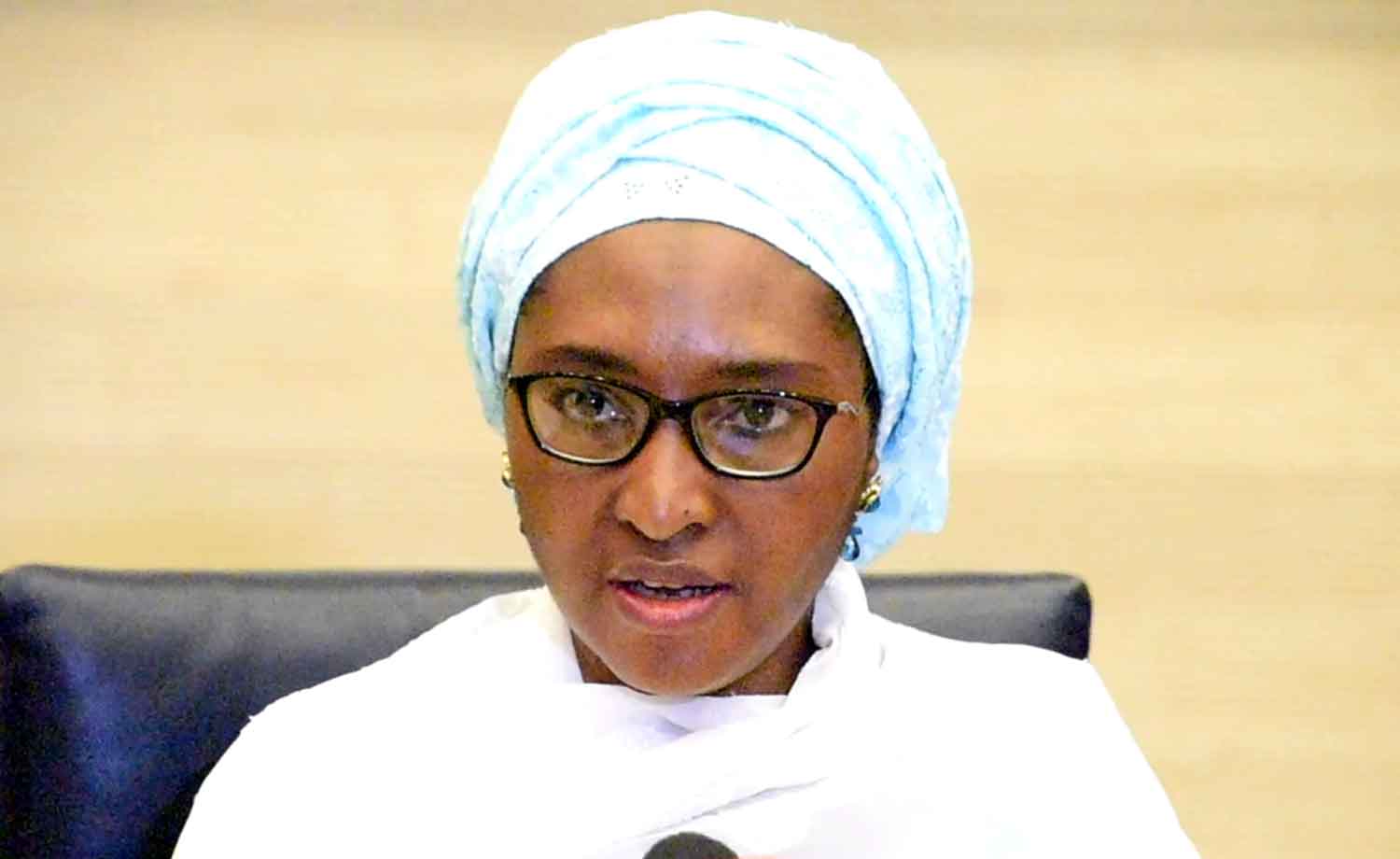
Zainab Ahmed
By Emma Ujah, Abuja Bureau Chief
The federal government has planned to spend the sum of N13.98 trillion in the implementation of its 2022 budget.
With expected revenue of N8.76 trillion, the federal government would be recording a deficit of about N5. 22 trillion, next fiscal year.
This is contained in the Budget 2022 Call Circular with reference number: BD/2000/EXP/S.800/I/3/46, issued by the Minister of Finance, Budget and national Planning, Mrs. Zainab Ahmed, to all federal government Ministries, Departments and Agencies (MDAs).
She said, “In accordance with the 2022 – 2024 Medium-Term Expenditure Framework and Fiscal Strategy Paper, the aggregate FGN revenue available for budget (including GOEs) for fiscal year 2022 is projected at N8.762 trillion, while the aggregate expenditure level is projected to be N13.98 trillion (inclusive of GOEs, grants/donor funded projects).
“This aggregate expenditure is made up of Statutory Transfers of N613.36 billion, Debt Service of N3.61 trillion, Sinking Fund of N292.71 billion, and Recurrent (non-debt) expenditure of N6.21 trillion, A total of N4.79 trillion (inclusive of N750.04 billion for GOEs) is provided for personnel and pension costs, an increase of N534.40 billion over 2021. This is 57% of projected aggregate revenues for 2022.”
The aggregate amount available for capital expenditures in the 2022 budget is N3.61 trillion. This represents 26% of total expenditure (short of the 30% target set by the current administration), and is 17.3% less than the 2021 provision of N4.13 trillion.
The 2022 provision comprises of N1.76 trillion for MDAs, N366.14 billion capital supplementation, N345.78 billion capital component of statutory transfers, N10 billion capital component of the Special Intervention Programme, N425.02 billion capital budget of GOEs, N62.24 billion for donor/grant funded expenditures and N638.32 billion funded by project-tied loans.
The N1.76 trillion available for MDAs’ capital is N259.32 billion (representing 12.8%) less than the provision for MDAs in the 2021 Appropriation Act.
READ ALSO: No budgetary approval for CAC until financial report is submitted ― Reps
According to the minister, “the provision for development expenditure has been constrained by low revenues, increasing personnel and pension, as well as debt service costs.”
In addition, she said that the continual provision of fuel and electricity subsidies remained a major drainer to overall government revenues.
The Statutory Transfers of N613.36 billion consist of allocations to the National Judicial Council (NJC), Universal Basic Education Commission (UBEC), Niger Delta Development Commission (NDDC), National Assembly (NASS), Independent National Electoral Commission (INEC), National Human Rights Commission (NHRC), Public Complaints Commission (PCC), North East Development Commission (NEDC) and Basic Health Care Provision fund (BHCPF).
Debt Service
The sum of N3.609 trillion has been provided in respect of Debt Service, made up of N2.506 trillion for Domestic Debt, and N1.103 trillion for Foreign Debt. Additionally, N292.7 billion is provisioned for Sinking Fund to retire maturing loans.
The aggregate sum of N3.261 trillion (excluding capital component of statutory transfers) has been set aside for critical capital expenditure, N1.759 trillion provided for MDAs’ capital expenditure; N366.14 billion for Capital Supplementation; N62.24 billion for Grants and donor funded projects; N10 billion for Social Investment Programme; N425.02 billion for GOEs; and N638.32 billion for Multi-lateral and Bi-lateral Project-tied loans.
2022 Budget Thrust
Mrs. Ahmed said “The thrust of the federal government’s capital expenditure programme in 2022 will be completion of as many ongoing projects as possible, rather than starting new projects. Thus, MDAs are hereby advised that new projects will not be admitted into the capital budget for 2022, unless adequate provision has been made for completion.
Disclaimer
Comments expressed here do not reflect the opinions of Vanguard newspapers or any employee thereof.