
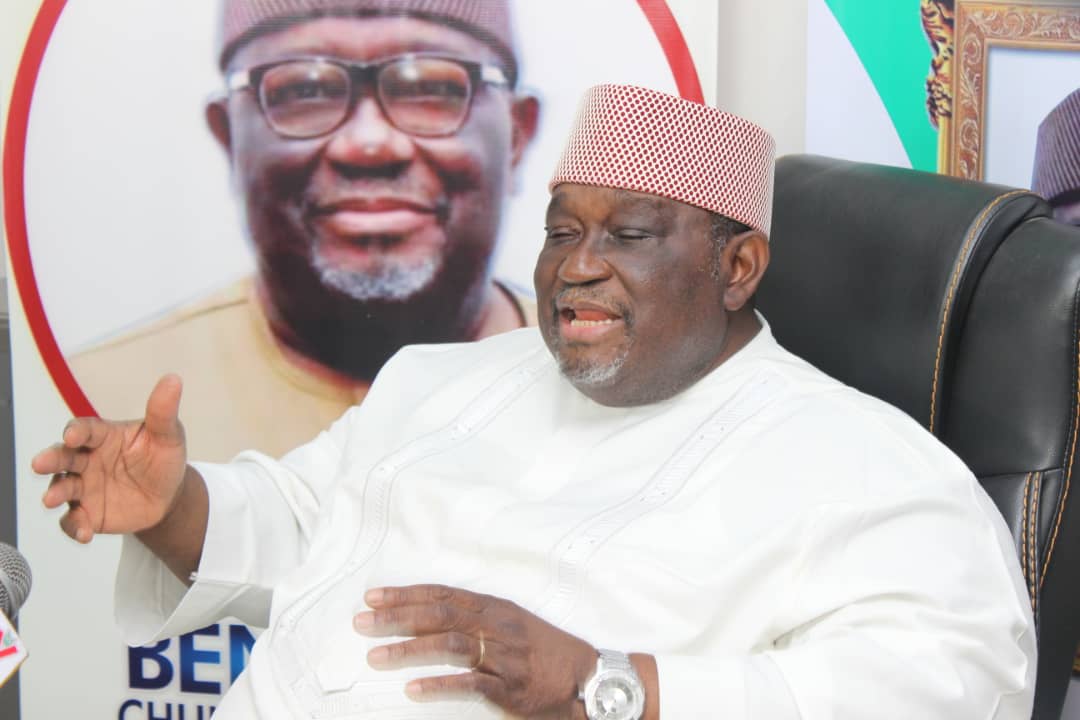
Benjamin Osisiom
Recently, Prof. Benjamin Osisiom was crowned as the President of the Association of National Accountants of Nigeria (ANAN), a professional accounting association in Nigeria. He is a retired University Professor and Clergy man with over 30 years of teaching and practical experience in the accounting field.
In this interview, Osisoma who marks his 100 days in office examines reasons for the persistent corrupt practices among public office holders in Nigeria. He also provides a glimpse into the activities of ANAN, the adoption of technology , while also revealing his target goals for the duration of his stay in office.
He also spoke on the challenges faced by the association, especially with the quest for supremacy with the sister Accounting body, the Institute of Chartered Accountant of Nigeria (ICAN).
He also gave an insight on how these issues have been resolved, the recently approved University of Accounting, forensic investigation among others. Excerpt.
By Emmanuel Elebeke
You just clocked 100 days in office, tell us what you have done so far?
It has become customary to look at the achievement of Chief Executives after 100 days in office. It is not that that time frame is sufficient to define completely, the goal of what you have set out to achieve but it could be a pointer towards what should be expected in the days ahead. And so, it has become a very important yardstick. It has been a very busy period for me, when we came in; I was stepping into the shoes of a predecessor who had done so much for ANAN in a very short time. This entire building was acquired under his watch. And under his watch ANAN was licensed to run a university. And so, I came in barely after the license was issued. So, the responsibility now fails on me to ensure that this university takes off on a good footing. I had my work cut-out for me and over this period, we have done quite a lot.
Where is the university?
We have tried to give the university a firm footing to take off, provided the funds and support. Right now, we are assembling the staff and resources that will enable us run a full post-graduate university. Beyond that, the university was mid-wifed by College of Accountancy which we are authorized under our laws to run. It is a self regulatory body because it derives its powers from laws that set up ANAN. And over the period of 40 years, it has been from one great success story to another.
The College has provided much of the backings of what we are doing in ANAN, trained the personnel, provided the funds for our operation and given us a brand image that is very peculiar.
What more have you benefited from the College?
The College system of training is ANAN’s gift to Accountancy profession globally. We will not want the university to crown out the College. It will be unwise to sacrifice a 40 years success story on the altar of a new venture that we do not even know how well it is going to do. So, we have decided to handle the two to carry them along. That is one area we have experienced a lot of activity. Within the first month of my assumption of duty, we have turned the new College site to a construction site for a new Admin building for the College. And we have decided to shift the College out from where it was. It was actually the College that gave birth to the University and the two cannot co-exist on the same facility, or else we run into problems with the regulating authorities.
The College has to shift on a separate over 40 hectares of virgin land. We have already commissioned the admin building and we are hopeful that before this year runs out, in the next three-four months, we have an imposing Admin building, three floors there with two lifts and multiple offices.
How has the pandemic impacted on your administration?
When we came in initially, with hand-over of COVID-19, we could not go on with our Mandatory Continuing Professional Development Programme (MCPGP), which the core of ANAN. The two things that sustained ANAN in the past years; the College and the NCPGP programme. The programme started in 1996 under Baba Odumero of blessed memory but we found ourselves in a fix because of the impact of the pandemic. However, barely, two weeks ago, we had our PCPGP programme here in Abuja, which was a resounding success.
Right now, our branches are holding retreat earlier scheduled to hold in Jos before this eruption of violence in Jos at the weekend and this made some of our members from North East to be cut off. We then decided to organize a hybrid retreat here in Abuja, which is ongoing.
Are you considering technology deployment?
Yes, I am declaring state of Emergency on ICT Readiness as a body. Couple of months ago, the International Federation of Accountants, IFAC administered a Digital Readiness Assessment on us and our performance was not satisfactory. So, we knew we had to do something.
On this issue of ICT. So, we feel that must break out to be globally competitive.
Already we are making quite an impact. The College has broadened its appeal. The thing there is to reach out to members across the nations and across our nation, so that members can apply online from outside Nigeria. The idea is for them to apply, register online and lecture online and also take examinations online. In fact we are coming to the position of issuing certificates online.
We want to get at digitizing our operations so as to be in the vanguard of what is happening in these times. That is our digital emphasis and one of the points we are also driving.
Staff welfare
When I came, I set up a committee on establishment matters because I discovered there was a level of disaffection with certain things about the way operations were going on. Some staff complaining of injustice. Because I hate injustice I had to set up the committee to look into all of these. The white paper on that committee must be out before September so that people will know where they stand. We need to deal with people fairly, mobilize them to do their best.
What are your expansion plans?
We are already beginning to open up our regional offices in the six zones of the federation because we came to conclusion that we needed to have regional offices, if we are going to take the profession to the people. So, we have the regional offices now in Lagos, Enugu, Port Harcourt, Kano, Jos and Abuja. With this, we are already implementing our 7 centre plan. Our examinations now take place in 7 centres across the country. This is only the first step. The next step is where individual members will stay in the comfort of their homes and take these exams under the technology and turn in the result.
Challenges
One of the major setbacks is finance. Again, we are putting together some tools in order to reach out to encourage people to invest in what we are doing. We are not just asking people to give us free gifts, we are asking them to become stakeholders in what we are doing for the future of our nation.
Insecurity is one of the challenges we are facing. Also, with the IPOB sit-at-home order in the South-East which is disrupting our movement. How I wish we have a governance structure where nobody will have course to complain and we will meet everybody’s need. There may be more challenges with individuals.
Forensic investigation?
We berthed a forensic body for forensic accounting fraud prevention. When we started, we decided to go beyond ordinary forensic accounting and said; let people taught in forensic accounting add fraud management because if you are talking only about forensic accounting, you narrow it only to accountants. But with fraud management, criminologist, police investigators and all kind of people can come under that to fight fraud. That is what we have started work on. Initially, we wanted to bring fraud examiners from US to come and we take their exams and be certified by them and they said no way, that they will never outsource their certificate, that we must come to them to be thought, examined and certified.
So, through one of our members we started to replicate it hear, went to our computer lab in Jos and reconfigured them to suit forensic tool kit lab. The first set of trainers look like people doing surgery in theatre and took them to court.
There are rules of evidence you must observe and so we felt that it is not enough to dictate a crime, you must always know how to prepare for the court. So, we introduced the mute court trial and the deputy director of Law School who was Chief Judge in Keffi then appeared in court and let out how to package what is done for the court. We have gone quite some long way. Gradually we have gone a long way.
What is the state of the Forensic body?
We have forensic training body which has taken a turn and has become Chartered Institute of Forensic and Fraud Examiners with an EXCO. Within my 100 days in office, we gave them very strong support to set up a Forensic Academy, here in Abuja. Our idea of the Academy is where you have forensic tool kits lab, have training in different aspects of forensic work, finger printing, and recovery of data from charred document and things like that.
They have acquired a property for that and we guaranteed a N200 million for that.
We are raising this issue of forensic investigation because that is one of the major banes of this nation.
How do you mean?
Everybody condemns corruption, yet it continues to thrive. It is in the church, mosque, offices. All we are doing is to do the best we can and hope that someday we will get there. I am not saying we will stop corruption, but we will reduce it. The reason why corruption thrives is because the deterring factor is not working. When you see people go jail for doing what is wrong, punished for offending the law of the land, people will learn. If we hail the offenders, how do we stop it from happening? But if somebody discovers that if he does certain things the society looks down on him, it will end. So long as we enjoy the loot and largess that comes with it, there from it, there is no way corruption will end.
Who are those to be trained?
Primarily accountants because there is no way you can embezzle a fund in an organization without an accountant. That is why governors and CEOs appoint people who can bend their principles. If people who are in the know are put there, I think, to some extent, we begin to apply the brakes to some of these things.
How do you plan for Examinations of ANAN?
One of the things that cut my attention when I was discussing with CPA of Ireland is when he said they now run exams using tech and invigilate using technology. We intend to bring in the technology that will allow people write exams from their house and the software will police the candidates. We are already working on it. We have already talked to the examination committee. They bought the idea because we want to get the point where the exam will be broken in three parts: first is multiple type where the result will be generated immediately 40%, the second one is filling in the gaps and the last one is case study. These are the ones you must meet and mark.
With this technology, candidates can sit and write from the comfort of their homes and software monitor them, give a query if required and whatever you do, someone will be monitoring from somewhere. This will definitely cub exam malpractice.
What is your relationship with ICAN and private sector?
We are already working with private sector. The thing is this, ICAN started in 1965, we had ours in 1993, almost 30 years difference. So that has given ICAN a head start and ANAN is not competing with them. We have always said it and will continue to say that ICAN is our elder brother. And we have no problem with them, the only problem is when the elder brother says he doesn’t want the younger brother that’s when we have quarrel, apart from that we have no quarrel whatsoever. Some of us all our lives we have devoted it to teaching accounting. I have taught so many students that have graduated and went ahead to do ICAN. Sometimes they come back carrying shoulders so high as if getting ICAN certified have bestowed them more knowledge than others. We are not in any way quarreling with these things, what we are saying is let’s grow together, build together for the progress of our nation.
How many accountants do we have in this nation, if every registered business outfit has one accountant then we will need about 400,000 accountants, but between ANAN and ICAN we don’t even have up to a 100,000. That is a serious shortfall.
All we need to do is ensure that the people are well trained. We should not entrust the training of our students to road side institute, so we set the curriculum and tell them what we want and try to build those value in them.
What is your USP that would appeal to people to go for ANAN instead of ICAN?
On the day we were given the IFAC recognition, the president of IFAC had declared ANAN to be the leading BAO in public sector in accounting management. It does not mean that we are only in public sector as perceived by many, we are also recognized in private sectors.
So when the students faces this choice of where do I go to, is it ICAN or ANAN, what we do is to strive to show that if one is better than the other then prove it by the quality of work that you are doing.
I know of a Professor in school I lectured who had an ICAN background and myself who had an ANAN background, on my valedictory he mentioned that he was happy I was in that school and said he saw no difference between the two professional bodies. So, there are good accountants and there are bad accountants both in ANAN and ICAN. All we want to do is get the beat for our people. ICAN seems to dominate the private sector and ANAN the public sector, and we are carving up. When we started then, people didn’t know we will go as far as we have gone. When ANAN started there were shouts that it will destroy and bastardize standards, but today ANAN has defined standards in accounting.
How have you distinguished yourselves?
IFAC has given us the responsibilities of developing accounting in other African countries like Botswana and Zimbabwe. We are exporting our brand of training to them. When we went to Morocco, for the African Congress of Accountants (ACOA). ANAN by one act has solved over 50 percent of the problems of training accountants in all African countries just by what they have done in the college.
That is what we have to offer, the onus is now on the industries and those who consume our services to price us the way they want. Some may say ICAN is better; there is no problem with that. You see when ICAN started; the emphasis was not on academic qualification.
All you needed to do was just have a secondary school certificate then proceed to the foundation afterwards intermediate thereafter you go to professional.
For ANAN we said no to this, and needed a person to be a graduate from any university or Polytechnic get your HND or BSc so that even without the professional qualification you can still survive in the labour market.
Can you imagine bringing over 3,000 accounting graduates to the college within one compound. Even without teaching them anything it will change their outlook. They will learn from comparing notes from different schools. And that’s what’s ANAN has done, bringing them together at the College and then groom them so they now learn what we want them to know as professionals that’s how they become what they have become.
CSR
We have Corporate Social Responsibility in Bassa Local government where we are rebuilding a clinic that has gone into a state of disrepair. The board of Governors took a position that we are going to work on this. As at last week, we have started construction of a new clinic there.
Again, ANAN has a research centres in 8 universities and this administration is going to add more.
What is your reaction to the differences between the Charted Institute of Taxation and ICAN, as stipulated by your Act?
ICAN midwife the establishment of the institute. Initially we were not bothered because everybody understood that accounting includes taxation, financial accounting, cooperate reporting, cost and management accounting, analytic and forensic review, all these are part accounting.
All over the world when you are practicing accounting all these are part of it, you cannot remove taxation and say you aren’t authorized to tow this part. How can anybody talk about taxation without accounting? So, we needed no other law but sadly the law was passed. And it stated that if you are not a member of the Chartered Institute of Taxation, you cannot practice tax administration in Nigeria. Even between ICAN and CITN that the law was established, it became a problem because friction came up between the two of them and they went to court.
This was blowing things apart, but ANAN from the onset had an understanding with CITN. We forged an alliance of mutual recognition with them so they recognized our members and we did recognized theirs too. So we never had that problem with them. If you are a fellow of ANAN, CITN automatically made you their member and so it was for us too.
Going forward, what are the legacies you want to leave behind?
I intend to Chang the matrix of accessing leaders in a given position. People always say I was a successful leader because I built this or that, I promoted this and that. For me, I want to be remembered as a principled centered ethical leader who established a just and fair system where everybody had equal rights. I am not saying that I won’t build, I will but one of my major task is the issue of the College.
My immediate task now is to establish the Nigerian College of Accounting in better footings than what it was. I want to give them a befitting campus not just suitable for Nigeria but Africa as a continent. I want a campus that people will come and marvel. At this starting stage if you see the structures all erected you will marvel.
Paying of salaries was another difficult task when I assumed office but we are now taking care of that. I learnt that when God raises a man in leadership, it is for him to solve a particular problem and when that problem is solved, his is satisfied. I don’t have to be a Benjamin solving Moses problem but I have to be a good leader. There is something God wants me to do and ones I do it I am done.
Disclaimer
Comments expressed here do not reflect the opinions of Vanguard newspapers or any employee thereof.