
Abiodun Awodele
By Linda Orajekwe
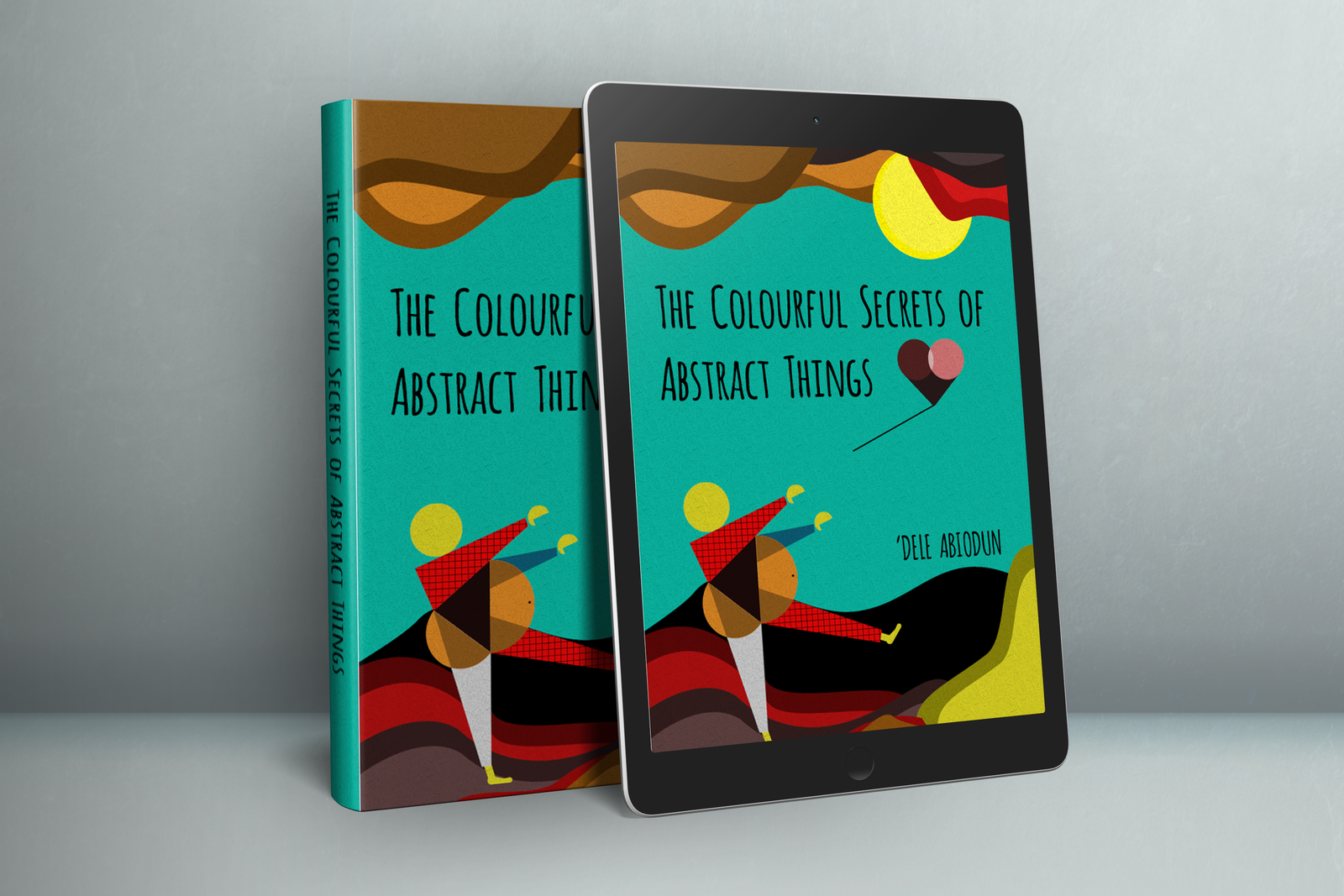
Humans have found different reasons to show we are different from the other creatures and one of these differences many people can think of is our ability to think but Nigerian writer Abiodun Awodele reverses that ideology and imagines the thoughts of inanimate object pushing it notches further by not just thinking but properly processing these thoughts and expressing them in ways that make it easy for us to connect to them. That is what we see in Abiodun’s debut printed work titled ‘The Colourful Secrets of Abstract Things’.
Who is Abiodun Awodele?
Abiodun is a writer, a poet, an author, and a mixture of many other things. He is shy, observant, likes to cook, friendly, and also loves to laugh – a lot. Abiodun is a regular guy, but he is also “The Maskuraid”.
How long have you been writing and when did you decide to take writing as serious enough to write a collection of poems?
I have been writing since I was in primary school. I must have been 11 or thereabout, in primary 5, when I wrote the first piece that I can clearly recollect. It was mock news for a cultural event, and it was inspired by Gbenga Adeboye’s Saturday morning program on Radio Lagos. I started writing poems during my University days and continued afterwards. In 2013 or thereabout, I decided to start a blog and start writing prose. When I realized that I had so many of my poems floating around, especially on cyberspace, I started thinking about giving them a permanent home. Luckily, I found an editor who was willing to do the work, and here we are.
What inspired ‘The Colorful Secrets of Abstract Things’ and the title?
I write poems about different things, like events around me, things in the news, or just thoughts running around inside my head. Poetry for me is a means of expression, the shortest way of telling stories. One day I was thinking about how crazy it would be if someone could listen to the experiences of certain inanimate objects. What if we could ask things like shoes, mortars, vehicle tires, and the likes, what their lives have been like thus far? I wrote a poem about it, and during the compilation process my editor and I were debating about catchy titles for the book. She suggested the title, and it just felt so apt. You know, deep and mysterious and yet, attractive. So, we decided to go with it.
What was your creative process like while putting this collection together?
I had a lot of poems written over the years, so when it was time to do the book, I sent a good number of them across and we started whittling them down into themes. By the time we were done, we had quite a number across the different themes, then we started eliminating the ones we felt didn’t fit into the collection.
What was the most difficult poem for you to create, why was it difficult?
I think it is one of those that has to do with death. Death, as we know, is a subject that’s usually treated as taboo around these parts, despite the fact that it is the only conclusion to life and living. Everybody will die, but I think what scares us as human beings is that we don’t know when so talking about death makes a lot of people uncomfortable. We are afraid of our mortality and whatever makes us think about it is usually avoided.
Which of the poems do you have a soft spot for enough to call your favourite?
Let’s see. Picking one is almost impossible, but I think I’ll pick ‘Wrong Warning’ because it describes the perennial dangers girls/women face from familiar foes. Everyone keeps telling them to be careful of the enemy, but nobody tells them what the enemy looks like. Nobody warns them that the enemy could actually be a member of their inner circle, wearing a familiar face.
ALSO READ: A little learning is a dangerous thing
How attached or detached are your personal beliefs to this work? Which of the poems would you say reflects your personality?
I like to think I am pretty open-minded, especially because as a writer that is dealing with the public, you cannot afford to alienate any section by being blind to them. When I write, I try as much as possible to keep any biases I may have, off the page. For the poem that reflects my personality, that for me would be ‘Gobe’, because it is cheeky. I love mischief.
How do you want people to feel after reading ‘The Colorful Secrets of Abstract Things’?
I hope they enjoy it. I hope it brings them as much pleasure to read as it brought me to write, and I hope they understand and appreciate me opening up my heart to them. I want them to feel every poem intimately as if I reached into their minds and stole their very thoughts. After reading, I want them to feel that their time and money have been well spent, to like the book enough to recommend or buy for their friends, and to look forward to buying my next book. I want my name to keep ringing in their heads.
What’s the best feedback you’ve gotten on the book and why was it your best?
A colleague read one of the poems and called me to explain in detail why he felt I was talking about him. That was how vivid and relatable it was, and for me, I was fulfilled because it meant I had managed to connect with a real human being without having any knowledge of his peculiar circumstances.
What’s your thought about the reading culture in Nigeria?
I think it could be a lot better. A lot of things have gone wrong and that’s why we are where we are now. Reading, especially amongst the younger generation of Nigerians, has lost pride of place due to a lot of factors. People are generally less inclined to read, maybe because you can’t find neighborhood libraries like we used to have grown up, maybe because books are now so expensive and everyone is preoccupied with survival, or maybe because everyone wants to be an entertainer making millions because scholars are never celebrated. We need to fix up and fast because people who don’t read are doomed. Everybody needs to play a part in bringing reading back to the forefront. Everybody, including the Government, parents, and individuals.
How well are Nigerian fictional works distributed in Nigerian schools and how can they improve?
I think more thought and less ‘influence’ needs to go into the book selection process. There are many brilliant Nigerian writers, but somehow, it seems certain powers that be decide who gets recommended based on criteria that are at best shadowy. This anomaly needs to change. Let me stop there.
Who are some of your favourite African authors including poets? For poetry, I’ll go with Dami Ajayi and Efe Paul Azino. Fiction would have to be Elnathan John and Leye Adenle.
What’s your favourite book as a child and what’s your favourite book so far?
As a child, I loved anything by Enid Blyton, but the first book I ever really fell in love with was The Long Winter by Laura Ingalls Wilder. To be honest, picking a favourite book now is almost impossible.
Do you think poetry is well received in Nigeria? How do you intend to use your work to change/influence such reception?
Many readers tend to avoid poetry because they believe it is not so easy to understand. I can understand that, because poetry can be quite abstract sometimes. Some poets also ‘deliberately’ complicate their works, maybe to make them ‘esoteric’ or something like that. This also contributes to the strained reception of poetry. However, poetry is all around us, in our daily thoughts and activities, especially music. Like I said earlier, poetry for me is the shortest way to tell a story, so I write in the simplest language for all to enjoy. Every time I write a poem, I am painting a picture of everyday things that people can relate to with everyday words. It is my belief that as more people come to realize that there is nothing complex about poetry, the more amenable they will be to it.
What makes a good book to you?
As long as I enjoy reading it, the book is good.
How far would you go to get a good book?
In my younger days when means were scarce, we did a lot of crazy things for books. We had this scheme in secondary school where you could borrow a novel from a classmate but couldn’t take it home. So, you basically spent every possible minute of the school day reading it, sometimes deliberately missing classes. I remember spending several periods in the school toilet to finish a Nick Carter novel. Now, if you know how horrible those toilets used to be, you would understand the depth of sacrifice that it was. Getting books these days is a whole lot easier.
Who’s your favourite all-time book character and why?
Another hard question to answer. I’ll probably go with Mac Wingate from the World War 2 series by Brian Swift.
How long does it take you on average to finish reading a book?
The “borrow-borrow” lifestyle in secondary school taught me to read very fast. When the book is an interesting one, it also makes me want to see the end of the story as quickly as possible. Circumstances may however affect how quickly I finish a book. For example, I picked up Stephen King’s Elevation on Tuesday morning and finished it in around 3 hours while waiting for my radio interview. There was nothing else to do after I arrived at the venue early. It doesn’t always happen that way, although I never let a good book drag.
How do you feel after publishing this work and what’s the grand plan for you as a writer?
Publishing this book has given me a sense of accomplishment. It’s not my first book, I published two e-books earlier, but as the first one in print, I count it as my first ‘tangible’ effort. There is this feeling of elation that comes with holding something you conjured up out of nothing. I feel like a parent that has birthed a child, like a god that has created life. The fact that people read my thoughts and see them as meaningful makes me happy. For the grand plan, I’ll say it is to take it one step at a time. For now, we try to push this one as far as possible. I’m also working on another book at the moment, and only God can tell what happens after that one is finished. I hope it is something good, literally.
Disclaimer
Comments expressed here do not reflect the opinions of Vanguard newspapers or any employee thereof.