
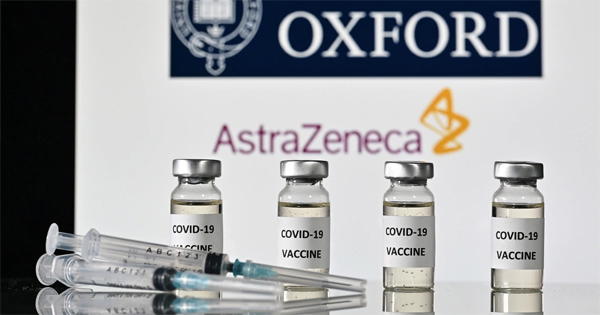
Hailed as a cheap, easy to store not-for-profit vaccine, the AstraZeneca shot has suffered a growing number of setbacks.
In the latest, around a dozen countries have suspended its use as a precaution after blood clots suffered by some of those vaccinated.
– ‘Accidentally’ great –
The British laboratory made headlines in November when it claimed its jab could match the 90 percent effectiveness of the rival and much more expensive Pfizer/BioNTech jab, which has to be kept at extremely low temperatures.
But that success rate was only if half a dose was given for the first shot with a full second dose a month later.
However, it later emerged that these results were obtained by accident when a half dose was given by mistake, raising questions about the robustness of the tests.
On average, trials showed it to be about 60 percent effective, though in real world conditions it has so far performed much better.
– Supply shortages –
The Anglo-Swedish drug company was accused of bad faith by European leaders in January over massive shortfalls in the delivery of vaccines to EU countries while millions of Britons were getting the shot.
The stand-off prompted the EU to slap export controls on vaccines and send inspectors into a plant in Belgium where the firm said it was having production problems.
Livid that AstraZeneca would only be able to deliver one-third of the promised 120 million vaccines in the first quarter, Brussels threatened to trigger an emergency clause in the Brexit deal before quickly backtracking.
– Governments’ mixed messages –
When the EU experts finally approved the shot, health officials in a number of states including France and Germany refused to authorise it for over 65s.
ALSO READ: Canadian PM urges citizens to take ‘safe’ AstraZeneca shot
Faced with vaccine shortages, both countries as well as Italy later made it available to some older people with serious health risks.
By then the bloc was facing rising scepticism about the shot, with Angela Merkel forced to praise it with doctors only giving a fifth of doses that had been delivered to Germany.
– S.Africa sends back doses –
While AstraZeneca and many scientists said the jab had been the victim of unfair coverage, the bad news just kept coming.
South Africa asked to send back one million doses after scientists found it gave “minimal protection” against mild and moderate cases of the country’s more contagious virus strain.
– Not a charity –
The vaccine won plaudits initially for its non-profit stance, but last March Oxford University, which developed it, backed off its pledge to donate the rights to any drugmaker.
AstraZeneca said it would provide doses on a cost basis for as long as the pandemic lasts. But it was later accused of reneging on this when it emerged that it could up the price as early as July.
– Blood clot worries –
The latest problem emerged last week when a growing number of countries started following Denmark in suspending their campaigns after a reported link with blood clots.
On Friday the European Medicines Agency, which is the EU’s drugs regulator, said severe allergies should be added to its side effects warning.
The director of the Oxford Vaccine Group said on Monday there was no link between the jab and blood clotting, and the World Health Organization has so far insisted there is no reason to stop using it, describing it as an “excellent vaccine”.
However, WHO experts plan to meet on the vaccine on Tuesday, while the EU regulator will do the same on Thursday.
The countries suspending it include some of the world’s richest, such as France, Germany and Italy, who are awaiting a further assessment by the EU regulator.
They also include poorer countries like the Democratic Republic of Congo and Indonesia.
[AFP]
Disclaimer
Comments expressed here do not reflect the opinions of Vanguard newspapers or any employee thereof.