
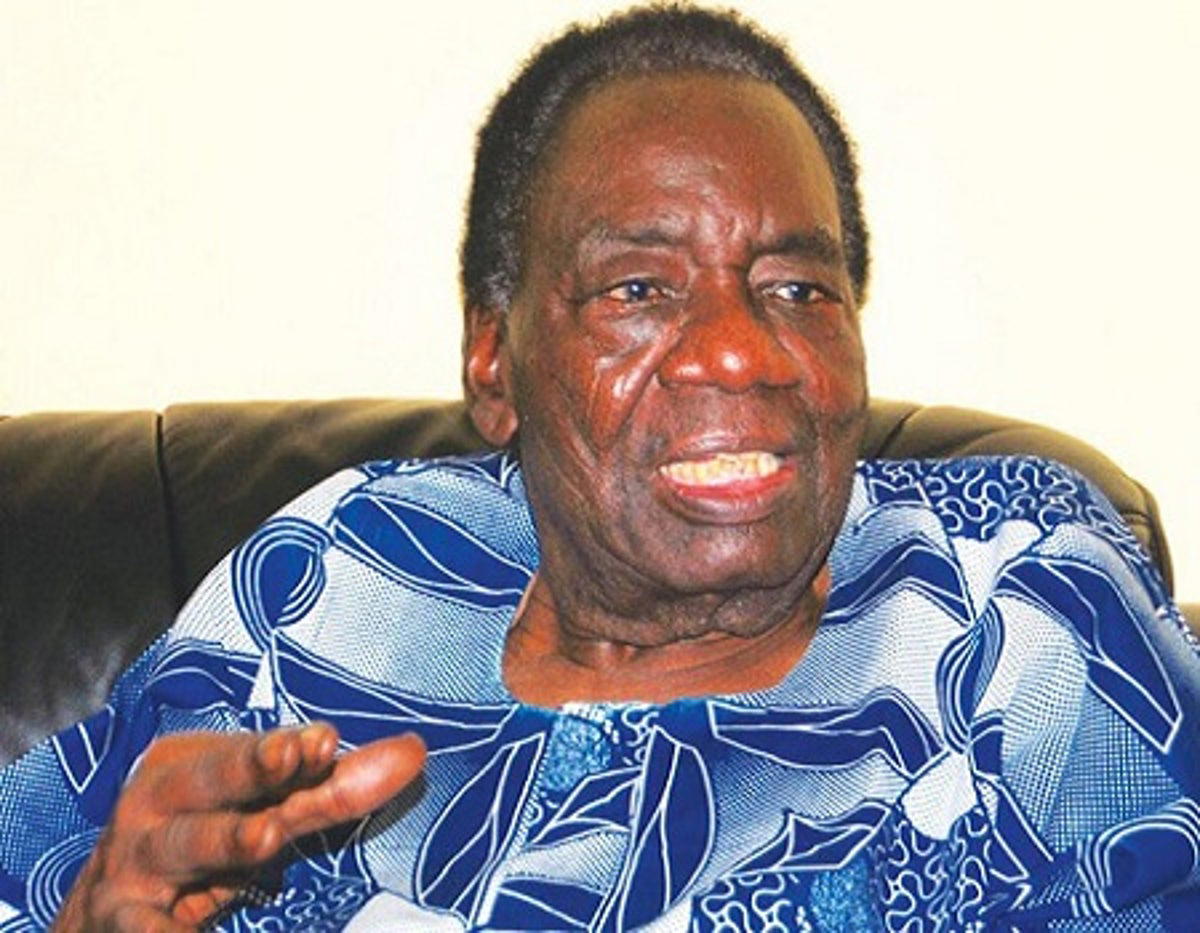
Richard Akinjide
‘IN Uganda it was Obote and the Kabaka and the Chairman of this Assembly is my witness. He was the distinguished Chief Justice of that country when the trouble between the Kabaka and Obote started. It was so serious that Obote had to seize power. It was a case of a seizing power and he used our good friend Idi Amin to storm the palace.
“Of course, the supporters of the Kabaka challenged the legality in court in the case decided by Mr. Chairman in a famous judgement in Ex-Parte Natopho. Now, the same thing happened in Australia which is even a more settled society than our own, where you have bifurcation of authority.
Until within the last three years there were clashes between the Head of State and the Head of Government because of certain peculiar provisions in the Australian Constitution which gives the Governor-General certain powers upon which Guy Whitlam was dismissed by the Governor. Australia, up till today, has not totally recovered from that crisis.
“Even Great Britain which is a settled society had its own problem although the Monarchy is supposed to be constitutional. That was the time of Edward VIII. The euphemism used for him was that he abdicated when in truth and in fact, he was dismissed by Prime Minister Stanley Baldwin, the prestige and the support Churchill had for the King notwithstanding.
So if this can happen in a fairly developed country like Australia, if it can happen in a developed country like Britain, we should not near it. It is poisonous.“If it worked in France, it worked because of the circumstances of the French. If it was introduced before the French Revolution, I doubt if it would have worked because they were virtually at the stage where we are now before that Revolution.
So, we should not do in ten years what should really be done in 50 years. Now, Mr Chairman, another advantage of the Presidential System is that the President has no power of dissolution. He cannot dissolve Parliament, whereas the Prime Minister can use with ingenuity, his dissolution power.
“If he brings a Bill to the Floor of the House and Members do not want to co-operate, they do not want to play ball, all you have to do is to drop word that if they do not support your measures, you may have to go back to the country. If you adjourn the House for 24 hours and come back, the Bill will be passed. This is so because Members do not want to go for election because they can never be sure of coming back. A member also spoke of Senatorial approval.
“This is third reason. We did approve that the Senate should have the power to review Ministerial materials assembled by the President. If it is not in the Draft, then it must be an omission, the printer’s error. I am sure, at the appropriate time, at the Committee Stage, it will be restored. In the case of the Prime Minister, there is no power of review but in the case of the President, you have power to review. You can reject S and say that he is not a good ministerial material for certain reasons. Fourthly, at the time of election, you know who is going to be the Head of your government in a Presidential System.
READ ALSO: Richard Akinjide in his own words (2)
“In the Prime Ministerial System, you do not. It is only after the election that the party decides that X will be Prime Minister. So, at the time, under a Parliamentary System, that you and going to election, you do not know who is really going to rule you because you are never sure. A may be Prime Minister for sometime.
After three months he can be changed by his party, B becomes the Prime Minister and the country may not like him. I would like to know who is going to govern me at the time I am voting.
“Of course, the point has been made to the effect that the whole country is a constituency and I cannot improve on what my good friend, the Member for Ideato/Nkwerre/Isu (Dr K. O. Mbadiwe) said on that point. Of course, you also avoid being in power indefinitely because if you are a Prime Minister and you have the support of the Parliament and of your party, you can be in power as Prime Minister for as long as possible.
“Somebody suggested the French system and added that there should be approval of the National Assembly. Again, this is sowing the seed of discord because if he nominates A and it is not approved, it might lead to crisis between the President and the National Assembly.
He might say one, two and three and all might be rejected. Then when it comes to dismissal, you may say that he needs not go to the Assembly. Suppose he dismissed the Prime Minister approved by the National Assembly and the Assembly is not satisfied with the reasons given or not given? That might again lead to crisis between the National Assembly and the President.
“My own idea is that as far as possible, we should avoid anything that will lead to confrontation between the Head of Government and the legislative body which is supposed to be a check on the President. Mr Chairman, I will touch briefly the Sharia. I was involved at the Sub-Committee level which worked on this particular subject and also involved at the CDC level on this subject, and at the drafting stage. I asked myself: What was the cause of the controversy? I think the causes are two.
One, a lot of big names got unnecessarily involved in the controversy, so people thought there must be something in it. The second reason, to my mind, is a misunderstanding. I will state briefly that we, in fact, have three legal systems in this country, not two. One of the reasons given is that we are leading ourselves to a multiplicity of the legal systems.
Some people say two legal systems. We, in fact, have three. I will restrict my analysis to personal law, that is marriage, divorce, testate and intestate succession. The first system is what we call the Received Law-those who go under the Act marriage. You may go under the Act marriage for the purpose of your divorce and marriage and for the purpose of testate and intestate succession.
Disclaimer
Comments expressed here do not reflect the opinions of Vanguard newspapers or any employee thereof.