
By Ndidi Uwechue
A PROTEST is a cry against pain or fear. Every living thing that can make a sound, protests. When a baby is hungry he cries in protest. When a robber tries to steal a woman’s handbag she cries out in protest. When a child trips and falls he cries out in protest at the pain. When a bystander witnesses a motorist run over a pedestrian she cries out in protest. When a bank teller gives you less money than you asked for you protest by complaining.
These are just a few examples to show that protest during difficulty, empathy for another, or loss, is a normal healthy response. A dead or unconscious person cannot protest when someone hits their body, so protesting is also a sign of life. In successful democracies such as we find in the West, citizens often go on protests as this is a sign of a living, functioning democracy.
Citizens there participate in creating and maintaining societies that are free, and where human rights are taken seriously. Conversely, in failing democracies, citizens are terribly cheated by governments that are delinquent and dysfunctional, and in order to continue oppressing citizens, such governments tend to use state power to harass and terrify and, thereby, reduce the democratic right to protest.
Commentators agree that if Nigeria is not already a failed state, it is on its way to being one if those in authority do not change their way of doing things. Many young people see that their only hope of having a normal life, like their peers in fruitful democracies, is to emigrate to those Western countries. The frustration, hopelessness, and pain of being a citizen with an insensitive and unresponsive government eventually leads to protests, and when despite these, the government remains stubbornly opposed to the people’s welfare, then protests turn into an uprising. Repeating for emphasis: it is healthy to protest in order to change or end an unacceptable condition, and doing so is also a sign of a living democracy.
Protests are a powerful tool for citizens to make their voices heard, and to stand up for justice for themselves and for others. “Each time a man stands up for an ideal, or acts to improve the lot of others, or strikes out against injustice, he sends forth a tiny ripple of hope…building a current that can sweep down the mightiest walls of oppression and resistance”-Robert F. Kennedy.
READ ALSO: Monkey experiments offer clues on origin of language
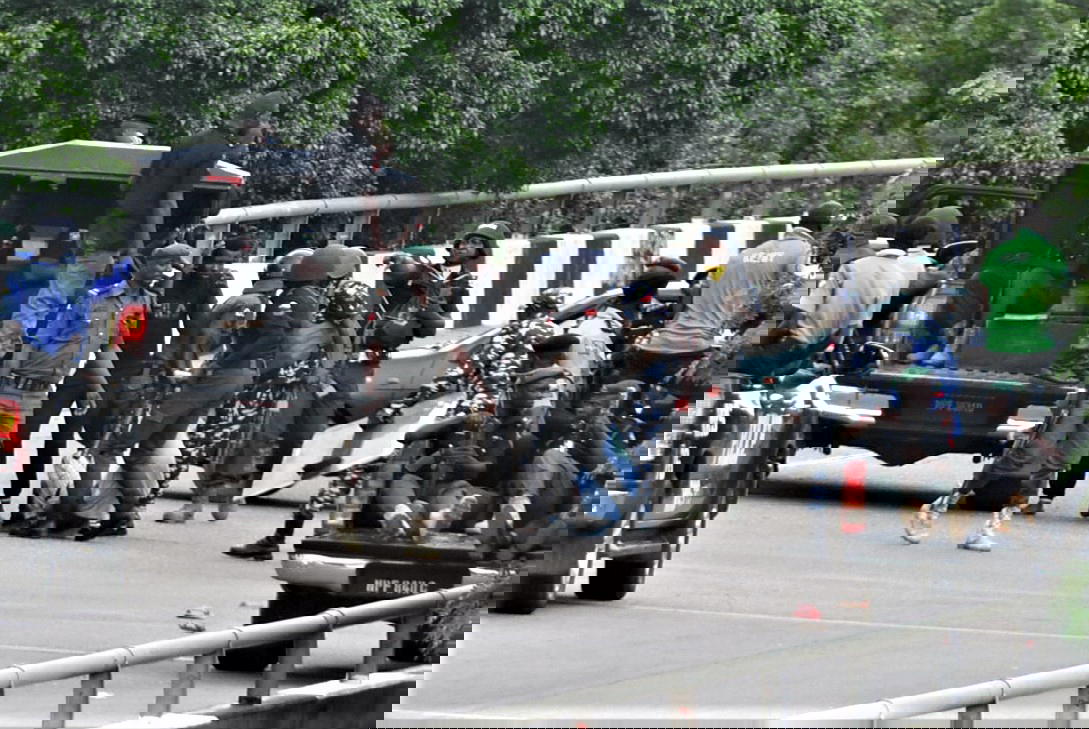
We are seeing more protests in Nigeria, many being localised to a particular community rather than nationwide. These are signs of a people beginning to understand that they have a right to a good life, and that they have a right to good governance. More people would actually like to take part in protests but they have been intimidated by apprehensions that government will use state power to harm or even kill them should they do so.
It is very important that Nigerians know that the Constitution guarantees the right to peaceful assembly such that: “Every person shall be entitled to assemble freely and associate with other persons…” (Section 40 of the 1999 Constitution). This is the foundation of the right to organise peaceful protests and any lawful activity where people gather in groups. The Public Order Act 1990 which says that a licence first had to be obtained from a governor or the police before people can assemble, was nullified in 2007 by the Court of Appeal which said that parts of this Public Order Act were void and of no consequence because they were against the superior directives of the Constitution.
Thus, now in Nigeria, it is the right of citizens to conduct peaceful processions, rallies or demonstrations without seeking and obtaining permission from anybody. What organisers should do though as good practice is to inform the police that they intend to have a protest, rally, etc., so that the police whose job it is to maintain public order and protect the public, will have time to organise to be there to guarantee everybody’s safety.
Nigeria has been brought to its knees, its potentials ruined by the disgraceful and cruel corruption of the ruling class. Peaceful protests are being planned nationwide by a coalition of civil society groups to force those in authority (civil servants and politicians) to change their ways.
This is using protests to ensure that governance is for the welfare of citizens.
Protests can take several forms and more than one type can be used for any particular issue. There are demonstrations, marches, rallies, strikes, boycotts, civil disobedience, hunger strikes, petitions, online protests, etc. The power of protests is that unlike elections where only eligible voters can take part, everybody, including children, can take part. Also, protests can happen at any time and are transparent and visible to a watching world, unlike waiting to bring about change through elections which come by only periodically, and which can be rigged anyway.
For any protest, citizens should come prepared. No matter the provocation, no matter the issue, there should never be any rage or aggression or violence (against persons or property). This will better guarantee either the immediate, or eventual success of the protest, and will attract sympathy and support for the protest. Citizens should be comfortably dressed with sturdy footwear, carry water to drink and refreshments especially if children are taking part.
Consider making your own posters and banners. It helps to educate oneself about protests using the internet and other sources. Even though protests are a serious business of citizen participation, they should still be pleasant and fun.
Uwechue, a retired Metropolitan (London) police officer and pro-social advocate, wrote from Abuja
Disclaimer
Comments expressed here do not reflect the opinions of Vanguard newspapers or any employee thereof.