
By Olu Fasan
NEARLY four months after this year’s presidential election, the animus between the two leading candidates, President Muhammadu Buhari and former Vice President Atiku Abubakar, and their parties is stronger and more deep-seated than during the campaign. Otherwise, how else can one explain the recent sensational, yet unproven, allegation by the Buhari government that Atiku and his party, the Peoples Democratic Party, PDP, were plotting a coup against the president?
Of course, lest we forget, Nigeria is a country where politicians talk and act with reckless abandon, where elections are characterised by intemperate language, mudslinging and hate speeches. Before coming to the coup allegation, here, for context, are some of the wild allegations and incendiary comments made by the leading politicians during the election.
Take Atiku. He alleged that Buhari’s party, All Progressives Congress, APC, was training operatives in China to manipulate the card readers. The aim, he said, was to slow down the card readers in states where he was electorally strong, while accelerating them in Buhari’s strongholds. Now, if this allegation was true, it would obviously have amounted to a serious and widespread electoral fraud, warranting the cancellation of all the elections or their results, not to mention the prosecution and possible jailing of the perpetrators of such a systemic electoral crime. Except that the allegation wasn’t true at all or, at least, not proven! Atiku provided not a shred of evidence to support his serious claim.
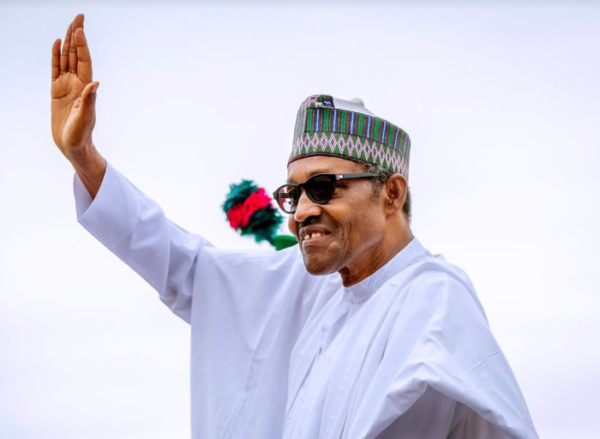
President Buhari participates in Swearing-In Ceremony at the Eagle Square
Then, take Buhari. In one campaign rally in the North, he invoked the word “fitna”. His supporters called it a “joke”. But the dictionary defines fitna as “unrest or rebellion”. How, you might wonder, would the president joke with such a word? But it was Nasir el-Rufai, Kaduna State governor, who plumbed the depths in the hate-speech infamy. He reportedly told foreign observers that if they interfered in the elections they would leave in “body bags”, that is, dead! How could any responsible politician say such an abhorrent thing? Well, el-Rufai, to his eternal embarrassment, did. It was beyond the pale!
Group tackles party chairman who called for Buhari’s impeachement(Opens in a new browser tab)
All of which brings us to the allegation of a coup plot, by far the most reckless and insouciant behaviour, given its wider implications. In early May this year, the Chief of Army Staff, General Tukur Buratai, alleged that there was a coup plot. A week later, on May 14, the Defence Headquarters said there was a document in circulation seeking the overthrow of President Buhari through a coup and named an organisation it called “Nigerian Continuity and Progress” as the group behind the alleged coup plot. The following day, on May 15, the Minister of Information, Lai Mohammed, ratcheted up the rhetoric by specifically linking Atiku and the PDP to the alleged coup plan.
His words: “The PDP and Atiku were working to make Nigeria ungovernable with the intention of overthrowing President Muhammadu Buhari”. He went on: “Our interventions are based on credible evidence”, adding that “no government with the kind of evidence that we have – plans to subvert the power of the state – will keep quiet”.
This was not the first time that the military would make allegations of a coup plot against the Buhari administration. There have been several allegations. For instance, in 2017, the same chief of army staff, General Buratai, said that “some individuals have been approaching some officers and soldiers for undisclosed political reasons”. This was widely interpreted as an alleged coup plot, and prompted a warning from the APC national leader, Bola Tinubu, to those “trying to entice the military out of the barracks”: “Don’t try it!”
But this time, not only did the military allege a coup plan, the government explicitly linked a national political leader and a major opposition party to it. But if the government has the kind of “credible evidence” it said it had, one would have expected it to go beyond not keeping quiet and actually prosecute the alleged coup plotters. How many governments would have credible evidence of a plan to subvert the state without holding those involved accountable for their actions? Attempts to subvert a state or to overthrow a legitimate government are certainly serious crimes that shouldn’t be swept under the carpet!
The truth, though, is that there was no such evidence that Atiku and the PDP were planning to overthrow the Buhari government. As Premium Times, the respected online investigative newspaper, recently put it: “There is no evidence that the document (allegedly seeking to overthrow Buhari) was ever circulated”. Leaving aside Premium Times investigations and findings, the Buhari government discredits itself by failing to provide incontrovertible evidence to support its weighty allegation that a former vice president and a leading presidential candidate and a major opposition party were plotting to overthrow it.
On the Richter scale of political irresponsibility, the government’s coup scare was of the highest possible magnitude. No government in a democracy should make unproven allegations of treason against political opponents. For in such behaviour lies the seed of tyranny, the silencing of political opponents through trumped-up subversion charges.
Surely, the government’s coup allegation against the opposition was reckless. Even sadder was the lock-step choreography between the military and the government. The Nigerian military is prone to politicisation. Yet, its integrity lies in being completely professional and apolitical. The unproven coup allegation hasn’t helped its image!
Disclaimer
Comments expressed here do not reflect the opinions of Vanguard newspapers or any employee thereof.