
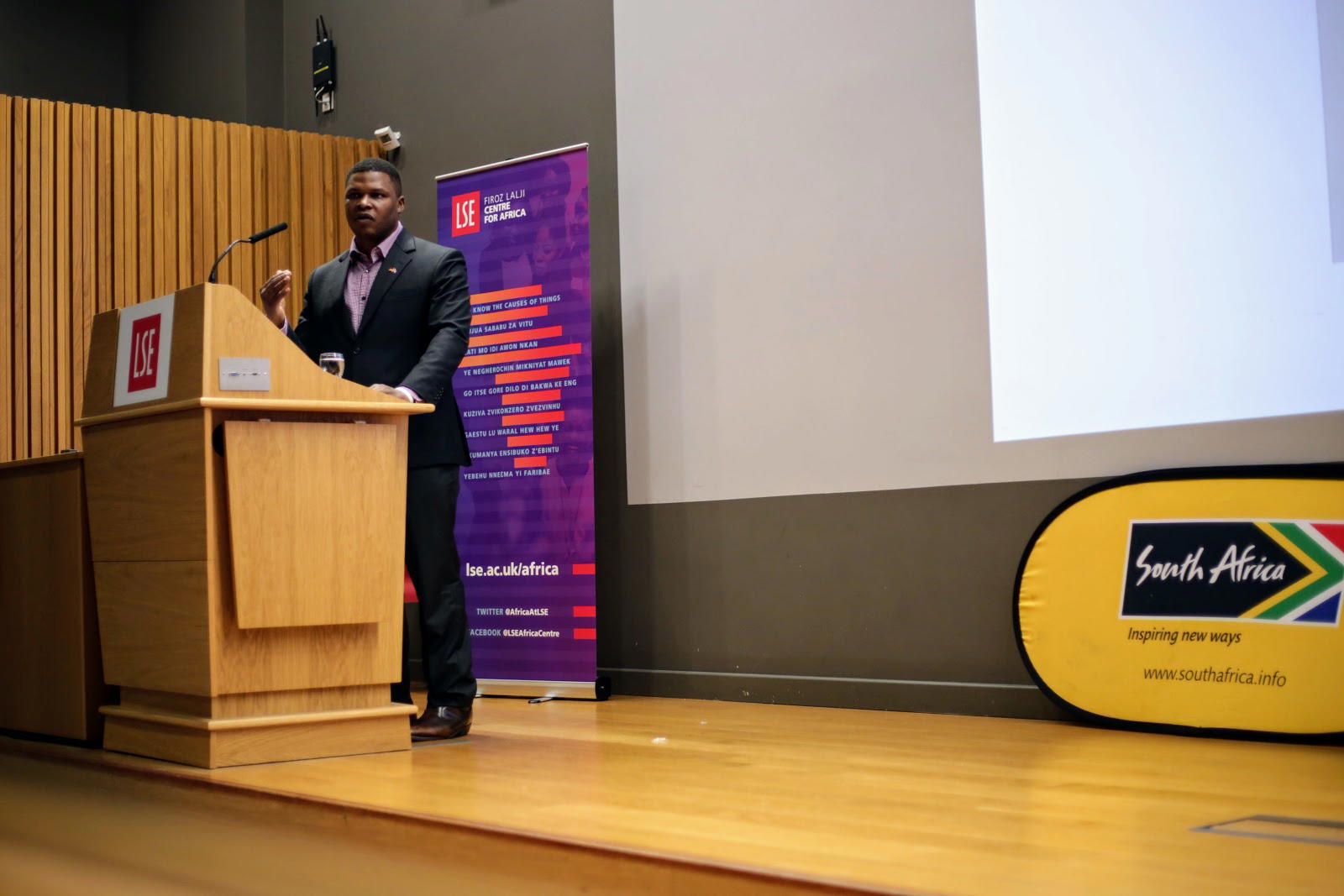
NJ Ayuk
Centurion, the leading pan-African legal and energy advisory group with extensive experience in the oil and gas sector, has been recruited by the African Development Bank through its African Legal Support Facility (“ALSF”) and the National Petroleum and Gas Commission, representing the government of the Republic of South Sudan to build capacity in the Republic of South Sudan’s oil and gas sector. Centurion’s engagement follows an open tender in a highly competitive international bidding process. In a statement, Centurion Law Group notes that “the project is a result of the ALSF’s commitment to foster legal and technical best practices and transparency across South Sudan’s oil & gas value chain. It will focus on providing specialized capacity building training to officials from the National Petroleum and Gas Commission, including the development of best practice procedures for the negotiation, evaluation and monitoring of contracts in the oil and gas sector”. CEO Centurion Law Group, NJ Ayuk, tells us more about the project and South Sudan’s oil and gas sector.

NJ Ayuk
What was Centurion’s strategy to win in the highly competitive international bidding process?
Our strategy is to do good and make money as well. We have a long track record in the oil and gas sector. We have a strong history of accomplishments and it counts when you have to go in for a competitive bid. These kinds of contracts are difficult to win but what is more important is our ability to change things and improve the oil sector to ensure many see the benefits of their natural resources. You have to compete against some of the biggest firms in the world. it’s hard and sometimes they will get dirty, but you must stay focused and put up your A-Game and come out on top. These can be very lucrative–or you wouldn’t see so many big companies going after them.
To what extent do you envisage Centurion’s impact in South Sudan’s oil and gas sector in the wake of your recruitment?
Nothing has done more to lift Africans out of poverty than the market economy and oil has a role to play. There are still challenges and we must work harder and empower people. What we hope to accomplish is to build capacity and encourage growth so citizens of the country can chart their own future and use their resources to make their communities better. The biggest gains in the fight against poverty occur when we empower people, build strong institutions and open markets. That’s what we hope to accomplish with the petroleum commission and the African Development Bank.
What are your thoughts about South Sudan’s oil sector and what it may portend for the regional economy?
South Sudan is East Africa’s only oil producer. The country has one of the largest oil resources in Africa. This is a country with massive potential and massive opportunities in upstream, midstream and downstream. I believe its strength lies with the tenacity of its people to overcome obstacles and keep going. They are some one the most resilient people I have met on the planet. The oil sector has an amazing potential. More work needs to be done on exploration. New discoveries have to be made and production on Block 5A has to resume. Security is improving daily, with the new peace agreement, most observers are bullish that property rights and the rule of law will be reestablished.
READ ALSO: Exploring Equatorial Guinea: New frontier in Oil and Gas
I trust the ability of the leadership of the petroleum sector and the country to ensure that the oil industry recovers faster than expected. You have a great technocrat as the Minister of Petroleum, Awow Daniel Chuang who is ensuring that the industry remains stable and focused. He also understands that for South Sudan to achieve its true potential, It would require attracting massive foreign oil investment. I trust his ability to successfully implement reforms and incentives to lure investors while obtaining a competitive government-take on profits and also promote local content. Most of East Africa is looking at South Sudan.
How would you rate the work of South Sudan’s government agencies to promote investment within its oil and gas industry?
There has been a big push. I think a lot more will be
What is your commitment to South Sudan’s oil and gas industry in general and particularly to the companies that want to invest in it?
We have a platform to grow and we need to work with all parties to accomplish this. Oil can jumpstart South Sudan’s economy, but not become South Sudan’s economy. A truly prosperous future depends on using abundant petroleum to restore the diverse economy that once made South Sudan one of East Africa’s true bright spots. South Sudan still has an experienced and capable domestic oil workforce. More needs to be done to require foreign companies to employ these people both in the oil fields and the downstream, Ideally, jobs would become sufficiently plentiful and high-paying to entice South Sudanese expatriates to return home and build their country.
What are your thoughts on transparency and integrity in the oil and gas industry?
Transparency is an issue in the global oil industry. That’s because the oil and gas industry has a trust problem. The public perception is wrong, and it is unfortunate. There are a lot of good people who work in the oil and gas sector. The oil and gas industry provides the energy that drives economic growth and social development, and we should do more to encourage the work of oil workers especially in Africa.
Many oil workers in South Sudan and around Africa are mothers and fathers who work in difficult environments with the highest ethical standards. We should appreciate the fact that they are taking all necessary precautions and going beyond reasonable efforts to clean up environmental damage when it does happen. But whether it’s fair or not, in the eyes of the public, the “bad apples” define the industry as a whole.
I take a big-picture approach on the industry as it encompasses thousands of companies engaged directly and indirectly in a wide range of activities across the supply chain from upstream, midstream, and downstream, in addition to various supporting services and functions from banking and trading to catering. It is difficult to argue against transparency, particularly since it promotes good governance in the long run. However, it would be naïve to believe that a general law on transparency specifically targeting the oil and gas sector will eliminate corruption and power abuse risks. It is true that transparency is needed but it is not sufficient to produce accountability in the public sector. It takes several robust pillars to build a strong bridge; transparency is only one of them.


How can this be achieved in South Sudan?
Our ability to bring oil companies and political players together will ensure results.
How do you define the future of the oil and gas industry?
Buy and read my upcoming book, Billions at Play. “The Future of African Energy and Doing Deals”.
What bothers you most about the current energy debates?
I am bothered by the level of polarization and demonization of the oil industry and its actors. I love the media and I rather deal with a reckless and fake media than a gagged media. I believe the media has a role to play and it has to engage all sides in this dialogue. We would be doing ourselves a big favor if we spent some time deliberately challenging the tendency to automatically dismiss and deride other people’s views about the oil industry. The level of discourse is so low and basic and I often marvel by the naivity but I am not surprised. I think more outreach needs to happen. The truth of the matter is everyday Africans think of the oil and gas industry, they think of greedy predators working hand in hand with the elite to take advantage of the people.
They see the oil industry as a culprit in ensuring that people don’t get their fair share of rewards from their resource extraction. Communities expect real economic benefits. And while in many cases around Africa these expectations are met – to the extent projects bring jobs and growth – there is no denying that the common perception is that the elite and oil companies share the windfalls, leaving little for the communities.The industry needs to share more information as people feel they are not well informed or being consulted when it comes to decisions that will affect them and their community. Oil and gas companies should also develop industry-wide standards for ethical lobbying, to counter perceptions of collusion with governments.
CENTURION
Disclaimer
Comments expressed here do not reflect the opinions of Vanguard newspapers or any employee thereof.