
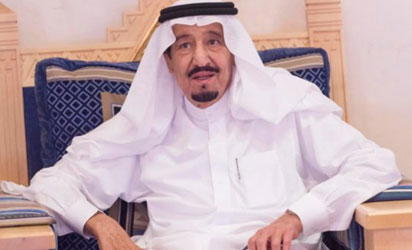
King Salman
By Sonny Atumah
When Crown Prince Mohammed bin Salman, also known as MBS presented the Saudi vision 2030, on April 15, 2016, few gave the 33-year-old the benefit of the doubt. The Saudi vision statement of not depending solely on oil for future energy needs recognized the fact that real wealth lies in the ambition of its people and the potential of the younger generation. To him, all success stories start with a vision. Was the crown prince certain he would be able to fulfill his dream for a nation that had for long been the largest exporter of global crude? His wish was to pep up the revolution on the need to increase refining capacity as oil transition bells tolled.

King Salman
Saudi Arabia rejects U.S. Senate moves on Khashoggi’s death
For a country that supplies one out of every eight barrels of global crude produced daily it was time for introspection. Crude oil contributes about 40 percent of Saudi’s real Gross Domestic Product, GDP. The priority was to develop more alternative sources of revenue such as taxes, fees and income from the sovereign wealth fund for government. MBS 15-year reform may bring verve in monarchical governance, to reduce the dependence on crude oil which prices remained relatively unstable since the 1970s.
Recognising that youngsters are a nation’s pride meant bringing youthful dynamism to catalyse the vision. Crown Prince Salman, believed that his reforms were ambitious, but achievable to reflect Saudi’s strengths and capabilities. Most of the major projects to be executed by the year 2030 numbering about 80 are to be financed by the .
The Public Investment Fund will not compete with the private sector, but instead help unlock strategic sectors requiring intensive capital inputs. This will contribute towards developing entirely new economic sectors and establishing durable national corporations. The package is to reinforce and diversify the capabilities of the economy, turning key strengths into enabling tools for a fully diversified future. It will transform Aramco from an oil producing company into a global industrial conglomerate.
It will transform the Public Investment Fund into the world’s largest sovereign wealth fund. It will encourage major corporations to expand across borders and take their rightful place in global markets. It will expand the variety of digital services to reduce delays and cut tedious bureaucracy. According to MBS the Vision will immediately adopt wide-ranging transparency and accountability reforms and, through the body set up to measure the performance of government agencies, hold them accountable for any shortcomings. The reform promised to be transparent and open about failures as well as successes, and to welcome ideas on how to improve.
The country had envisioned rapid population growth in the globe that would hit 9 billion by 2040 and estimated that two-thirds of global energy demand will come from India and Southeast Asia, where demographic growth must be matched by the rise in basic living standards of increased urbanization that would require investment in downstream petroleum. Till date about 80 percent of global energy needs in transportation rests in oil and gas. Saudi Arabia through its national oil company Aramco, is striving to be number one refiner globally. Creating more value from crude oil through refining, marketing, lubes and chemicals, encourages new business and investment growth locally and internationally.
The Saudi monarchy may be on its way to success, though some analysts say a mixed bag. The Kingdom is building leading alliances, by entering long-term partnerships with neighbouring and friendly countries for knowledge transfer and trade. Saudi Aramco aims to expand its global refining capacity to 8 million-10 million barrels per day, bpd from its present 5.4 million bpd.
Aramco which gained a foothold in the US refining industry in 1988 in a joint venture with Texaco, later in acquisitions and mergers, that created Motiva, in a 50-50 refining and marketing partnership with Shell, parted ways in 2017. Aramco took full ownership of Motiva’s Port Arthur refinery and turning the facility into one of the best performing refineries on the US Gulf Coast. The 630,000-bpd facility is the largest U.S. refinery.
Motiva plans to invest US$6.6 billion to expand the Port Arthur refinery into making chemicals, and another US$1.9 billion in a complex in Texas to produce benzene and paraxylene. Port Arthur achieved a gross refining margin of US$13-US$14 per barrel in 2018, the highest among Aramco’s downstream portfolio. The company also owns a network of retail stations in the US Southeast, as well as some research centers.
Crown Prince Mohammed bin Salman recently concluded a tour of Pakistan, India and China, with several multibillion-dollar refinery and petrochemical deals announced. In January, Saudi Aramco in a joint venture partnership with Malaysia’s Petronas formed a Refinery and Petrochemical Integrated Development, RAPID project. Saudi Arabia is in talks to build an oil refinery in South Africa as part of a pledge to invest as much as US$10 billion. Aramco IPO is valued at US$2 trillion, a figure that would raise a record US$100 billion by selling a 5 percent stake possibly this year for the world’s most profitable company.
Disclaimer
Comments expressed here do not reflect the opinions of Vanguard newspapers or any employee thereof.