
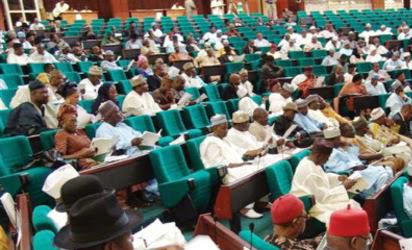
House of Representatives
As the House of Representatives begins probe of alleged illegalities perpetrated by the Acting PenCom DG, Aisha Dahir-Umar, the total disregard for the Pension Reform Act 2014 in the removal of the entire PenCom Board has come home to roost, writes Samaila Wakili.
Pension reform
The monumental failure of the old pension scheme, also known as the Defined Benefit Scheme (DBS) necessitated the far-reaching reform of the industry by Chief Olusegun Obasanjo administration. The reform, which culminated in the Pension Reform Act (PRA) 2004, birthed the Contributory Pension System (CPS) managed by the National Pension Commission (PenCom) through the Pension Fund Custodians (PFCs) and Pension Fund Administrators (PFAs).
The success of the CPS saw the over N2 trillion deficits inherited from the old pension scheme move to over N8 trillion assets because the CPS is designed to be tamper-proof, while PenCom, until recently, had been very strict and effective in regulating the industry.
Even at the peak of his criticism of ex-President Goodluck Jonathan’s regime in 2014, Obasanjo acknowledged the progress made by the industry.
https://newlive.vanguardngr.com/2018/11/pencom-steps-up-efforts-to-enhance-compliance/
“None of us could imagine that within a space of 10 years, the fund would have built up to USD27 billion of cool money, not hot money. And we also heard that in the last 10 years, there has not been a single case of fraud”.

House of Representatives
To further strengthen the industry, President Goodluck Jonathan administration initiated another reform spearheaded by Mrs. Chinelo Anohu-Amazu as an Acting DG at the time. Among others, the Pension Reform (Amendment) Act 2014, properly established the Pension Transition Arrangement Directorate (PTAD) to address the endemic corruption in the old pension scheme which carters to those who retired before the coming into force of the CPS. It further strengthened PenCom and created new offences and stiffer penalties for breach of pension laws and regulations. For instance, punishment for misappropriation of pension funds is now 10 years imprisonment in addition to a fine of three times the amount so stolen or misappropriated.
Stable leadership
Stakeholders have identified stable leadership as a key ingredient of the successes recorded by PenCom over the years. For instance, PenCom benefited from the experience of the architects of the pension reform. Fola Adeola, who chaired Obasanjo’s Presidential Committee on Pension Reform eventually became the first Chairman of the Commission’s Governing Board. A member of the panel, Chinelo Anohu-Amazu, became Commission Secretary/Legal Adviser and later rose to the positions of Acting DG and DG.
Importantly, under the pension law, the appointments of PenCom leadership are tenured appointment to provide security of tenure. The pioneer DG, Muhammed Ahmad, served two terms traversing the Obasanjo, Musa Yar’Adua, and Jonathan administrations.
Illegal disbandment of PenCom leadership
Industry stakeholders and Nigerians were, therefore, taken aback by the flagrant breach of PRA 2014 in the removal of both the Governing Board and the Executive Management Committee of PenCom in April 2017. More so, when they said the President had left a standing order that no appointments confirmed by the Senate should be tampered with.
Even though Section 21 (1) (a)–(g) of PRA 2014 provides conditions on which a member of the PenCom’s Executive Management Committee could cease to be a member, none of the conditions was met in the removal of the last management. Even more significant is the fact that the pension law neither permits nor envisages the dissolution of an entire PenCom management. That is why their appointments are not only tenured, but also confirmed by the Senate.
Again, Section 20 of PRA 2014 provides that the Chairman and the Director-General shall hold office for a term of five years (renewable once), while other members shall hold office for a term of four years (renewable once). On the other hand, in the Executive Management Committee, for instance, the four commissioners enjoy four-year term (renewable once). The idea behind the staggered tenures is to promote continuity and institutional memory.
Unfortunately, while Section 31 of PRA 2014 provides that “There shall be an Executive Committee of the Commission consisting of the Director-General and four Commissioners”, PenCom has been run by an Acting DG since April 2017. There is no substantive DG or the four full-time Commissioners to man Administration, Technical, Inspectorate as well as Finance and Investment.
Furthermore, whereas Section 31 (2) provides that the Board shall consist of: a part-time Chairman, the DG, four full-time Commissioners of the Commission, and a representative each of the Head of the Civil Service, Federal Ministry of Finance, NLC, TUC, Nigeria Union of Pensioners, Nigeria Employers Consultative Association, Central Bank of Nigeria, Securities and Exchange Commission, Nigerian Stock Exchange, and National Insurance Commission, the board is entirely vacant.
Stakeholders have severally forewarned the FG on the implications of illegal removal of PenCom leadership and the absence of critical organs for checks and balances in the pension industry.
In May this year, Labour, through the former National Secretary of the NLC, Comrade Isa Aremu had warned: “President Muhammadu Buhari has to quickly, as a matter of urgency, give priority to the proper constitution of the Board of PENCOM. It is completely unacceptable to working people, we the contributors to the scheme, that a critical labour market institution, is without a Board for almost two years. The former leadership was whimsically removed. As if that was not bad enough…you now leave trillions naira pool of pension fund to be administered without a board. What happened to corporate governance?”
Reps’ Alarm over Illegalities
Many were, therefore, not surprised when the House of Representatives recently resolved to probe illegalities allegedly committed by PenCom Acting DG, Aisha Dahir-Umar.
Moving the motion, Hon. Benjamin Wayo, alleged gross violation of the PENCOM Act by the Acting DG, noting that such was possible because FG’s failure to reconstitute PenCom’s leadership for nineteen months.
“The Acting Director-General, Mrs. Dahir Umar, has unilaterally, without any backing of the law, increased her terminal benefits and those of other senior staff of the commission by an outrageous 300 per cent and has also jacked up the number of PenCom general managers from 10 to 17, clearly in breach of the extant laws governing the institution of PenCom.”
“It is dangerous and too risky to leave a treasury of N9trn without proper custodians and regulators”, Wayo stated.
In August this year, the youth under the aegis of Nigerian Youth for Change protested alleged illegalities at the agency, including the suspension of the assumption of duty by 43 young PenCom recruits since May 2017. The youth, who carried a mock coffin of one Mustapha Ajiya who allegedly died from frustrations and lack of money to take care of his health after resigning his previous appointment to take up the PenCom job, called for the removal of the Acting DG.
Contrary to the claims by the Acting DG, the Federal Character Commission have also affirmed that the said employment received all the necessary approvals.
Also in August, aggrieved staff of PenCom under the aegis of Pension Reform Advocacy Group, PRAG, petitioned the Economic and Financial Crimes Commission (EFCC), alleging widespread corruption in the commission.
Getting PenCom Back on Track
To industry players, the House probe of the alleged illegalities and impunities at PenCom is long overdue. They, however, believe that the lesson in it all is the need to uphold the laws of the land at all times.
They are of the view that the probe should be thorough and that PenCom’s Acting DG, Dahir-Umar, should step aside to avoid undue interference with investigation, more so since she was already due for retirement since December 2016. They also hold the view that all “illegal” payments such as the 300 percent retirement benefits should be refunded and fresh ones suspended.
They further hold the view that FG’s failure to send the names of new PenCom management to the Senate for nearly two years is due to issues of non-compliance with the Pension Act in the removal of the former leadership and appointment of a new management. They claim both were part of the undesirable fallouts of the President’s medical vacation.
Although the then Acting President Prof. Yemi Osinbajo substituted Aliyu Dikko with Funso Doherty as DG nominee in May 2017 as a way of addressing the hullaballoo that greeted the initial nomination, the issue of breach of provisions on qualification of Doherty persists.
Equally, the South East still lays claims to the DG position since the last DG, who hails from Anambra, was untimely removed. Section 21 (2) of Pension Act provides: “In the event of a vacancy, the President shall appoint a replacement from the geo-political zone of the immediate past member to complete the remaining tenure”.
In tackling the alleged illegalities at PenCom, therefore, industry stakeholders strongly call for an urgent review of the illegal actions surrounding the removal of PenCom leadership, which they see as a desperate bid by some unwholesome interests to cease the institution and N9 trillion pension industry.
Disclaimer
Comments expressed here do not reflect the opinions of Vanguard newspapers or any employee thereof.