
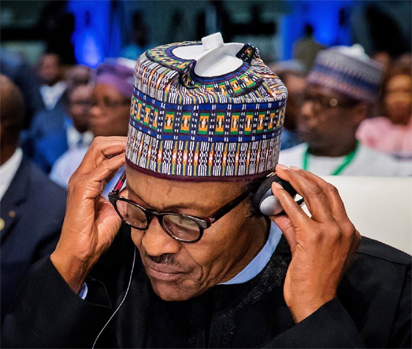
President Muhammadu Buhari new Chairman of Economic Community of West African States (ECOWAS)
By Mary Agbajoh
President Muhmmadu Buhari’s recent appointment of Professor Charles Quaker Dokubo as the new Special Adviser/ Coordinator of the Presidential Amnesty Programme has started yielding results that is giving a sense of hope to the Amnesty Office and its beneficiaries as well as stakeholders.
Stakeholders and people of Niger Delta region applauded the choice of Dokubo for the job hence he is eminently qualified to refocus the programme to become more impactful. Dokubo is well aware of the pains, challenges and an expectation of the people of the Niger Delta hence those expectations were of no issue to him whose academic qualification and experienced are of extra advantages to him in resolving the issues of Niger Delta.
Dokubo who received a Master’s Degree in Peace Studies and a doctoral degree in Nuclear Weapon Proliferation and its control from the University of Bradford started as lecturer and became Director of Research and Studies at the Nigerian Institute of International Affairs (NIIA). In addition, he has published extensively and carried out research in the area of nuclear proliferation, conflict resolution and other areas related to strategic analysis.

President Muhammadu Buhari
Thus, his academic background and exposure which are related to issues of Niger Delta region adequately equipped him to drive the very critical reintegration of the thousands of former militant agitators in the Niger Delta who have already been disarmed and demobilized under a structured Disarmament, Demobilization and Reintegration (DDR) Programme.
As expected, on assuming office, Dokubo in urgent need of recalibrate and reboot the Presidential Amnesty Programme inaugurated an Amnesty Review Committee to produce a blue print on how to deepen peace, safety and security in the Niger Delta using the instrumentalities of the Presidential Amnesty Programme for former agitators in the region.
The review committee is comprised of four senior officials from the Amnesty Office and four experts carefully selected from outside of the office is saddled with the task of reviewing all contracts awarded by the Amnesty Office since 2015 with a view to determine the levels of work done, monies paid, beneficiaries and extent of work done so far, recommend a payment schedule for those qualified to be paid and determine the current status of all the Vocational Training Centers built or are still under construction across the states in the Niger Delta.
In an effort to uncover the depth of rot in the amnesty programme, he urged the committee to ascertain the current status of the database of the Amnesty Office with a view to determining its certainty and sanctity of the current status of all on-going vocational, educational and post-training empowerment programmes of the office within the country and offshore,
The committee is equally saddled with responsibility to undertake an assessment of the current relationship between the Amnesty Office and the Presidential Amnesty Programme’s critical stakeholders with a view to suggesting ways of making the relationships even more robust. Such suggestions include enhancement, empowerment and also setting up clusters of farms and other training centres to encourage people of the region and equally make hem creators of wealth. Being a listening leader and in line with ongoing retooling programme, the Professor also embarked on series of consultative meetings with critical stakeholders.
The idea is to hear directly from the beneficiaries of the programme on how to make it more effective and much more impactful. This no doubt assisted in reposition the Agency.
Thus, despite inheriting a liability reported to be in the region of over N7 billion, the new coordinator has been able to fast track payments of the monthly stipends and backlogs of in-training allowances to beneficiaries of the programme in educational and vocational institutions in Nigeria and outside the country.
His commitment and achievements he made in a short time of resuming office were subsequently noted by the coalition of ex- agitators and stakeholders in the Niger Delta who applauded him for his commitment to peace building in the region.
Thus, the aforementioned proposals and achievements of Dokubo open the way for peace which resulted in enabling business environment in the Niger Delta Region and increase of production of crude oil in accordance to OPEC requirement.
Consequently, the success of the Presidential Amnesty Programme in the Niger Delta region under the leadership of Dokubo has resulted in Nigeria being able to meet OPEC quota of 2.2 million barrel of fuel per day compare to the production of 700,000 barrels of fuel produced some days in the past. We must give kudos to the newAmnesty boss.
- Agbajoh is resident in Abuja
Disclaimer
Comments expressed here do not reflect the opinions of Vanguard newspapers or any employee thereof.