
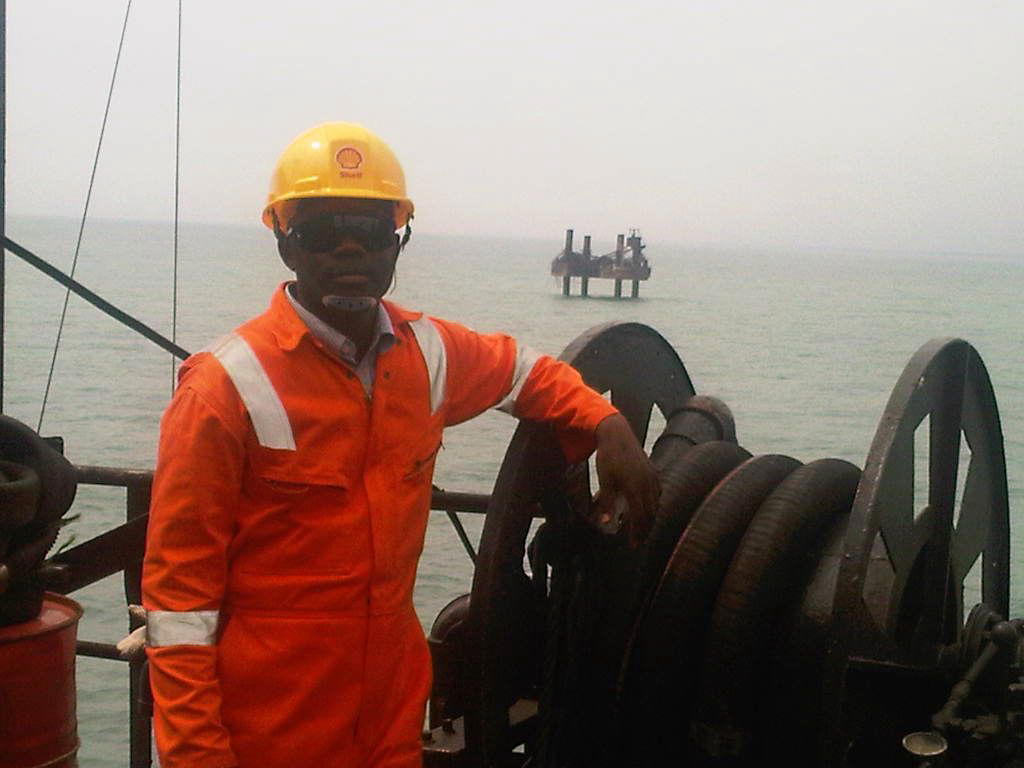
By Udeme Akpan
In the heart of the Niger Delta, where many gas reservoirs once sat idle and were economically unreachable, a quiet technical revolution was underway. At the center of it was petroleum reservoir engineer Abdul-Wahab Sa’ad, who led a groundbreaking field development initiative that redefined how marginal gas assets could be made commercially viable.
In 2016, Sa’ad introduced a Smart Gas Well system that combined intelligent completions, real-time monitoring, and multi-zone control. Smart completion technology had rarely been deployed at this scale in the region, making the effort both ambitious and transformative. By integrating these tools into a cohesive development strategy, Sa’ad helped convert previously stranded resources into stable contributors to the energy supply.
The initiative unlocked production from five reservoirs that had long been considered uneconomic and delivered more than US$40 million in cost savings, setting a new benchmark for efficient, data-driven gas development. Sa’ad’s contribution focused on reservoir simulation, petrophysical evaluation, and completion design, work that ensured each decision was grounded in technical accuracy and economic discipline.
By applying an integrated approach across subsurface, wells, and production systems, Sa’ad demonstrated how Smart Well technologies can extend the productive life of maturing gas assets. “My objective was to turn marginal opportunities into sustainable producers through intelligent design and a better understanding of the reservoir,” he explains.
The results were far-reaching. Beyond the immediate improvements in production and cost performance, the project provided a technical model that could be replicated in similar geological settings. It also emphasized the importance of pairing real-time downhole data with robust reservoir management principles, an approach that has since shaped Sa’ad’s work across other redevelopment and optimization efforts.
As global markets adjust to a future where the era of cheap oil is increasingly behind us, smarter approaches to well and reservoir management have become essential. Sa’ad’s results demonstrate that careful planning, integrated modelling, and intelligent system design can reduce development costs while maintaining recovery performance and upholding environmental responsibility.
Industry professionals now view these smart-well applications as part of a broader shift toward precision, integration, and sustainability. Sa’ad’s work demonstrates that a well-built technical strategy can deliver strong economic returns while supporting environmental balance, even in complex and cost-sensitive settings.
For Sa’ad, the project became a defining moment in his career, reinforcing his conviction that innovation must deliver measurable results. The techniques and principles he developed continue to guide his current work in reservoir optimization and mature-field redevelopment. As the industry faces ongoing pressures around cost control, emissions, and operational efficiency, his approach offers a clear reminder that smart, data-driven engineering remains one of the most reliable paths to sustainable performance.
Disclaimer
Comments expressed here do not reflect the opinions of Vanguard newspapers or any employee thereof.