
By Japhet Alakam
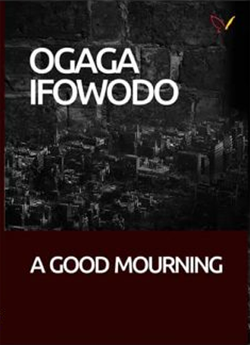
Ogaga Ifowodo, lawyer, columnist, poet, and rights activist, is not new to poetry. His poems have been published in a number of anthologies and magazines. His latest collection which is his fourth volume of poetry entitled A Good Mourning is among the three shortlists for the NLNG prize for literature.


In the 78 pages book published by Parresia Books, Ogaga takes a retrospective look at the familiar problems of Nigeria’s and the African continent’s unrelieved disorder as he focuses on the tragedy, ambiguity and contradictions of human experience recreated from poetic vision and language.
It is a collection of 26 poems of varying verses divided into four parts that tackle a number of issues: from history to war, despair to hope, and dead heroes to economic instability.
Part one has 14 poems which includes “History lesson”,“Perfect Vision”,“Ten Hours”,“God Children”, “Sixty Lines by the Lagoon”,“For Mahalia and Cannon”, “ One Plus One” , “ To Name a Hero” , “ Dream: Fear and others”.
In “History Lesson”, Ogaga explores younger years as a schoolboy where he wished for his father’s car to break down so he could take a longer look at the hills and rivers, “Ten Hours” is about a surgical operation, “One Plus One” highlights the beauty of weddings, while “Rather Than Burn” explores the pressure to marry, vis-a-vis lustful desires. “Sixty Lines by the Lagoon” is dedicated to a fellow poet, Odia Ofeimun, where he laments about the non-utilisation of the country’s abundant human and natural resources. The poet remembers how security agents went to sleep and death strolled into the bedroom of former Attorney General of the Federation, late Chief Bola Ige in “The Frightened Tree”, while in “To Name a Hero” Ogaga honours fellow activists/academic Festus Iyayi and laments how such bright minds were wasted.
In part two, which incidentally is the title of the book, “A Good Mourning”, the author takes a holistic look at the life and death of the presumed winner of the June 12 presidential election, late M. K. O. Abiola, and how the cruel hands of the military junta denied him of his victory, wasted his life, his wife Kudirat, and many others’, leaving Nigerians confused till date. He traces how the young Abiola struggled from nowhere to become somebody and argues that if Abiola had remained in his business he would have been alive today.
In Part three with nine poems, Ogaga left the home shores and takes the reader on journeys outside with poems like “Where is the Earth’s most infamous plot?”, “Freetown”, “Liberation Camp”, “From Goma to Gwoza”, “A Rwanda Testimony”, “Robert Mugabe” and others. In “Where is the Earth’s most infamous plot?”, Ogaga revisits some infamous spots like Adolf Hitler’s Nazi Germany and its holocaust gas chambers, and the inhuman Trans-Atlantic Slave Trade routes. “Liberation Camp” dwells on the perils of being in war-torn countries as in places like Sierra Leone and Liberia, while “A Rwandan Testimony” remembers the 1994 genocide and its effects on the people. “Book Burning in Darfur” brings to the fore the religious tensions in Sudan.
With part four which has two poems: “Only the Heart” and “The Sun speaks to earth”, the celebrated poet concludes with a tribute to David Skorton and the need to maintain a green initiative.
In A Good Mourning, Ogaga as an activist continues his struggle in well-scribbled verses that convey his emotions in extraordinary beautiful ways.
Disclaimer
Comments expressed here do not reflect the opinions of Vanguard newspapers or any employee thereof.