
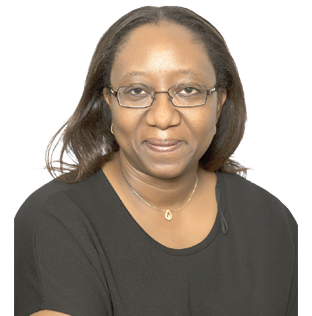
Aida Diarra, Regional Vice President for Africa, Western Union
By Onome Amawhe
In 2016, an estimated $19 billion was sent by migrants to relatives in Nigeria. Of that total amount, more than half originated from Europe and the United States. It’s a big deal, but it is mostly an area of financial services that goes wholly unnoticed except by the population that uses and relies on it. The remittance business is massive and massively important to the individuals and the countries that receive them, but in the face of other retail payment innovations, Western Union has been able to retain its leading position as one of the most preferred payment services brand.
Western Union (WU) is without doubt a leader in global payment services. Together with other ancillary services, under the Western Union Business Solutions branded payment systems, WU provides consumers and businesses with fast, reliable, and convenient way to send and receive money around the world. As of December 2016, Western Union and its ancillary branded services were offered through a combined network of over 500,000 agent locations in 200 countries and territories, and over 100,000 ATMs and kiosks. Also in 2016, Western Union completed more than 242 million consumer-to-consumer transactions worldwide, moving a little over $82 billion of principal between consumers, and 463 million business payments.
As a company that has evolved over the years, connecting with people has always been in the WU’s DNA, just as money transfer is also all about connecting people globally. Aida Diarra is Western Union’s Regional Vice President for Africa. Prior to her current role, she had served as the company’s Assistant Marketing Manager in charge of WU’s operations from the US servicing African corridors. From here, she joined WU’s Africa team, where she was assigned the marketing responsibility for all of Africa. Shortly thereafter, her role evolved into a regional overseeing one for Western Union. In this interview, she gives an insight into the company’s operations in Nigeria (one of WU’s most connected countries in the world). She also states that the level playing field that has been set over the course of last year was essential for all constituents in the remittance sector.


Aida Diarra, Regional Vice President for Africa, Western Union
CAN you share the revenue and other key numbers for your Nigeria business?
Western Union is a very diverse company. In 2016, no single country outside of the U.S. generated greater than 7% of total company revenues. Nigeria is the fifth largest remittance receiver globally, per the World Bank, as such; it is a significant market for the remittance industry. With 20-year tenure of service, Nigeria is an important country for Western Union and one of our key markets in Africa.
How does the evolution of remittances in the Nigerian market look like?
Total remittances sent to Nigeria in 2016 have decelerated by 10%, compared to 2015, in which they have reached $21b USD, per the World Bank. While both inbound and outbound remittance services are offered in Nigeria, their volumes are often influenced by a host of reasons such as economic situation and opportunity in the send or receive country. In addition to the 5,100 physical locations, Western Union allows Nigerians to receive money into 2.2 million mobile wallets and into more than 50 million bank accounts.
How many countries send and receive money from/ to Nigeria through Western Union?
Nigeria is one of the most connected countries in the world when it comes to receiving and sending money, based on our first-hand experience of serving Nigerians for more than 20 years. More than 170 countries and territories sent money into Nigeria, and 160 received money from Nigeria in 2016. This movement of money reflects the extraordinary global connections brought about by the rise in migration of Nigerians to many parts of the world. The US, the UK, Italy, Canada, Germany, Australia, France and the Netherlands continued to be top sending markets over last decade to Nigeria through Western Union. United Arab Emirates and Malaysia moved to the top 10, replacing Switzerland and Spain.
What is the money sent through Western Union used for?
From our global experience, Nigerians move money to fund education, healthcare, everyday living. As their economic situation stabilizes, remittances are invested in wealth creation. The World Bank (2011) states that investments such as homebuilding, land purchases, and farm improvements account for more than half of the spending at 57 per cent. Investment in human capital, such as food, education, and health care, accounts for 37 percent, while the remaining 6 percent is used for short-term support.
What are the criteria used in setting the Western Union exchange rates?
It is critical to know that as we operate in any given country,our exchange rates are based on the guidelines of the countries. WU is always very keen on making sure that whatever rates are applied is in line with set guidelines. Nigeria, for example is a place where the regulator indicates clearly the rates to be applied by all the industry players. And in such case scenario, we have no option but to comply.
The Money Transfer industry is often accused of applying high prices, what are your thoughts on this?
The price of transferring money (including fee and FX) through Western Union is 5-6 percent of the amount being sent on average globally. Our pricing varies among the 16,000 corridors in which we operate and reflects factors such as Anti Money Laundering costs, consumer protection costs, local remittance taxes, market distribution, regulatory structure, volume, currency volatility, and other market efficiencies. These factors can impact the fees and foreign exchange rates offered by corridor and service type. Several variables contribute to the difference in remittance cost from one country to another. The cost of doing business varies, and different countries have different levels of business infrastructure availability which is essential to build an extensive network. Western Union reaches over 500,000 Agent locations in 200 countries and territories, of which there are more than 36,000 Agent locations in Africa – serving urban and remote areas.
How have the multiple exchange rates fluctuations impacted your business in Nigeria?
We recognise that the impact of the economic downturn has resulted in many changes for the money transfer sector in Nigeria. These changes have also resulted in informal money transfer entities in the marketplace with much less costly options; however they were non-compliant with government regulations. Western Union operates in more than 200 countries and territories and compliance with the law is fundamental – to protect the interests of all constituents including consumers.
Western Union believes the level playing field that has been set over the course of last year was essential for all constituents in the remittance sector. Any policy that drives a fine balance between these interests, which helps the ultimate cause of moving money which in turn realizes the economic potential whether that is for individuals, for families, their local communities finally supports nation building.
What role has/can remittances play to reduce the dollar scarcity crippling businesses?
Remittances have always been a major source for financing economies. It also facilitates social and economic development. Money transfer brings in foreign currency and helps diminish chronic balance-of-payment deficits and increases cash flow in receiving countries. In many cases, remittances also contribute to economic activities generating employment and demand for goods and services. It also contributes to the GDP of African countries at a different scale, often much higher than Foreign Direct Investments. The World Bank has stated that in Sub-Saharan Africa, where private capital flows have fluctuated considerably from year to year, remittances were more stable than both FDI and equity flows.
Apart from sending and receiving money; what other payment services does Western Union offer?
As a company specializing in payment services, we also service small and medium scale businesses through our business solutions entity which enables consumer-to-business and business-to-consumer payments. This is probably more relevant to markets in areas like the UK and other countries in Europe but definitely an opportunity for Africa moving forward.
What is your view of WU’s future in Africa?
I am particularly excited about our ability to offer services from mobile apps. This is available already in the United States but we want to make sure we extend that service outside of the US as well.
Disclaimer
Comments expressed here do not reflect the opinions of Vanguard newspapers or any employee thereof.