
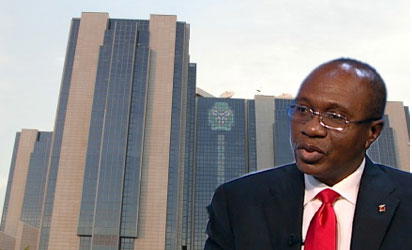
Emefiele CBN Governor
The recent prediction of the end of the ongoing economic recession by the Governor of Central Bank of Nigeria, CBN, Mr Godwin Emefiele, by the third quarter of this year is a bit hasty though the citizenry could do with the good news to brighten their moods.
The CBN prognosis for the economy reflects the upbeat reports of the International Monetary Fund, IMF, which said in January 2017 that the economy would grow by 0.6 per cent, while the World Bank affirmed that the nation’s Gross Domestic Product, GDP, would climb by one per cent. These reports simply summarise the fact that we are gradually on our way out of the worst recession in over two decades.
The CBN’s mandates include managing interest and exchange rates, maintaining stable prices and attempting to bring about full employment. Its policies and programmes constitute the monetary policy, which together with the fiscal policy (which is outside its control) create the results that are reflected in the quarterly reports of the National Bureau of Statistics, NBS.

Emefiele CBN Governor
Those quarterly reports collated from various sources, including the CBN, inform Nigerians and the global community about the performance of the economy in the previous quarter. The Gross Domestic Product, GDP, is never computed in advance and seldom is it officially rendered on a monthly basis. A recession by definition means that the economy (GDP) had contracted for two consecutive quarters – meaning six months. End of recession is not pronounced even if the economy grew in one month out of three.
Quarterly reports of the NBS constitute an objective verdict on the activities of all the managers of the economy – CBN included. CBN’s announcement amounts to a player announcing the result of the contest while the game is still in progress.
Five months into the year, the 2017 Federal Budget is still languishing in the National Assembly. Nobody knows when it will become an Act, given the usual ding-dong between the Legislature and the Executive over residual issues such as “budget padding”, which bedeviled last year’s Appropriation Act. The budget has to be faithfully implemented before the economy can successfully exit recession.
There are also other independent variables which we hope will hold in our favour before the prediction can come true. Oil prices must remain upbeat, and the prevailing calm in the Niger Delta must be allowed to continue. These call for sustained matured handling of governance issues by the fiscal and monetary bodies.
Although we can clearly see light at the end of the tunnel, we must wait patiently until the NBS comes up with its official data on the performance of the economy over the required benchmark period before we can be rest assured that the end of the current recession has become a reality.
Disclaimer
Comments expressed here do not reflect the opinions of Vanguard newspapers or any employee thereof.