
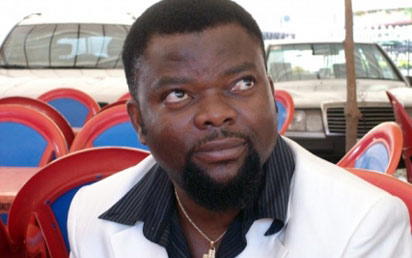
Mr Ofehe
SIMON EBEGBULEM, BENIN CITY
Comrade Sunny Ofehe is the Founder and Executive Director of the Netherlands based Hope for Niger Delta Campaign (HNDC), a Non Governmental Organization. Last weekend in Benin City, the environmental activist finally conducted the burial rites of his mother, who was murdered in Benin City by unknown assailants ten years ago. Notable Niger Delta elders and ex-agitators were at the ceremony. Saturday Vanguard spoke with him on why it took him ten years to give his mother a befitting burial. He also spoke on other Niger Delta issues. Excerpts:
Why did it take you ten years to bury your mother?
It has been a great burden that has really troubled me from cultural perspective, family perspective and there is this African saying that if you don’t give your parents a befitting burial they will never rest. And sometimes when you have challenges that I have had over the years like the arrest by the Dutch Police, arrest by the DSS and even the police and also my kidnap.

Mr Ofehe
Some family members attributed all these to the fact that I had not buried my mother. Having conducted a very successful funeral event last Saturday, it was a huge relief for me and I thank God for everything. I also I thank everybody for their support. But those who murdered my mother will never have peace.
What actually happened?
On the 4th of October 2007, I remember having a PTA meeting in one of my children’s schools in the Netherlands. I was getting continuous phone calls from Nigeria and because I was in a meeting my phone was on silence. Later I called Nigeria and I was told my mum had been killed. In fact only God knows how I drove back home. She was not sick, she was very young at 60.
It was a shock because I had never anticipated that. It was something that really troubled me, and it is still having effect on me because the house where they murdered her is our family house in Benin City and since 2007 I have not been able to sleep in that house because it carried so much memories and that was why anytime I was in Benin I preferred to stay in a hotel.
You can imagine I built my house there but I could not sleep there now. It is difficult to say where the death came from, I expected the police to do that because it was reported to the police and investigations were carried out. But for me nothing was done, all I kept hearing was ‘we got a clue somewhere you need to send money to rent a vehicle’ and all that.
At a point I just realized that they were using the situation to exploit me and I decided that I would not be mourning the death of my mum and at the same time being used to finance somebody’s greed. I remember even leaving my Mum’s hand set with the IPO which I never collected. It is clear that my mum’s death was politically motivated in the sense that probably some of the issues I talked about on what we faced in the Niger Delta region, may have made some people who benefit from this crisis very uncomfortable.
So, they may have wanted to use that to frighten me. I remember getting an SMS message prior to that moment from an unknown number telling me not to come to Nigeria anymore. Little did I know that the message carried a bigger threat. Like many other people in the Diaspora, it would have been easy for me to sit back and enjoy all the good things that came our way but I focused on the Niger Delta issue, having spent twenty one years in the Netherlands.
I think I have carried out more activities that were very risky, that I think were good for people to understand the situation in the Niger Delta much more than those who live in this country. And having fought doggedly, having been kidnapped in the creeks of the Niger Delta, having been harassed by Netherlands police and the DSS, I think that giving up now is not an option. I owe it to my mum to continue to do what a lot of people have been appreciating.
Are you satisfied with what the Federal Government is doing in the Niger Delta today?
The government has tackled the issue from the political perspective very well. I think it is the first administration that has come out to talk about the UNEC report carried out by the biggest International institution on the issues of environment which I expected that the presidency of Jonathan, a man who came from that region should be able to take as a big tool to resolve some of the issues happening in the Niger Delta but unfortunately, he failed to do that. That was where he lost my support for him.
Now we have a President from the North and he has taken that bold initiative to say he wants to do something, he wants to look at the UNEC report and most of us applauded that. I think the Vice President has visited the area to show that support and instil that confidence on the people that government is willing to look into their problems. And recently, I also saw that the Acting President was in Delta state to talk about the issues of the insecurity in the Niger Delta and how people should come together.
I also heard him say the amnesty programme will continue. These is the kind of confidence that the people are looking for. However, as a government it is one thing to make promises and it is another thing to fulfill them. So looking at the way the economy is going, the way the Federal government is structuring its economic policies, I still find it difficult to see where they want to fit in those promises they have made to the people of the Niger Delta knowing that time is also running out fast.
But if they can match their promise with action I think it will be the beginning of a lasting peace in that area. But the dynamics of the Niger Delta issue is a very complex one, complex in the sense that everybody has a role and responsibility and everybody has a blame in where we are today after over fifty years of oil exploration in the area. It is a shame that we are so blessed, that we have a region that is so blessed with mineral resources.
Apart from that, from the way our landscape is situated by God we could have many benefits from that region even outside the oil and gas. I have been to the creeks, if we have a creek like that with those kind of mangroves in the Western world they would have turned it into an international tourist hub where people can visit, and have fun. Like Oloibiri, the first place where oil was discovered, can be structured in a manner that people can visit there.
But I think we should start to think of an alternative to oil which is fast dwindling due to paradigm shift to other sources of energy and how we can move the region and the entire country forward without depending on oil. For me, there is hope and that is why I am still doing what I am doing. Nigeria is a land that is richly blessed and we still have human capacity and the natural resources to be able to make the country great. If we throw politics away, throw religious sentiment away we will be able to move our country to where it should be.
What is your view on the recent pronouncement by the Federal government to empower those involved in illegal refineries in the creeks?
I have been an advocate of a structured government policy that will engage these people. I have done a documentary on illegal refineries, I have actually spoken to people who were doing it and it may surprise you to know that some of the people who benefit from this illegal refineries are actually sitting in Abuja, driving the best cars that we see on our roads today.
When these illegal refineries started, we had a few of them but today we have more than five thousand illegal refineries. And with the pressure on our security forces to tackle the issue of Boko Haram and other challenges, I think it will be a big burden for the government to completely eradicate them. Most people have seen it as a source of revenue because there is no alternative.
They told me that randomly the Air force would throw bomb in areas where illegal refineries are going on which will create more spills. And in some of these places, no crop will ever grow there again. So the only solution to this complex problem is to get these boys and modernize their production because we always hear that we cannot meet the local demand of our kerosene and fuel.
So let us get these people, make them go through vocational training, enhance their production system and put them on a pay roll because some of those boys whom I interviewed earned N10,000 per month. If you lecture them on the risk of what they do and provide a mechanized system of production, we will then be able to increase our domestic capacity.
So, I love what the Acting President is doing and if government can match their promise with action then we will see more of these boys becoming more busy and useful to the society.
This will be another strategy to curb insecurity in this country and I really support the move by the Federal government to empower these local refinery operators.
Disclaimer
Comments expressed here do not reflect the opinions of Vanguard newspapers or any employee thereof.