
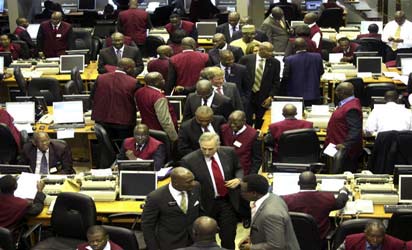
Nigerian Stock Exchange
By Nkiruka Nnorom
FOR some time, there have been talks about integration of key stock exchanges across West African region to facilitate cross-border listing and region-wide securities tradings. The Nigerian Stock Exchange, NSE, has been an advocate and supporter of this move, which is believed would create broader and deeper liquidity for the stock exchanges.
The plan, if successfully implemented, will bring the region in tune with the practice in some other jurisdictions around the world where their exchanges have since harmonized and integrated their operations.
The move has become even important due to advance in technology and globalisation.
About the initiative
The initiative, which is being developed by the West African Capital Markets Integration Council (WACMIC), launched in January 2013, will allow stock exchanges across the region to develop a common platform for cross-border listing and trading. It will integrate West African capital markets with member exchanges including the NSE, the Ghana Stock Exchange, GSE, and the BRVM (serving eight francophone West African countries) and Cape Verde by establishing a harmonised regulatory environment and a common platform for the cross-border issuance and trading of securities.

File photo: The floor of Stock exchange
Stages in implementation
The initiative is being rolled out in three stages. The stage one, which is sponsored access for stockbroking in each of the jurisdictions, was completed two years ago in 2015. Already, transactions have been executed between the NSE and GSE, though approval of set of rules to integrate the Francophone countries into the system is posing challenges, according to Osacr Onyema, CEO, NSE.
The second phase – “passport stage” where qualified brokers will get direct market access to the West African jurisdictions they wish to trade in is being rolled out, while the third phase involves linking members’ exchanges to a virtual West African securities market.
Qualified West African brokers will then be able to access the listed securities and market information in the region to allow them to execute transactions, while issuers will be able to raise capital across the region too.
Onyema assured that the Governing and Technical Committees are working very hard to ensure the conclusion of the remaining phases even though difficulty in approval of set rules by the regulators in the French speaking countries is posing a challenge.
Some benefits: According to Ade Bajomo, Executive Director, Market Operations and Technology, NSE, who spoke at a conference in Cape Town, South Africa, the initiative will allow capital market operators across West Africa to operate using a common “passport”, so to speak. “So an issuer in one of the countries may seek to list in another exchange where they can pull more liquidity. And investors can balance their risk and return portfolios on the various exchanges as well.”
He argued that if an integrated market could be created, it would not only be beneficial in terms of improved transparency and shared practices, “but we will be lifting up various exchanges around the region. And by pulling together (WACMIC), we hope that we can share resources, bring up standards, and harmonize regulations.”
The integration of the capital markets aims to boost liquidity and trading volumes in West Africa, a major limitation that typically characterizes stock exchanges across the continent, Bajomo said.
Challenges: However, financial experts have said that though the idea might be a good one, Nigeria is not yet mature for such move. They argued the proposed integration would be disadvantageous for stockbrokers in Nigeria as many of them do not have the capacity for such cross-border transaction and cannot build the capacity at the moment due to the present state of the economy.
Domestic operators
In his view, Mr Adetola Odukoya, CEO, FSL Asset Management Limited, said: “I think it is a premature move. Right now, the only benefit I see is that it will encourage trading in Nigeria stocks and probably increase in activity, but then, if you are looking at how that will affect our domestic operations, I am looking at it from that angle because what it means is that somebody can sit in South Africa and trade in Nigeria stocks and we all know the sophistication, for example, you have in South Africa in terms of major investment houses, banks or brokers in South Africa.
“Our own domestic operators will be at a disadvantage. A lot of our operators do not have that capacity and they cannot build that capacity because the economy is in a recession. For them to make money is difficult, let alone investing money in their business to build their capacity.
Disclaimer
Comments expressed here do not reflect the opinions of Vanguard newspapers or any employee thereof.