
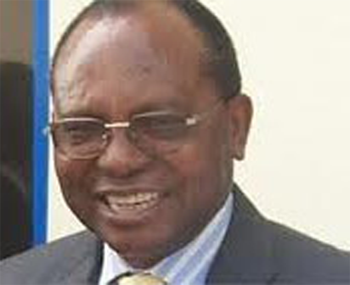
Anya Okoh Anya
By Obi Nwakanma
Let us now praise famous men: Professor Anya Okoh Anya, distinguished scholar – former Professor of Zoology and the Life Sciences at the University of Nigeria, Nsukka, former Dean of its Faculty of the Biological and Pharmaceutical Sciences, and of the Postgraduate School, and member of the Council of the University of Nigeria, Nsukka, turned 80 on January 3, 2017. I was in Abriba on that day, where I had also been graciously hosted by Kalu Onuma of Ndigbo Lagos, and his lovely wife, to join in the celebration of Professor Anya’s milestone. Educated first at the Hope Waddell School, Calabar, the University College, Ibadan, where he earned a degree in Zoology in 1961, and later at St. John’s College, Cambridge, for his graduate research, Anya belongs to a very rare category of public servants who have supplied high-minded solutions to Nigeria’s numerous challenges of development.
His background speaks to a very polymathic capacity: Anya, a distinguished scientist and recipient of the National Order of Merit, began his career briefly as a Science Master at the Qua-Ibo Mission Secondary School, Etinan, and later at the Federal Fisheries Research Institute, Lagos, as young a Research Scientist with the likes of Edward Bayagbona, who later went on to a distinguished career at the UN FAO in Italy. Anya chose the route of the academy, starting with teaching at the Federal School of Arts and Science, Lagos, and later as Researcher at Moore Plantation, Ibadan, before going off to Cambridge, where he did work at the famous Molteno Institute of Parasitology. In 1967, at the onset of the hostilities that led eventually to the civil war, Anya O. Anya was one of the numerous Easterners displaced by the events, and he left Ibadan, and was absorbed first, by the University of Nigeria, Nsukka.
But in 1967, he was appointed by Chukwuemeka Odumegwu-Ojukwu’s government to the committee that established what would become the first University of Science and Technology; the University of Science and Technology, Port-Harcourt, under the Vice-Chancellorship of Professor Kenneth Dike, former Vice-Chancellor of the University of Ibadan, who had also moved from Ibadan as a result of the hostilities. Anya would serve on the faculty of the University of Science and Technology, Port-Harcourt as a Senior Lecturer from 1967-1970, and with the end of the Civil war, Anya was absorbed once again by the University of Nigeria, Nsukka, where he made distinguished contributions as a world class scientist and as a leader of the academy. Anya’s contributions to social thought remains varied, complex and rich. Among some of Anya’s most engaging ideas can be discerned from his Ahiajioku lectures, delivered in Owerri in 1982. Tracing the evolutionary and ecological factors that undergird the development of the Igbo environment and person, Anya asserted very unequivocally at the end of his excursus that the Igbo world is no longer, “the isolationist hotbed of past ages. It is Nigeria, Africa and indeed the World beyond.
It is within this domain that our future lies and in which our new identity must be forged.” Anya’s view is broad and expansionist, and necessarily presents a cartography for Igbo political thought and action in the 21st century. As a matter of fact, Anya Okoh Anya is by a very clear model, a nation-builder, and it is within the very paradigm of nation-building that he has combined his work both as a scientist and scholar, as well as a major player in the boardrooms of development and research initiatives and of high finance.
It seems clear to me that in advancing some of his prognostications in his now quite seminal book, which should really be a must read in Business Schools in Nigeria and the African continent, Science and the Crisis of African Development, Anya chose the pragmatic steps to accomplish and deal with some of the principal questions, among which is the distance placed between a conscious elite and the development of the material infrastructure necessary for social engagement. Unlike many of his peers who chose the gilded isolation of the ivory tower, Professor Anya had developed a conscious relationship with society in a direct and pragmatic way.
Perhaps it had much to do with the fact that he is an Abriba man, who knows a thing or two about trade and business going over a long tradition of entrepreneurship, on retirement from his job as an Nsukka Professor, Anya did not fold into the landscape of drooping Iroko trees, he got busy: he was invited into the boards of banks and other concerns, where he continued to make his mark and his contributions. He became Chairman of Nigeria Economic Summit Group, and Chairman of the Board of the National Merit Award, taking over from Professor Mabogunje.
He has served on the board of the Diamond Bank, and on the indigenous oil exploration company, Nestoil, and has established the Alpha Institute for Research in Science, Economics, and Development, on which he sits as Chair of its Board of Trustees. It is an active 80 years, and as I have frequently noted, it is much in the backward character of Nigerian institutions, that the University of Nigeria, Nsukka, did not, and has even not contemplated the possibility of taking advantage of Professor Anya in ways that matter in other places in the world, by establishing an Emeritus chair on which he sits, integrating his current efforts at the Alpha Research Institute with the broad mission of the University.
Nsukka ought to keep Anya on their roll, because it matters that such names must advertise Nsukka to the global world. It is much in the same way that one wonders why that university, which ought to, but has also failed to extend the same honors to El-Anatsui and Obiora Udechukwu, currently, two of its most distinguished Artists in the world sphere. Professor Udechukwu, one of the most remarkable artists of the contemporary world tuned 70 last year, and I also meant to note that milestone in a tribute. But I now know the feelings of the hornbill, who proposed to knock down the great Iroko with his beaks in honor of his father’s passing.
But on the day his father died, he grew a boil on those beaks. Good thing, it is not Obiora Udechukwu’s funeral yet, but morning still for this remarkable artist, one of Africa’s greats, whose work speak eloquently of a world so powerful in its myth that we feel its sublime urgency in Udechukwu’s simple lines. Born in Onitsha, educated at DMGS and briefly at the Zaria Art School, and at Nsukka, Obiora Udechukwu’s art embodies the spirit of Nsukka, because it was a spirit that spoke of a great renaissance. Currently the Dana Professor of Modern Arts at St. Lawrence University in Upstate New York, Udechukwu’s art is held in many distinguished collections in the world, among them the Smithsonian.
I am quite curious at the evolution of his current work, as he prepares work for his major exhibition, which promises to be a feast of the senses, as can only be with Udechukwu, whom one of his distinguished students and acolytes, Olu Oguibe, an artist of no less an epic proportion himself, celebrates in that invocatory poem of his, “Obiora Nwa Agulu/Nwa amulu na mma…” from A Gathering Fear. It is a fit and proper thing to remind us all, that men like Anya Okoh Anya, and Obiora Udechukwu, because they represent something of a passing age, belong to us all; and this way of thinking must compel us therefore not to forget from whence they come, and whither they go, and we, with them all in this journey of life and nation.
I should say it again: it is in the interest of the University of Nigeria, Nsukka, if it must be taken seriously, to explore ways to bring these men, and their likes unto the roll, as emeriti of the University. Such talents honor the university; advertise it, and make it part of a memory-making place.
Disclaimer
Comments expressed here do not reflect the opinions of Vanguard newspapers or any employee thereof.