
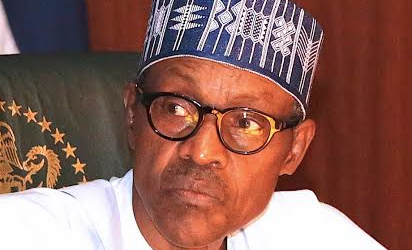
President Muhammadu Buhari
..Buhari to Present 2017 Budget to NASS December 1
By Henry Umoru
ABUJA- PRESIDENT Muhammadu Buhari will December 1, present before a Joint session of the National Assembly, the 2017 Appropriation Bill in consonance with the constitutional provision that the President of the country must present the budget for the following year before the end of the preceding financial year.
Ahead of the appearance of the President before the National Assembly, the Senate in spite of attacks by the lawmakers and picking of holes on the 2017, 2018 and 2019 Medium Term Expenditure Framework (MTEF) and Fiscal Strategy Paper (FSP) submitted by the President October, the Senate has begun discussions on the documents.
The documents which form the basis for the planning of the 2017 budget, were referred to the Senate Committees on Finance, Appropriations and National Planning for further legislative job and subsequent presentation to the Senate.
Meanwhile, during debate on the documents, majority of the Senators who spoke, declared the documents as fraudulent, unrealistic, not sincere, not transparent, even as they said that the documents lack credible and called for serious rejigging if they must meet the present economic reality.
President Buhari appearing before the National Assembly was disclosed yesterday by the Senate Minority Leader, Senator Godswill Akpabio (PDP Akwa Ibom North West), while making contributions to debate on projected assumptions made by the presidency in the 2017-2019 MTEF.
The Senate Minority Leader, Godswill Akpabio, gave this indication when he was seconding the motion for the Senate to consider and approve the 2017, 2018 and 2019 MTEF and FSP, which was presented before the Senate. 

Akpabio said, “Yesterday, you made reference to the fact that the President may be coming to the chambers to submit and read the 2017 budget on 1st of December (Next week Thursday).
“If that is the case and we send this (MTEF) back for reworking by the presidency, it means that we will not be able to meet that deadline. But if we send it to the committee level, they may come up with something within the next three days that will be much, much realistic ahead of the budget presentation itself”.
Akpabio had before making the disclosure, pleaded with the Senate not to throw out the MTEF document based on its unrealistic projections as raised by majority of the Senators, advising that it should be committed to relevant committees of the Senate based on the submissions that would be made by the various agencies that may be invited by the committee and come up with realistic indices for the budget estimates, adding, “We can see that we don’t have a perfect document in our hands but of course we are looking at assumptions and assumptions may not necessarily be correct. I want to suggest that we send it to the committee.
“Of course, the committees will invite the relevant agencies and ministries of government. And they will come up with a more realistic MTEF/FSP. So, my appeal will be that the committee members should take into cognisance all the submissions and observations made today; so that we can come up with a more realistic MTEF and FSP”.
While reminding them that the National Assembly will not be able to receive the 2017 budget estimates from President Mohammadu Buhari on Thursday except the Senate passed the FSP and MTEF for 2017, 2018 and 2019, the Minority Leader said if the senators agree that the document be referred to the committees for consideration, within three days, they will have been done with it, to enable the Senate pass the Framework.
In his remarks, the Senate President, Bukola Saraki who ruled on the debate which lasted for more than two hours, however reminded his colleagues that the assumptions in the documents were done based on the best capacity of the executive arm.
Saraki said, “There is no doubt about the fact that these projections are not
realistic. There is no doubt that the exchange rate is not realistic. The Central Bank of Nigeria has said it is using N305 (to a dollar). There is no doubt as well that throughout this year, we did not achieve 2.2 million barrels per day; even in time of peace (in the oil rich Niger Delta), we have not achieved 2.5mbpd. How realistic is
2.2mbpd next year? The oil price as well looks conservative.
“Like some of our distinguished colleagues said, our responsibility is to work on it and use our capacity to do the right thing. We have our Committees on Appropriation and Finance that should not just take anything from the executive, sign it and return it (verbatim). If it means that we have to rehash it, look at it again, turn it around and do what is right, then, that it our responsibility.
“I think that it just the way to go rather than to just take a document from the executive and return the same to it. It is clear from what was submitted (by the lawmakers) today that it will not work like that this time around.”
The Senate President then asked the Committees on Finance and Appropriation to take note of all said by the senators on the MTEF and FSP during the plenary while preparing their report on the MTEF and FSP, adding that the committees to organise a debate on the performance of the 2016 budget “before we even take the report of the committees on the MTEF; that must be a precondition.”
During the general debate on the MTEF document, Senators like Dino Melaye (APC Kogi West), Bayero Nafada (APC Gombe North), Adeola Olamilekan (APC Lagos West), Mohammed Hassan (PDP Yobe South), Emmanuel Paulker (PDP Bayelsa Central) , Abiodun Olujimi (PDP Ekiti South); Samuel Anyanwu, PDP, Imo East; Joshua Lidani, PDP, Gombe South; Ibrahim Gobir, Sokoto East etc, all picked holes at the assumptions made in the document and argued against it, even as some of them asks that the document be sent back to the Presidency.
The lawmakers who took a swipe at the documents and lampooned them, argued that the projections in both documents lack substance and unrealistic, stressing that the projections of over 2 million barrels of crude per day, 9.6 percent growth rate, and an exchange rate of N290 to the dollar were totally deceitful.
While Senator Ahmed Lawan, APC, Yobe North did not fully support a rejection, but amendments, Senator Ahmed Rufai Sani, APC, Zamfara West however asked that the proposals of the executive should be supported.
While Melaye on account of the alleged unrealistic assumptions of the MTEF document described it as a fraud, Adeola Olamilekan declared that the economic team of President Buhari was in disarray.
Some of the assumptions in the MTEF document kicked against by the senators were the 2.2million barrel per day oil production as against 1.6million barrel per day production that it is, presently, exchange rate of N290 to a U.S dollar as against N305 to a dollar officially announced by the Central Bank Governor, Godwin Emefiele two days ago.
Others were the 3.02% GDP growth rate for 2017 as against -2.44% growth rate it was as at yesterday from – 2.06% it was during the second quarter as a result of recession.
In his continuation, Chairman, Senate Committee on Finance, Senator John Enoh, PDP, Cross River Central said, “I think that this document is sent to the senate in fulfilment of the requirement of the Fiscal Responsibility Act and normally why it covers three years the next immediate year is the more important year and I think that our discussions and our focus especially on my contributions would be targeted at that especially.
“I think that in looking at the documents following senator Adeleke. I think the first is to consider is the broad, the basic assumptions that are contained in the document that those assumptions have to first with the daily oil production of 2.2 which has not changed from where it was in 2016 and I think with the backdrop of a lot that is happening in terms of oil production and I think that the government especially the executive arm has to put in place a proper engagements strategy in the Niger Delta if it hopes to achieve this because as I speak am sure we are loosing on a daily basis more than 600,000 or 800,000 barrels a day. If that is what we are doing and then we are predicating daily production in 2017 at 2.2 then the government need to do quite alot in terms of the oil price benchmark of $42.5. I think that an increase from $38 for 2016 and I think that inspite of the reassurance by OPEC to one to tamper with production quotas across oil producing countries its good to actually give it at what the document indicate.
“Talking about the exchange rate of N290 when inspite of the exchange rates we have figures that rotates the upper limits into as much as N350 not minding what is happening in the parrell market I think it remains unrealistic. In 2016, we actuallly debated this and midway the currency was devalued and others this is the proper time to look at this things realistically. For example for the third quarter running we have a negative GDP which actually is minus 24 and I don’t see how by 2017 we would not just get over recession but we would go about 3.something percent.
“In looking at the 2017 projections I think the one that is most startling in terms of the projections that has increased is bad, Vat in 2016 was about 1.2, 1.4 but in 2017 it was projected about 2 trillion and I think that there is any real basis if for example as at September the VAT indicated just about 55 percent then why are you now increasing it by more than 1trillion.”
For Senator Dino Melaye, he said, “If we speak the truth, we would die, if we lie, we would die. So I have chosen to speak the truth and die. Mr Preident, just this morning the front page of Punch Newspaper carried boldly an assertion from the Central Bank of Nigeria that huge debts is responsible for recession and there is no other factual factor responsible for recession than our huge debts. I want to say this document that I have before me, this MTEF proposal and projections of the 2017 to 2019 is a lie. This document is not truthful, is not honest, is not transparent and is not factual.
“In this great chamber, last year we passed the 2016 to 2018 of MTEF of three years, this chamber would want to know what happened to that MTEF and what happened to the 2017 aspect of the three years MTEF we passed last year. Now, there is a new 2017 what is responsible and what are the variations between and comparative analysis of what we received in the MTEF of last year that is meant for three years projection and what we have now. This chamber we need to know.
“We want to know the level of compliance of the MTEF we passed last year and it is for three years, 2016-2018. What are the new amendments, Is this MTEF predicated on the loan that the executive is requesting to take. We want to know and that is not stipulated in this MTEF. We also want to know that the avearge rate of N290 exchange rate per dollar is it realistic? Is this the truth. Governance is about the truth, is about honesty, is about transparency, is about opening yourself to the people. Democracy will continue to be government of the people, by the people and for the people never we would allow democracy to be government of the greedy by the greedy and for the greedy thereby describing it gritocracy.
“The GDP is going down and this MTEF document is telling me that it is going up. So, how do you corroborate this fraud. We should not be talking about deficit to GDP in realistic term we should be talking about deficit to revenue. How much of our revenue is being used in servicing our debts. You need to tell us, we need to know that what percentage of our revenue are you allocating to servicing debts but that question is very, very painful to me because recently in international forum the minister of budget and planning blatantly displaying ignorance of not knowing even what the debt profile of the government is.
“Finally,at the end of the day we would know that the projection of three percent by this document is misleading. This house is a house of the people, we must not out of fear or intimidation or harrasment refused to speak the truth. This document should go back to where it comes from and a transparent, honest realistic document that is workable and in tune with the scientific and demand of recent times in a economic world should be presented to the Senate in the interest of the Nigerian people.”
In his contribution, Senator Barau Jibrin, APC, Kano North who urged his colleagues to look at the document as a proposal, said that the Senate has the right to add or remove and that as a proposal, it was not sacrosanct.
Also in his contribution, Senator Ahmed Lawan who noted that the $42.5 benchmark is realistic, said that the N290 exchange rate per dollar as proposed was not realistic, adding that the government should address the issue of militancy in the Niger Delta region.
For Senator Samuel Anyanwu, he said, ” there is no document before us , there is no credibility in the MTEF and those who submitted it are not transparent.”
In her contribution, Senator Biodun Olujimi said, ” this document is not realistic, the economy has not improved, any way, the document did not review the performance of 2016 MTEF. How can we turn around the economy in twelve months? It is voodoo oriented, we don’t want any voodoo contraption.”
For Senator Adeola Olamilekan (APC Lagos West), he said, ” the economy is in disarray, we should return it and allow the economic team to rework it. ”
In his contribution, Senator Suleiman Adokwe, PDP, Nasarawa South said that President Buhari should give Nigeria a recovery blueprint, saying that there was no economic plan to get out of recession.
Also contributing, Senator Lidani, who urged President Buhari to emulate late President Umaru Yar’Adua, said that ” the MTEF lacks credibility.”
In his contribution, Senator Bayero Nafada, APC, Gombe North urged his colleagues to get it because failure to get the MTEF document properly, it would be difficult to get the 2017 budget correctly, adding that those raising the mistakes were helping the government.
For Senator Ahmed Sani who noted that he has masters in Economics, said that those criticizing the documents were simply those who did not read it , adding that in three months, the government can do wonders and that the GDP can be improved on.
In his lead debate on the 2017-2019 Medium Term Expenditure Framework and Fiscal Strategy Paper, the Deputy Senate Leader, Senator Bala Ibn Na’Allah said, ” Medium Term Expenditure Framework (MTEF) and Fiscal Strategy Paper (FSP) are statutory documents which articulate Government’s revenue and spending plan as well as its fiscal policy objective over the period.
“Section 11 of the Fiscal Responsibility Act (FRA) 2007 requires the Minister of Finance to prepare the MTEF and FSP and lay it before the Federal Executive Council and the National Assembly for consideration. It is in line with this provision, that it was transmitted to the National Assembly on Tuesday‚4th October, 2016 by Mr. President Commander in Chief of the Armed Forces of the Federal Republic of Nigeria.
“The Medium Term Expenditure Framework (MTEF) and Fiscal Strategy Paper (FSP) is composed of the macro economic framework which gives an analysis of key macroeconomic trend of the past years and provides an insight on the future policy direction. The FSP outlines fiscal strategy, analyzes expenditure and revenue figures for the years under review, details the assumptions underlying these projections, review the previous budget and gives an overview of consolidated debt and possible fiscal risks.
“2017-2019 Medium Term Expenditure Framework and Fiscal Strategy Paper provides the basis for the planning of the 2017 Budget. The MTEFF/FSP is a three year planning tool that defines government economic, social and development objectives and priorities Medium Term Expenditure Framework and the Fiscal Strategy Paper is the Assumptions underlying projections of oil and non-oil Revenue in 2017.
“The Medium Term Expenditure Framework and the Fiscal Strategy Paper is proposing a budget that will be predicated on an oil revenue benchmark of $42.5 per barrel for the period 2017 -2019. While govemment will continue the diversification of the non -oil revenues which are more predictable and less volatile to a position of performance.
“The non-oil revenue for 2017 -2019 is guided by the improved efficiency of collection and expected growth in non-oil GDP, and accordingly customs collection, Companies Income Tax, Value Added Tax and FGN Independent Revenue are non-oil sectors the government is expecting revenue from in 2017.
“The proposal also shows that the government is projecting a 3.02% GDP growth in 2017, while inflation is expected to moderate at 12 ‚92%.
“The GDP growth would be driven by strong performance in agriculture, wholesale and retail, construction and real estate sectors ‘ among others.
“Similarly, the GDP growth for the medium term is based on the assumptions of average oil production of 2.2mbpd‚2.3 mbpd and 2.4mbpd for 2017,2018 and 2019 respectively with average benchmark oil price of USD42.5pb,USD45pb‚ and USD50pb for 2017,2018 and 2019 respectively as well as an average exchange rate of N290 per dollar. It is also based on an average growth rate of 9.69% during the period.
“The strategies outlined in the document before you my dear colleagues are designed to reposition the Nigerian economy from the shores of recession to a sustainable inclusive growth path. The fiscal strategy for the 2017 -2019 MTEF / FSP therefore is framed to fundamentally restructure the economy for enhanced productivity, efficiency and accountability in the management of national resources with the intent of unlocking the real sector and private sector potentials for bolstering growth.
“The focus of the 2017-2019 MTEF and FSP is the utilization of targeted spending in critical sectors that will translate into quick transformative capabilities and strong linkages with medium term development plans to achieve a more developed infrastructure base to stimulate real sector productivity, job creation and increased private sector investment.
“The 2017 budget will be guided by six principles namely realism, credibility, allocative strategic, prioritization, transparency and accountability and social safety nets. The policy outline in the Medium Term Bxpenditure Framework and the Fiscal Strategy Paper are in line with the Change Agenda of this Administration. ”
Disclaimer
Comments expressed here do not reflect the opinions of Vanguard newspapers or any employee thereof.