
•Experts analyse 6 deaths in Lagos, 76 in Ebonyi
By Chioma Obinna
Cholera outbreak in some parts of the country leaves much to be desired. Since the outbreak, health watchers have been wondering why the country, at 56, is still faced with such occurrence. To some, it brings to the fore the state of the environment, the endemic poverty in the land and the lack of basic amenities when it should have outgrown such primary health challenges.
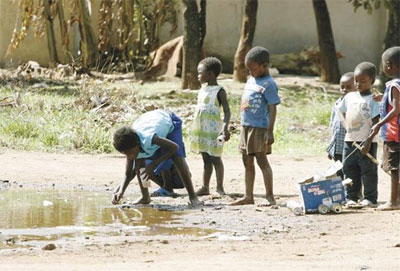
The bottomline is that millions of people residing in slums across the nation have no access to potable water, no toilet facilities, open sewage is common place while open defecation is the order of the day.
This condition exposes hapless Nigerians to infections such as cholera.
Cholera infection
Cholera, according to the World Health Organisation’s (WHO) definition, is an acute diarrhoeal infection caused by ingestion of food or water contaminated with the bacterium vibrio cholerae O1 or O139.
It is a global threat to public health and a key indicator of lack of social development. To WHO, the re-emergence of cholera has been noted in parallel with the ever-increasing size of vulnerable populations living in unsanitary conditions.
According to a study on “Cholera Epidemiology in Nigeria: an overview”, carried out by Ajoke Olutola Adagbada and colleagues, cholera made its first appearance in 1972. Unfortunately, the latter part of 2010 was marked with severe outbreak which started from the northern part of Nigeria, spreading to the other parts and involving approximately 3,000 cases and 781 deaths.

The study also showed that the 2010 outbreak of cholera and gastroenteritis and the attendant deaths in some regions in Nigeria brought to the forefront the vulnerability of poor communities and most especially children to the infection.
The outbreak was attributed to rain which washed sewage into open wells and ponds, where people obtain water for drinking and household needs. The regions ravaged then were Jigawa, Bauchi, Gombe, Yobe, Borno, Adamawa, Taraba, FCT, Cross River, Kaduna, Osun and Rivers.
The study also noted that even though the epidemic was recorded in these areas, epidemiological evidence indicated that the entire country was at risk.
Unfortunately, years later, the disease outbreak has continued to kill.
From 2015 to date, many states in Nigeria have been hit by the infection. The states include Lagos, Ogun, Oyo, Plateau and Zamfara. Critical observers are worried that the frequency of occurrence is indicative of a huge shortfall in human development index and a failure of leadership in the country’s health sector. Statistics from UNICEF showed that over 500 Nigerians lost their lives in the 2015 outbreak.
The worst hit this year is Ebonyi where cholera killed 76 persons in April, while six died in Lagos and 66 were affected.
According to the state Commissioner for Health, Dr. Daniel Umuzuruike, apart from the 76 deaths from cholera, 14 other patients died of Lassa fever. The cholera outbreak also affected 38 communities and 11 out of the 13 LGAs of Ebonyi.
Why cholera will persist
So why is Nigeria finding it difficult to stop cholera? According to health experts, the reasons are not far-fetched. The experts believe that far as long as people urinate and defecate in the open while wastes are washed into open filthy drains, cholera will continue to be with us. Meanwhile, the chances of contamination are very high from roadside food vendors and people eating in unhygienic condition. People eat from various sources.
According to Lagos State Commissioner for Health, Dr Jide Idris, it is a shame that the country is experiencing cholera in the 21st century because people are yet to understand personal hygiene.
Idris disclosed that the main suspected source of infection in the latest outbreak of cholera in the state was a local salad popularly called Abacha and some domestic wells
He maintained that prevention of cholera can be achieved through basic water sanitation, such as boiling water of unclean sources, adding: “Cholera can kill within hours if left untreated.”
Giving measures to prevent the spread of the disease, he said: “Wash your hands with soap and water frequently and thoroughly especially after using the rest room to prevent cholera. “There should be no open defecation,” he added.
Indeed, a UNICEF report showed that over 50 million Nigerians defecate in the open. Unfortunately, experts say ingesting a gramme of faeces deposited by houseflies on uncovered food is like eating 10 million viruses, one million bacteria, 1,000 parasite cysts and 100 parasite eggs.
And this does not only cause cholera but also typhoid, hepatitis, polio, pneumonia, fatal worm infestation, trachoma, stunted physical development and impaired cognitive functions.
Statistics also indicate that diarrhoea kills at least 150,000 children yearly, while under-five mortality is high in Nigeria where 157 out of 1,000 babies born die before they celebrate their fifth birthday.
Diarrhoea discharge
Usually, the source of the contamination is other cholera patients when their untreated diarrhoea discharge is allowed to get into water supplies. Sunday Vanguard gathered that cholera is not likely to spread directly from one person to another; therefore, casual contact with an infected person is not a risk for becoming ill but this does not excuse non-observance of good sanitation.
Simple things like washing your hands before eating and nursing the baby, washing your hands after relieving yourself, purifying the water before drinking and stopping open defecation and ensuring better sewage systems saves lives and stop the spread of cholera.
Cholera usually presents clinically as nausea, profuse diarrhoea, vomiting (in early stages of illness), fever and leg cramp. Later presentation is dehydration, shock or coma. Health watchers are of the view that since the factors fuelling cholera in Nigeria have been linked to dirty environment, poverty, lack of good water sources, there is need to bring back sanitation officers.
Symptoms
About 75 percent of people infected with cholera do not develop any symptoms, although the bacteria are present in their faeces for 7–14 days after infection and are shed back into the environment, potentially infecting other people.
Among people who develop symptoms, 80 percent have mild or moderate symptoms, while around 20 percent develop acute watery diarrhoea with severe dehydration. This can lead to death if untreated. The case fatality of cholera ranges from less than 1 percent in treated cases to as high as 50 percent in severe cases.
Prevention tips
Boil water before drinking, especially if you are not sure of the source of infection
• Keep all cooking utensils, plates, cutleries, cups and other materials clean before and after use, cover foods and water sources, cook foods adequately.
•Store foods in fridges, wash fruits and vegetables thoroughly
•Dispose of waste materials appropriately; there should be no open defecation
•There should be no body contact, especially hand contact with faeces.
•Regular food handlers’ test
•Provision of effective and hygienic toilet facility
Where cholera is suspected:
• Prepare oral rehydration solution (10 level teaspoonful of sugar + 1 level teaspoon of salt in two 35cl bottles).
•Keep giving food as soon as it can be tolerated
•Report any case of diarrhoea and vomiting to the nearest public or private health facilities.
Disclaimer
Comments expressed here do not reflect the opinions of Vanguard newspapers or any employee thereof.