
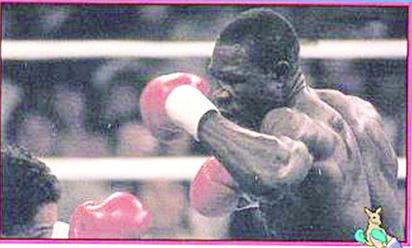
Joe Lasisi
.His exploits, disappointments and way forward for Nigerian sports
By JACOB AJOM
IN 1989, Customs Man, Joe Lasisi, a Nigerian boxer was at the peak of his career. As the national and African Light Heavyweight champion, Lasisi fought his way to become the number one contender for the WBA world title belt, then held by Virgil Hill of the United States of America. As a man who believed so much in his ability, the Nigerian champion challenged his American counterpart for the world title. The American reluctantly agreed to stake his belt against Lasisi. After two postponements, at the instance of the champion, the fight eventually took place at Hill’s home town, Bismark, North Dakota in Los Angeles.
ON May 27, 1989 at the Civic Center, Bismarck, North Dakota, USA, Lasisi lost the fight via TKO as the referee stopped the bout in the 9th of the scheduled 12 rounds. The Nigerian fighter said the referee’s decision was questionable.
“I was robbed, I was robbed,” he said repeatedly, in a chat with this reporter, some months ago, during the GOtv NextGen Search programme at Lawanson. Lasisi is of the belief that the fight was won outside the ring, as “there was more to it than met the eye.”
He recalled, “when I went for the world title I was alone, without government support. Indeed, I was virtually alone,” he said regretfully.
“As I entered the ring, I looked around the Civic Centre was jam-packed arena and I could hardly see a Nigerian. I felt lonely as there was nobody to spur me on from the stands, except my corner and one Nigerian journalist, Eybong-Ita, who was from the Vanguard Newspapers. As the Nigerian Anthem was being played I felt the weight of expectations from millions of Nigerians back home. Even without government support, I knew I was representing my beloved country. Unfortunately, I was robbed of that chance to bring smiles to millions of my fans back home. To date, that remains my biggest regret.”
The former pugilist believes, if there was a strong, visible presence of Nigerian government or its agents in the arena, the brazen manner the referee stopped the fight could have been forestalled. “There is politics in boxing,” he intoned.
Back home, Lasisi had beaten all his contemporaries. The most popular of his victims was Jeremiah Okorodudu, an Olympian who represented Nigeria at the 1984 Los Angeles Games. In one of their fights, at the Indoor Sports Hall of the National Stadium, Lagos, Okorodudu left the ring with a broken arm. With his arm in a sling, the Olympian offered a bizarre explanation to his loss and added myth to his conqueror’s prowess when he said that Lasisi was using juju(a term for black magic), and claimed that he was seeing more than one Lasisis in the ring. From then on, Jerry avoided Lasisi with passion.

Joe Lasisi
Before turning pro, Lasisi said he was also a terror in his amateur days. “I was denied a chance of going to the Olympics for reasons I still don’t know to date. At the 1981 National Sports Festival, I was among the front performers in my class. We had Omoruyi, Okorodudu, Sani Mohammed and others. I beat Okorodudu but during selection for the Olympics, I was left behind. However, when they returned and turned professional, I beat Okorodudu again, home and abroad.”
Almost twenty years on, Lasisi is a shadow of himself. Although still strong-willed, the retired Customs officer is a bitter man. Bitter about what he described as the sad state of boxing, nay sports in the country. The renowned pugilist said his present desire is how to get a platform to give back to the society that made him what he never dreamt of being. He believes he can bring up young, talented boxers who can become champions in future. Lasisisi says he is still strong enough to enter the roped square and can still beat younger boxers, his age not withstanding.
“Age is a thing of the mind,” he started. “Determination can carry one to any height one desires, just like a horse in Horse Racing, How do you tell the age of a boxer? In the USA, for instance, at 45, you are still fighting.”
Lasisi said, in Nigeria, the media has ‘killed’ a lot of sportsmen and women. “In Nigeria whatever the press says, the people believe. Once you dip in form, you are written off immediately, and that is the end of your career. And that is how sad most sports men and women end their careers in Nigeria.”
The former national champion is sad that sports in Nigeria had taken a free fall. He points accusing fingers at both the administrators and athletes. The failure of successive governments in pursuing those basic steps that can sustain good results in sports, numerous policy somersaults by ministry officials, he said, had to do with the appointment of ’round pegs for square holes’.
“The first consideration for appointments into key positions in Nigeria is where a person comes from. It is wrong. That is why things are going wrong. Government appointees care less about what goes on because they go there with the sole aim of looking for what they can benefit, not what they can give to the system,” he reasoned.
He blamed the dramatic down turn in the fortunes of Nigerian sports to a systemic failure in management of success. “The introduction of generous monetary rewards to athletes who win laurels has done a lot of harm to the system. It has made the struggle for selection ugly and more intense. Coaches are in a dilemma over who to select and who to drop because they must consider candidates from top government officials or they are sacked. Some parents make underhand gestures to ensure their wards make the team and some other unmerited yardsticks are employed in the selection of athletes who represent states and country. At the end you have, not necessarily the best but, who knows who.”
In all this, however, Lasisi said, “In as much as I believe the system has spoilt the athletes, I still blame the athletes too. In the past, athletes thought of what they could achieve for their country. Today, they are like mercenaries, who are hired and paid off when they complete their missions. They think of money first, before performing.”
He recalled Nigerian heroes of the past, saying, “people like Hogan Bassey, Dick Tiger, Teslim, Balogun, Rigogo, Christian Madu are still remembered today because of their achievements, not for what government gave to them. I sponsored myself to the world championship fight. If an athlete gives his or her best, other things – fame and riches – will come his or her way. He suggested job offers for unemployed athletes and accelerated promotion for those who already have jobs as alternatives to monetary rewards to successful athletes. And scholarship for the juniors.
The quality of boxers in the country worries Lasisi. He said they lack commitment and the basic qualities that make good boxers. He wondered why a country like Nigeria with a lot of history in boxing behind her and enormous potential, could send only one boxer to the 2016 Rio Olympics. “As a boxer, your stamina, level of endurance and strength of heart determine your stay in the ring. You must be brave and courageous lest you lose even before the bell signals the beginning of a bout. Our boxers of today lack these qualities and they don’t have good trainers.
“The few I train complain about my training methods as being too difficult. But I don’t care. I have about 50 who train under me, but I brought only 3 to this GOtv NextGen Search programme. These are the ones that can withstand any task.”
Lasisi has a proud record of 27 fights, with 25 wins(22 KOs) and two losses
He said he felt blessed that he took to boxing as a career. “Every morning I wake up and thank God because he took me far above my expectation. I am a retired civil servant and I am comfortable. I am happy. I can’t thank God enough.”
Disclaimer
Comments expressed here do not reflect the opinions of Vanguard newspapers or any employee thereof.