
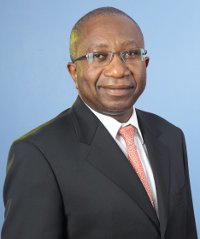
Femi Oyetunji
Managing Director of Continental Reinsurance Plc, Dr Femi Oyetunji in this interview reiterates that the local content policy of the federal government is not yet in full session in the insurance industry. He spoke to ROSEMARY ONUOHA.

Femi Oyetunji
How successful has the local content policy been in the insurance industry?
The local content has been a success in Nigeria. If it is not there, I can assure you that most of us will not be in business now. Because the size of the balance sheet of some of the big global insurance players can write everything that is there. If you also look at the big risks, they are all owned by multinationals with head offices in US, China and Europe. So they will be more comfortable dealing with companies from their own base. So we need things like the local content, but it is not yet in full session.
At what level are we now in compliance with local content?
In oil and gas risk underwriting, I will say we are at 10 per cent. For other classes like engineering, fire, property, I don’t think we are doing up to 40 percent.
How is the economic downturn affecting reinsurance business?
The reinsurance market in Nigeria cannot be exempted from what is happening across the globe. Africa is going through tough times. Most African economies depend on commodities. Commodities prices, be it copper, gold, or crude oil have gone down to their lowest values so the economies have been affected. When economies are affected and there is a downturn, the first causality has always been insurance. So we have seen a lot of reduction in interest in insurance. We have seen asset values go down, we have also seen a new risk coming to the fore front. The risk we face now is risk of currency fluctuation. Nigeria has been negatively impacted.
How are you being affected by the refusal to insure big projects in the Nigerian market?
In fact what we see is that some of these risks are now being offered to us from outside Africa. But again part of the thinking is for us to know where the investments are going in and when the investments are going out and then we follow the money. We ensure that we are on ground to talk about insurance. When these deals are going on, say for infrastructure, insurance is tucked in somewhere in small print and we lose out. But I think there is going to be concerted effort and the regulatory bodies and government should support us too. But such is not just in Nigeria. There is a case of a big dam in Zambia financed by funds from China and 75 percent of the insurance is going to China. So we need to know when these deals are being put together so that as insurers and reinsurers, we will be there to ensure that our interests are protected.
How are you coping with terrorism insurance, from which area have you got the biggest claims since the advent of terrorism in Nigeria?
Actually, claims from terrorism have been limited. That has been one of the most profitable lines of businesses. What we found out is that when there is going to be election, enquiries about political violence and terrorism go up. They will take the policies and by and large, we have done well in Africa in the past few years in terms of the quality of our elections. So we have not seen what people feared and that means that we have learnt that elections don’t have to lead to political violence and terrorism. Also terrorism is usually localised and we have seen concerted efforts to fight against terrorism both in Nigeria, Kenya, and elsewhere and I do believe that because there is an international approach to it, we are seeing successes against the terrorists. So in terms of claims, it has not been substantial.
Which line of business gave you the most challenging claims?
That is property and fire. There was a big one in Cameroon last year. We also had substantial claims from flood in Ghana last year. They are the two largest claims we had from West Africa.
Should local players be compelled to sign treaties with foreign reinsurance firms?
I don’t think they are compelled to do that. It is the international players that are looking for ‘A’ rated companies. These are things that are skewed against African companies. These ‘A’ rated companies have been around for over 200 years and insurance, reinsurance is at infancy in Africa.
We must realise that Rome was not built in a day and we shouldn’t apply the same requirement for us as the Europeans. They come to our market so we should go to their market but we can’t because the first thing they wave at you is your rating. Continental Re has the third best rating in Africa in reinsurance, so I am not against rating.
We are doing well and we are looking forward to getting an upgrade in rating but we cannot come to our own continent and are waving the same red flag. So the regulators will really need to help us. Nigeria is doing well in terms of making sure that local capacities are exhausted before anything is externalised. Now the regulators will do their own, we have to do ours. We need to build solid institutions, good balance sheet; we need to be able to demonstrate to the insured that when there is a claim, we will be able to pay.
However, having ‘A’ rating does not imply the willingness to pay. Ability to pay does not mean willingness to pay. For us at African Re, we have the ability and willingness to pay because we are next door to these risks. So we need to look at another model. We have discussed with the rating agencies and say ‘why don’t you do regional ratings’ but as far as they are concerned, because of the international nature of our business, they can’t segregate. But for us in Continental Re, we know what the rules are, we know what to do to get improved rating and we will work at that. But we need the support of the regulators in some form or the other to protect us from uneven playing field we found ourselves now.
How has Continental Re been coping with the harsh operating environment?
If you look at Continental Re’s strategy in the past five years, it has been that of diversification. So what will be the success formula for 2016 going forward? It has to be innovation and diversification. For us at Continental Re, we have been fortunate that we have been able to build a diversified platform. It started off in Lagos some 30 years ago. We have branches in Duala, Cameroon, and Abidjan. We have subsidiaries in Kenya, Botswana and a branch in Tunisia .So we have Africa well covered and diversified. We have brought in talents from diaspora to join our operations across Africa. We have been very quick to react to the needs of our clients.
Disclaimer
Comments expressed here do not reflect the opinions of Vanguard newspapers or any employee thereof.