
fuel-pump
By Sonny Atumah
Today we are in the club of nations producing petroleum and not knowing what to do with it; groping and wallowing in memories of long-gone old days of not knowing what to do with our petrodollars. Collectively we have not been able to utilize our innate releasing mechanisms to stimulate triggering instinctive behaviours to tackle identified challenges.


We have not been able to conduct a methodical investigation to develop a plan of action based on facts discovered. We have been reluctant to act because of absence of research. We now suffer from this structural deficiency.
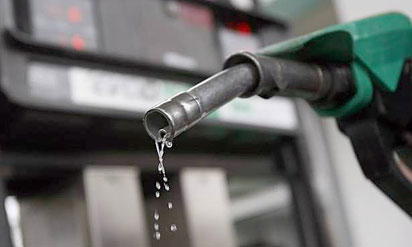
One month ago the Federal Government acting through the Minister of State and Group Managing Director of the NNPC, Ibe Kachikwu, took out subsidy on Premium Motor Spirit (PMS) or petrol. Kachikwu told Nigerians that there were no resources for the supply needs of Nigerians; no foreign exchange and cannot open letters of credit to import products.
In what seemed like belly words Ministers are busy in belatedly geopolitical town hall rounds selling petrol price increase to Nigerians. The real Nigerian has been asked to swallow the bitter pill in good faith for marketers not to be forced out of petrol import business. Nigerians are also paying more in electricity tariff for distribution companies to remain in business. Is the vulnerable Nigerian factored in these important economic equations?
The Minister of Power Works and Housing, Babatunde Fashola who preached to Nigerians the 2016 swallow-the-bitter-pill sermon with temerity had in December 2014, while serving as Governor of Lagos State, asked the Federal Government to review downwards the pump price of premium motor spirit in tandem with the slump in world oil prices.
It is unfortunate that President Muhammadu Buhari who exactly one year ago said many jobless people would be affected by subsidy removal was pressured to take what is now called hard economic decision, knowing fully well there were many more soothing choices to solve this lingering problem.
Indeed subsidy withdrawal meant a boon to state coffers. But is it good for the vulnerable Nigerian who grapples with high pump price of imported petroleum products with a free fall and devalued Naira? These Nigerians with diminishing benefits in perpetuity are becoming victims of some state conspirators.
The situation is difficult to analyse considering government officials incongruous explanations of subsidy withdrawal or price increment for petrol. Preferably it is price increment because the price modulation introduced early January 2016 is ad infinitum. Again with lack of empirical data figures are conjured on what we consume of imported petroleum products. We can hardly determine the factors of price elasticity of demand in microeconomic terms of this imported product that is necessary, almost having no substitute, and taking a high percentage of the consumer’s income.
Can it be likened to former military President Ibrahim Babangida’s early 1990s postulation that the Nigerian economy defied logic? He could not understand the economy’s untowardly resilience in his government’s structural adjustment programme (SAP). The current state of affairs is a phenomenon to contend with; not understanding why we cannot refine locally.
Excess gasoline has pooled in the Amsterdam-Rotterdam-Antwerp refining hub hitting a record high in anticipation of summer demand. This Excess gasoline has pooled in onshore tanks and ships anchored off refining hubs, according to traders and Reuter’s ship-tracking data published in Hydrocarbon Processing recently.
At the time Nigeria increased prices, refiners from North Western Europe had an armada of 75 ships laden with 2.5million tonnes of petrol cargoes around the Lagos quay. As government increased petrol price by about 67 percent, fire-sale prices ruled the international markets with gluts in crude oil and petroleum products.
These refiners’ only business guarantees were gasoline contangos (every day their journeys last makes their cargoes more valuable when they land) as they dawdled along slow steaming routes to Asia around the tip of Africa without cutting through the Suez Canal, and sitting on fuel to cash in on high futures prices.
With a globally glutted market for Premium Motor Spirit (PMS) or petrol, Nigerians are hounded in a relentless manner that crude oil prices are low. With low crude price, Suezmax tanker, Front Njord loaded 1 million barrels of Nigeria’s Bonga medium crude oil early May 2016 at Bonga Offshore Terminal, and discharged at Bahia Blanca port in Argentina.
Several refinery operators including Royal Dutch Shell arranged the purchase. Shell, Petrobras, Axion Energy, and Oil Combustibles operate the Buenos Aires, Bahia Blanca, San Lorenzo and Campana refineries with a joint capacity of 260,000 barrels per day. That Argentina has joined the fray for our crude oil meant a fundamental problem in Nigeria.
Perhaps our forward-thinking government may have surrendered to the Nigerian alternating current, Aliko Dangote to explain the answer to the riddle of two decades as his 650,000 barrels per day refinery would come on stream by early 2018. The CBN Governor Godwin Emefiele early January 2016 on his visit to the refinery in Lagos assured “Mr. Africa” Dangote that whatever it would cost in terms of foreign exchange, the CBN was there to assist him in the US$14 billion project.
Emefiele almost fantasized what the Dangote refinery would make for Nigeria and the foreign exchange that would accrue thereof for CBN and forgot we have four idle state refineries that are being prepared for rummage sales. The latest product analysis from Wood Mackenzie which tracks 745 operational refineries globally shows that there would still be an oversupply of gasoline globally for several years even if there are no more refineries built beyond 2020. Technically Nigeria is not there in refinery number and functionality.
We are told that the cure for low price is lower price and that affects demand and supply. With low price for crude, Nigeria has continued to sell crude, refused to refine, devalued her currency, import refined products at exorbitant prices and impoverished her citizens. The same old story we preached to the Goodluck Jonathan’s administration to invest in refineries and petrochemicals is what we are reminding President Buhari after one year in office.
President Buhari that we believed has the ability may also be lacking in the will. Developed and emerging nations never looked for the easy way out. They sought for lasting solutions to complex problems. As a nation we should not toe the line of weak resistance with the slightest challenge. We have the market without the product. Let us benefit from the gluts by refining locally and stop being foreign manufacturers’ representatives.
Disclaimer
Comments expressed here do not reflect the opinions of Vanguard newspapers or any employee thereof.