
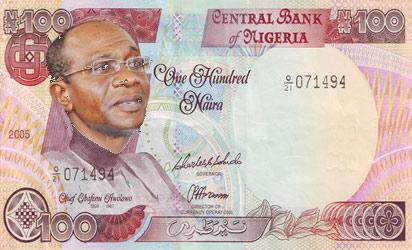
Emefiele
By Babajide Komolafe
Economic experts have predicted that the Monetary Policy Committee (MPC) of the Central Bank of Nigeria (CBN) will further raise the Monetary Policy Rate (MPR), in order to address rising inflation in the country. Some of them however opined that the Committee should adjust the foreign exchange policy to allow for efficiency in the foreign exchange market.

CBN Governor, Mr Godwin Emefiele
The 11 member MPC commenced its bi-monthly meeting on Friday in Lagos with presentations of departmental reports by CBN staff. Committee members will today discuss highlights of the CBN staff reports as well as latest inflation and Gross Domestic Product data released by the Nigeria Bureau of Statistics (NBS) last week.
The meeting will conclude tomorrow with policy recommendation by each committee member and announcement of policy measures adopted.
At the end of its meeting in March, the MPC decided to tighten money supply by raising the MPR to 12 percent from 11 percent. It also raised the Cash Reserve Requirement (CRR) of banks to 22.5 percent from 20 percent and narrowed the upper and lower bands around the MPR to +200 and -700 basis points to +200 and -500 basis points.
The MPC is expected to further tighten money supply especially in view of the jump in inflation to 13.6 in April from March, as well as the commencement of the implementation of the 2016 budget, which is expected to inject massive liquidity into the economy.
“The more appropriate policy expected in my view from MPC, will be a slight upward adjustment of current MPR as a tightening response to the current inflationary trend’, said Mr. Victor Ogiemwonyin, Managing Director/Chief Executive, Partnership Investment Plc.
He added that, “The 2016 budget just signed into law is a large reflationary budget which will also put further pressure on inflation. The large spending budget is needed at this time to get economic activity up, but also has the potential to further stoke inflation. A tightening stands will be understandable.”
On her part, Razia Khan of Standard Chartered Bank, London, predicted that MPC will raise the MPR to 13 percent. In an email response to Vanguard, Khan, who is the Managing Director, Chief Economist, Africa, and Global Research for Standard Chartered Bank, said, “We have been monitoring inflation risks for some time. With April composite Price Index (CPI) confirmed at 13.7 percent, we now expect the CBN to tighten its policy rate by 100 basis points to 13 percent at the May meeting, rather than in September, as previously forecast.
Inflation is largely cost-push in nature, and the economy is weak. A hike of 100 bps will not result in a positive real MPR, but the 200 bps upper corridor around the MPR is likely to result in a SLF (Standing Lending Facility) rate of 15 percent. This should be sufficient for the MPC.” Though Khan ruled out the possibility of any adjustment to the exchange rate, Ogiemwonyin and Afrinvest Plc called for removal of foreign exchange restrictions.
According to Khan “We do not expect any big foreign exchange liberalisation moves just yet. Although the release of a new fuel pricing template with its exchange rate assumption of N285 per dollar has raised market anticipation of an imminent change in policy, there has been little official indication of any change in thinking. Market conditions are arguably too liquid for a sizeable devaluation to be considered just yet.”
Making a case for the removal of foreign exchange restrictions, Ogiemwonyin said, “I also expect removal of controls from the Foreign Exchange market. As this will be the only way to make this market efficient. Efficient markets work for all of us. There will be no need to announce any devaluation of the naira, only that the CBN is getting out of Transactionary Naira. i.e they will no longer sell dollars to banks just as they have done with BDC. Banks will be free to source Dollars at their supplier’s rate and sell at the rate customers are ready to buy. The CBN will henceforth intervene like other central banks when rates get out of control. They will offer very large amounts to ease supply and cool the market when necessary.”
Disclaimer
Comments expressed here do not reflect the opinions of Vanguard newspapers or any employee thereof.