
By Lekan Bilesanmi
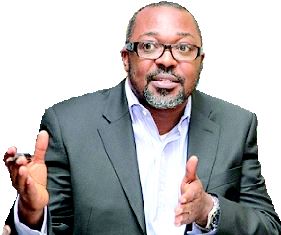
John Ugbe is the Chief Executive Officer, MultiChoice Africa, a pay-TV entertainment company. In this interview, Ugbe explains, among other things, why the company services redundant broadcasting equipment and spent over N20 million on the entertainment industry.

I think that is the beauty of satellite. Your availability of satellite is the same anywhere in the world. The digital satellite service here in the country is not different from digital satellite T.V service any where in Europe. The satellite is manufactured and maintained by the same organizations. Our DSTV runs on Eutelsat which is a world-wide company. So, the availability is the same every where in the world. Where you tend to have variances is mostly from a wider perspective. For instance, if you are sitting in New-York, in January where there is a lot of snow, you tend to have more interruptions, whereas, in the same January here in Nigeria where there are no rains, you can hardly have that kind of interruptions. So, over the years, we started with C-band 2.8 metres dish which was as big as some of our roofs.
So, with the shift in technology and in order to make it more affordable, we have the bigger dishes which cost a lot more. Meanwhile ,some countries have started moving to the KU-band which is smaller than the present one. It is like a little plate hanging outside your house, but it has a lot of interruptions from weather, but we are yet to move there because we don’t think the availability is suitable for our market here yet. But one thing we always try to do, get people to do, may be trying to be part of our culture, just like any other thing, is that the dish in front of your house needs servicing by checking the strength and quality of the signal.
For those of us who are close to the ocean here in Lagos, because of winds, there is the probability that there might be a shift such that the signal strength may go from 95%,98% to 60% at which time you can still continue to watch. But it then means that if there is a very thick cloud, it would affect your service more than it would affect the other person’s service who has 90%. As with any other thing, we service pumping machines, our cars after every few kilometers. We implore our subscribers , once a year, to get an installer to look at the installation if it is aligning properly.
Talking about service, we have never had service outage. When I am talking to people, I always ask them if they could think back if there was any time the entire DSTV service went down, no channel working, and whether the same thing happened to their friends. For a service you cannot remember when it went down, that shows the reliability of our service. It means we have multiple sites. That means we have the first site, we have the second site. The issue is that, all the equipment are sitting in the sites idle, in case something went wrong. You probably would never noticed if something went wrong, it probably switches automatically to the back-up site. That to us is additional cost, servicing a second redundant equipment.
Complaints about booting period
Yes, some of the subscribers told us that ten years ago, the booting period was faster than what it is now. But my reply is that, yes, 10 years ago, it was faster, and that is because the contents were not as many as what we have now. Don’t forget that when the decoder boots, it picks up different transpondents, so the more the channels you have available, the more the time it has to pick everything up. So what we have always done is to see how the box can load a bit faster. And to work within some of the infrastructure challenges we have. Your shutting of decoder every few minutes is not battery. It is not supposed to happen.
The decoder is one of the things that is supposed to stay on, mostly permanently. Because even when you are not watching, we are continuously talking to it, by down loading some new soft-wares into it. We upgrade the soft-wares of the decoder a lot of times, especially when usually it will not disrupt your viewing pleasure at night. We understand some of the infrastructure challenges we have and we try to build around them. But to provide a great quality service to you, we cannot ignore some of those vital elements. I like the feedback, because each time we get a feedback like that, we take it to our developer to see how we can put in all the wonderful things our subscribers want into making the decoder better without necessarily cutting down the loading time of the decoder. Meanwhile, we try to encourage our subscribers that they should try to put UPS behind their decoders so that, between the time you switch to generator when there is power outage, your decoder is still working, and I think that is why we also try to provide highlights of games. I can tell you, for certainty, that we will keep on improving, that is one thing that guides us.
The billing system, which many people say is based on pay-per-watch in South Africa, is not obtainable here in Nigeria? Why?
I have always been shocked when people say it is in South Africa, and my consistent question has been, where in South Africa? I know the Multi- choice Group of Companies at least, it is not practised anywhere. We don’t have pay-as-you-watch model anywhere. I think people tend to take perception for reality. I am yet to be taken to the country anywhere in the world where such a model is in operation.
How about the issue of not being at home, yet your bill runs?
It does not work anywhere like that. Perhaps I should take you to the larger understanding of the pay- T.V model. When you acquire the right to a football match, hardly can you go back to say midway to the game that the supporters of the losing team are not happy and they decide to switch off their decoders. Again, when you go to a stadium to watch a game, if you have to leave at half time, do you get a refund for not able to finish with the teams? It is the nature of pay-T.V and contents.
And, often times, it is compared with communication. We are in the broadcast industry. Communication is two- way, broadcast is one-way. We have no way of your decoder talking back to us. There are some contents. If you look at the Pacquao and Mayweather match which was sold in the U.S. as pay- per- view…. remember, pay-as-you-watch and pay-per-view are completely different from each other. This was addition to the fact that the people were subscribers who paid their monthly subscriptions. They paid for that game and it was sold for 100 dollars. We don’t even have 100 dollars paid on any of our bouquets. But for that three, four hours of the night of the boxing match, you had to pay 100 dollars. Think about it, how did we show that match here?
Don’t you think providing the price model as a game-changer in the industry?
To us, it has to be a model that allows us a service that is affordable. Don’t forget that this is a business we set out, such that some of the rents are acquired at a massive loss just to be able to get subscribers. I am not talking about what our competitors can do, but we are always looking at the technology with the best model. Am I saying that in future, if such technology becomes available to us, and if that is the best model for the business, we would not do it? That is not what I am saying. But with what we have got and to be able to provide service, it is like the Pacquiano-Mayweather fight, if we had said to watch it, you to pay 20k into the bank before we could show it, you can imagine that is even more than the monthly subscription. But we provided it at no cost to the subscribers apart from their monthly dues.
The Compat bouquet benefited from the full compliment of the EPL,La Liga,UC and even hardware price slash. Was this decision based on the pressure you got from the Consumer Protection Council?
We have always looked at giving value. So, if giving value periodically means bringing in new channels, continuing to provide a lot of contents, maybe you are correct. We are adding more contents than the price. Do you know your EPL,La Liga, Bundusliga and others are some of the most expensive contents we have, but, to us, providing quality contents is paramount here, even when it comes with a loss. However, the action was not in response to the CPC or any pressure because I don’t think how we could have woken one morning and have price slash, you can see that it has a long marketing drive around it. It is something we had been planning and developing, because we constantly at look how we can add value; we understand the economy is tough right now and I think everyone feels it. And in response to the market, we say, ‘okay, this is more value we can add’. In our thinking about Nigeria, I want us, a lot of times, to think what we are doing with the country professional league.
This season is one of the most defining seasons for us, because of the number new teams. These games are coming live. We want the discussion to drive what we do locally here. We would love to have our league become, gradually though, ultimately better that what we see in the EPL. We want to see laurels being won because this is what will motivate teams like the MFM team. The MFM team is presently at the top of the league. I want people to go out there and support these teams. We need people to buy the jerseys because the money will flow back to the players, and, by extension, the communities. I am hoping in the next few years, other pay TV providers in Africa and around Africa buy into it to be able to show our league.
Outside your investment in Nigeria, in what other areas have you invested and what is the scale and shape of these investment?
We are not interested in throwing money around. Just over a year ago, we took boxing as a pet project with one of our brands, Gotv. Before now, I don’t know how many Nigerians have seen a Nigerian boxing match on T.V or gone to the national stadium to watch, some don’t even know the names of their boxers in the country. I remember the first one, we had Jeremiah Okorodudu and Joe Lasisi, they had a memorable bout. And I thought, seeing the two together, it was the right thing we were doing. One year after, the National Stadium indoor sports hall was filled up. The last time, December, we were there, someone said this place has never been filled to capacity. That programme took a lot from us to be able to bring it to that level. The same thing is with basketball which saw our team qualifying for the Olympics after beating Angola which, by the way, we were always struggling to beat. With boxing, we have boxers now winning 1m,5m. We are changing their lives, not only about the money but also about the fact that they have something to do, practising the fight. It is a destination for them, there is hope. We had coaching and health clinics..we also insure them just to make sure we can get it to a stage where other people will begin to invest in it.
The AMVC awards grand finale is usually held in Nigeria since inception. Why not in other parts of the continent?
At the moment, I think there are some other events which do not hold in Nigeria. But Nigeria is a major hub for movies in Africa. I am very happy that we are having it here in Nigeria. In future, if it moves, it will be the decision of the company, but, for now, it is a very developmental phase. And the important thing is that we are rewarding. You see, when you reward, people tend to put in more efforts. It is important we are not just rewarding best actors, there is a lot of technical stuff behind the movies. We believe in the industry because we invested about N20million in the industry in the last few years. There is a whole that goes into a movie. There is the make up, carpentry, feeding. If we have like 100 movies, you can imagine how many carpenters are involved. This is an industry that we believe is the future of Nigeria. Yes, we are trying to build factories. You know, every nation, at one point or the other, has to go back to its strength, just like the Indians who worked on their softwares that now allows them to leapfrog. We have the talents and, in Multi-choice Nigeria, we believe these talents will grow in future.
The company used to sponsor productions, but for sometime now, it is like you have stopped. Any reason for that?
We are still into production. I think, last year, Hotel Majestic, an internal production, was the biggest thing on TV. African Magic has been co-producing movies launched recently; even in the theatres, you will always see that it is co-production with African Magic. So, we doing a lot in the industry.
It is in line with our philosophy to do everything internal. So we are able to form partnership with the projects and ensure that only a few of them projects go outside. You will recall that African Magic Igbo was launched last year. Before then, there were not too many Igbo movies, but there is a lot now. And that is because there is a willing buyer as someone has created a platform to showcase them.
Disclaimer
Comments expressed here do not reflect the opinions of Vanguard newspapers or any employee thereof.