
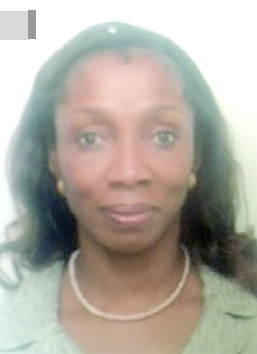
By Ebele Orakpo
Mrs Tosin Olabimtan-Laniyan is the Chief Operating Officer of Hi-Stakes Ventures Limited, holding company of Meraki Organics, makers of Meraki organic soap brand. In this chat with Financial Vanguard, she speaks on her business and why she went into organic soap production, the challenges. She regrets that although the raw materials are abundant here but Nigeria does not have the technology to process them.

Impacting society:
According to Mrs. Olabimtan-Laniyan who attended the University of Lagos and did Entrepreneurship programme at the Pan-African University, she went into organic soap production after extensive research, to mpact the lives of fellow men especially having been blessed immensely by God and by those God has surrounded her with.
“It is in this quest that I started asking God to give me an idea, something that will not only satisfy me in terms of profit but something I will do with passion and that anybody that uses it will be blessed by it. I needed something that I will not have to be travelling out of Nigeria all the time because for so many years, I have been into importation and exportation. About 10 years ago, my church started a vocational centre and one of the courses was soap-making.”
Going into soap-making:
“A year ago, the Lord said to me, “what about things on wellness, wellbeing, good health?”
I love salads but then, salad business with our epileptic power supply? How will I cope? I was making salads for friends and family during occasions. I kept praying and the Lord said a lot of Nigerian ladies like to tone; they bleach and call it toning “so why can’t you do something about skin care?” Nigerian ladies love to look good. We talk about only clothing but what about skin and hair? So the idea of doing something about skin care came up.
Skin care is about being aware of what you are using because whatever soap or cream you use on your skin is like eating food so you need to know how the soap is made, with what, and the benefits. I said if it is skin care, then it has to be organic. Some of the things we eat are also good on our skin.”
Food for skincare:
“We make coconut oil in Nigeria, so I started making bath soaps with coconut oil, palm kernel oil etc. But I was not yet satisfied because I wanted a soap that will moisturise, that will be skin-deep; something that you will use and actually see it work immediately on your skin.”
More research:
“I decided that my soaps must have some other oils infused into them. So I started researching. I have had several trainings in skin care products both in the US and UK. I went to the Federal Institute of Industrial Research, Oshodi (FIIRO) for a formal training. Apart from that, I am an inquisitive person so I always want to know. I thought about baobab oil, I read about it and realised we can benefit a lot from this tree that we have in abundance in the north.
Also Neem (dogonyaro) oil is really good on the skin, highly moisturising, deep-conditions the skin, good for aging skin and rich in vitamins. Coffee also.”
Importing oils:
“I couldn’t get the oils easily here so I had to buy from abroad. Family and friends were willing to use the products and give me feedback. From their feedback, I was able to improve on the products. I started adding cocoa butter, mango butter etc. That was how my organic skincare products business started.
I realised that if I am doing organic, I have to know the source of every raw material that I use and I can testify to the fact that the oil I use is 100 per cent organic and it is pure, no preservatives.
Using organic skin care products is like feeding the skin with good food.”
Nigeria is blessed but… God has richly endowed Nigeria. Our vegetation is excellent but what we lack most of the time is technical know-how to process them and make them beneficial for industries. I have approached quite a number of people to see if they can help us with processing of certain oils from our local trees but we have found none. I went for a course last year and we were told that poppy seed oil, which looks like water, is good for anything facial. It is anti-aging so I started researching on other things we have in Nigeria that can be used as anti-aging. They are innumerable but we have not just done the research.”
Appeal to researchers: “Where the research has been done, we do not know how to process the oils. So our research institutes should please look into how to help to process these things to get oils. There are people like me that are into organic products that will need these oils and we pay a lot to buy from abroad whereas we have them in abundance here just wasting away.”
Empower locals:
“Local women can be taught and empowered to do the processing. They do not have to be educated. Education is a plus but if they start from those women, they will benefit our industries. So government really needs to look at how to develop technology because we have a lot of things we do not know the benefits we can derive from them.”
Doing business in Nigeria: “It is not easy setting up a small business in Nigeria. For example, I discovered it is easier for someone to get NAFDAC approval for anything that has to do with food than any other thing. At a seminar I attended, the NAFDAC representative said that if you are a baker or bottling palm oil or whatever, they will inspect your kitchen and if they find it suitable, you will get approval once you meet all the criteria. I asked whether they will give approval to someone who is into organic skincare products operating from home. They said: “No, you cannot do it from your kitchen table because your kitchen table is where you feed your family and you are dealing with chemical, specifically, caustic soda and that for such to get approval from NAFDAC, you need a site separate from your kitchen with a minimum of three rooms – a production, cutting and packing rooms,” which they would inspect and test the products. It costs an average of N150,000 to analyse each product. How many start-ups can afford N150,000?
We have different skin needs – dry skin, average skin and aging skin. Someone with aging skin needs to deeply moisturize. I cannot make one type of soap for all. So will I be made to pay N150,000 for testing each?
So we need the government to look beyond the big companies, look at start-ups. How can government help people like us to get through NAFDAC? Our products are good; we do not use anything harmful to human or the environment.”
Few years from now:
In the very near future, we will be able to sell our products beyond Africa. We will be promoting locally made products that can compete with products made by companies around the world. We believe that with assistance from government and its agencies, we can surpass our expectation,” she said.
Disclaimer
Comments expressed here do not reflect the opinions of Vanguard newspapers or any employee thereof.