
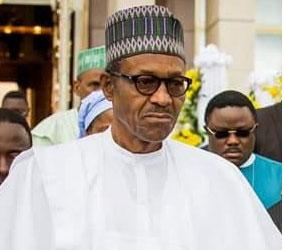
Buhari
By Olalekan Bilesanmi
President Muhammadu Buhari clocked 100 days in office last Sunday. His inauguration as the fourth President since 1999 came with a lot of promises. One of his first actions was the ordering of the country’s military command to Maiduguri, the epicentre of the Boko Haram insurgency. The decision took the war against terrorism right to the door steps of Boko Haram, recording amazing results of conquest against insurgency, release of captured villages, freeing of largely women and children captives and restoration of hope of an end to terrorism.

Buhari
In order to freeze thr activities of the terrorists, Buhari made diplomatic shuttle to the countries under the Lake Chad Basin Commission and Benin Republic. The shuttle ultimately produced the Multinational Joint Task Force, which will create a ring around the terrorists. The Lake Chad Basin Commission military deployment has already attracted donations, military platforms and more shared intelligence.
To further give a bite to the Multinational Joint Task Force, the President ordered the release of $21m to facilitate the establishment of the headquarters of the force in N’Djamena. The United States of America, USA, also pledged $5 million to the fight against Boko Haram, in addition to material support. This, in addition to other members of the G-7 who, while Buhari visited Germany, opened a new leaf of diplomatic relationship with Nigeria, promising technical and material support to quell the menace of the terrorists and rebuild the Nigerian economy.
As he got the support of the international community, Buhari, back at home, altered the strategy against Boko Haram by changing the service chiefs, and ensuring that the entire operation gets daily monitoring with the military heads now based in Maiduguri, Borno State capital. The President, also, in order to strengthen the nation’s security architecture, approved the recruitment of 10,000 operatives into the Nigerian Police which complemented Buhari’s vision of building a robust and responsive domestic security outfit.
Economy
At the outset of his administration, the President approved an intervention fund to pay public servants owed salaries across the states due to the fall in revenue. Buhari’s intervention was principally to alleviate the suffering of Nigerians and reduce the level of poverty in the country. Apart from the intervention, funds into the Federation Account witnessed a substantial jump in the month of July, 2015, largely due to the plugging of leakages. The jump was in spite of fall in oil revenue.
Electricity has improved significantly since the President assumed office on May 29, 2015. The biggest beneficiaries of this, of course, are the Small and Medium Enterprises, SMEs.
Buhari’s ascension has also improved the country’s foreign reserves to $31.5 USD in spite of the falling global prices of commodities. From an initial $29.2 USD, the foreign reserves grew to $31.5, further securing the economy against global and domestic shocks.
The change in the leadership of the NNPC was a major stride in restructuring the organization. The appointment of a new Group Managing Director and the slice of Executive Directors from eight to four by the President has repositioned the organization. Closely linked, some refineries in the country have started operations. Kaduna and Port Harcourt refineries are producing at 60 percent capacity, hoping to close-up after a Turn Around Maintenance (TAM). Warri refinery is expected to start operation early next year. Now, fuel queues have gradually faded out at filling stations, especially in Abuja and Lagos where the queues lasted for a while after the inauguration.
One area where Buhari received accolades within the country was his ordering of the fast-track of the Ogoni clean-up, acting on a United Nations Environmental Project Report that had been stalled by previous administrations.
To further demonstrate his penchant for fairness and justice, the President directed the CBN to clear all outstanding allowances of former Niger Delta militants studying in various institutions across the world. The delay in the payment of the allowances had left the Amnesty Programme hanging on a cliff. He also rejigged the Amnesty Programme by changing the leadership, and giving it a new vision of catering for the weak, the poor and the vulnerable. That move was well received by the people of the Niger-Delta.
There used to be Federal Government delegation to Saudi Arabia for annual hajj which, usually, gulped millions of naira. The President has since stopped it. By this decision, the government saved about one million U.S dollars and N30m in local expenses.
Corruption
Striking at the heart of corruption, Buhari ordered the closure of multiple accounts in MDAs and a reduction to the use of Single Treasury Account to promote transparency and accountability.
After three days visit, the President was able to harmonize Nigeria’s relationship with the United States, which faltered under the immediate past administration. The United States, as a result of the visit, promised more support for Nigeria in terms of technical, military and intelligence support to end insurgency in the North-East. The result of the improved relations between the two countries saw the released evidence by the United States of massive looting and links of monies wired out of the country. The President has directed prosecution. The meeting in the United States also attracted N2.7 trillion investments into Nigeria.
On corruption, the impression of Buhari as incorruptible and the fear of prosecution pushed many to return stolen public funds, with reports saying key actors in the immediate past government have returned huge sums of money. He has meanwhile set up an advisory committee on war against corruption to design an effective template for fighting corruption
Buhari’s leadership has been religiously focused on cutting down the cost of governance while channeling scarce resources to the areas of priority; thus, government’s official travels have been reviewed so that public officers no longer embark on frivolous foreign trips. He also cancelled oil swap deals that had cost the country billions of dollars; resulted in fuel queues due to differences in figures and muddled the country’s reputation multiple interpretations and reported high level corruption. The change in administration saw the monetary value of finished goods and services produced in Nigeria in the second quarter of 2015 recording 2.57 percent growth, says data on Quarterly Gross Domestic Product estimates of the Nigerian Bureau of Statistics.
In real terms, the non-oil sector contributed 90.20 percent to the nation’s overall GDP, marginally higher than both the 89.55 percent share recorded in the first quarter of 2015, and 89.24 percent recorded in the corresponding period of 2014.
Disclaimer
Comments expressed here do not reflect the opinions of Vanguard newspapers or any employee thereof.