
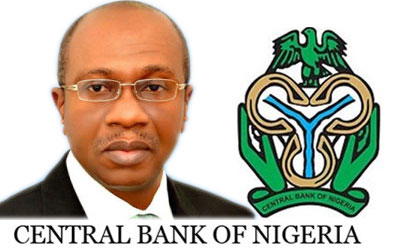
CBN Governor, Mr Godwin Emefiele
By Udeme Clement
The Lagos Chamber of Commerce and Industry (LCCI), has described the move by the Central Bank of Nigeria (CBN) to publish names of debtors to shame individuals and companies involved after the August 1, 2015 (yesterday) deadline, as unprofessional, calling on CBN to examine the default on case by case basis in order to avoid sweeping generalisation. The chamber also advised the apex bank to adhere to global best practice of debt recovery by giving due consideration to legal implications.

CBN Governor, Mr Godwin Emefiele
Speaking, the Director General, LCCI, Mr. Muda Yusuf, stressed that there are varying causal factors for loan default that must be taken into consideration. He said, “The LCCI recognises two categories of debtors that include defaults as a result of genuine business failure, which are irreversible and affect the capacity to repay. Also, there are defaults as a consequence of deliberate intent not to repay. So, it is vital to distinguish between these two categories of debtors, to guide the choice of debt recovery strategy.”
He went on, “Some factors in business failure in recent years include shocks and dislocations from depreciation of the Naira, exchange rate and the attendant shocks to businesses, especially those with high exchange rate exposure. Sudden drop in crude oil prices with significant impact on petroleum product importers, as investors in the upstream oil and gas sector are also victims of collapse of oil prices. Many businesses are yet to recover till date. Some banks have huge exposure to this sector. Power sector investors are grappling with issues ranging from gas unavailability, theft, billing issues, quality of assets and legacy debts. Defaults caused by import duty waivers granted by government, which put many businesses at very serious competitive disadvantage. Rampant smuggling and counterfeiting of products as well as importation of fake and substandard products, which created severe competition issues for manufacturers”.
He continued, “Others include sudden changes in fiscal policy especially import tariffs, import prohibitions, import duty waivers and policy reversals on incentives. Huge indebtedness to contractors by governments at all levels, which had impeded the ability of contractors to repay the loans from the bank. Combined indebtedness to local contractors by the federal, state and local governments is well in excess of N1 trillion .Prohibitive interest rates and charges by banks, which increases the risk of default and have a compounding effect on outstanding indebtedness of businesses. Security issues in some parts of the country that jeopardized many investments affected areas. Many projects were abandoned due to security breaches in some parts of the country. Stock market collapse, which led to huge losses by investors in the capital market.”
“The second category of debtors have deliberate plan to default. This class of debtors took loans and from the very beginning did not intend to repay. This is of course the more disturbing scenario,which borders on criminality and impunity. There are bad borrowers and there are bad lenders! The CBN should deal with both sides. There is need for better use of Credit Bureaus to reduce the incidence of serial debtors. Given the adverse consequences of Non Performing Loans (NPLs) on the stability of financial system, the risk to depositors’ funds and the sustainability of the banks, there is compelling reason to take drastic actions to avoid grave consequences of bad loans. NPLs in the banking system is currently estimated at over N400 billion.”
“Entrepreneurship is about risk taking. Sometimes profits are made, at other times losses are suffered. It would be unfair to portray business failure as an act of criminality, which is what the publication of names connotes. The reputation of businesses is also very high. Loans supposed to have collateral and a foreclosure invoked in the event that such loans are not redeemed.”
Sunday Vanguard gathered that the non-performing loans currently represent three percent of the N13trillion industry loan book, which has a set limit of five percent. Also, NPLs have increased to N490billion sector-wide. This figures amount to three percent of the N13trillion total bank credit, and the move by banks to recover the debts is to prevent NPLs from reaching the five percent ceiling of total credit in the market set by the monetary authority. As such, immediate recovery of these loans would enhance stability in the financial sector to prevent systemic stress capable of making banks to go under.
Thus, the CBN is adopting this strategy of debt recovery now to ensure that NPLs are not out of control like what happened in the financial industry some years back. In 2009, the banking industry in Nigeria experienced a major financial crisis, as commercial banks recorded huge NPLs of about N4.3trillion. In the process, many banks were declared insolvent and eight banks were taken over by the apex bank. To remedy the situation, some banks went into merger and acquisition deals, while the remaining weak banks that could not merge were given financial bailout by the CBN to preserve depositors’ money.
Our investigations revealed that despite measures put in place to curtail NPLs from escalating, these debts are still rising. For instance, the statistics available shows that such loans rapidly increased from over N344billion in 2013 fiscal year to N400billion in 2014 and N490billion in 2015. In the same vein, the total banks’ credit increased sharply from N9.27trillion in 2013 to about N11.22trillion in 2014 economic year and currently N13trillion in 2015, where there is a new government in place. On the whole, the apex bank stressed that the name and shame publication is adopted as the last resort to ensure speedy recovery of NPLs.
Disclaimer
Comments expressed here do not reflect the opinions of Vanguard newspapers or any employee thereof.